UK Supreme Court rules against AI as patent 'Inventor' in landmark case

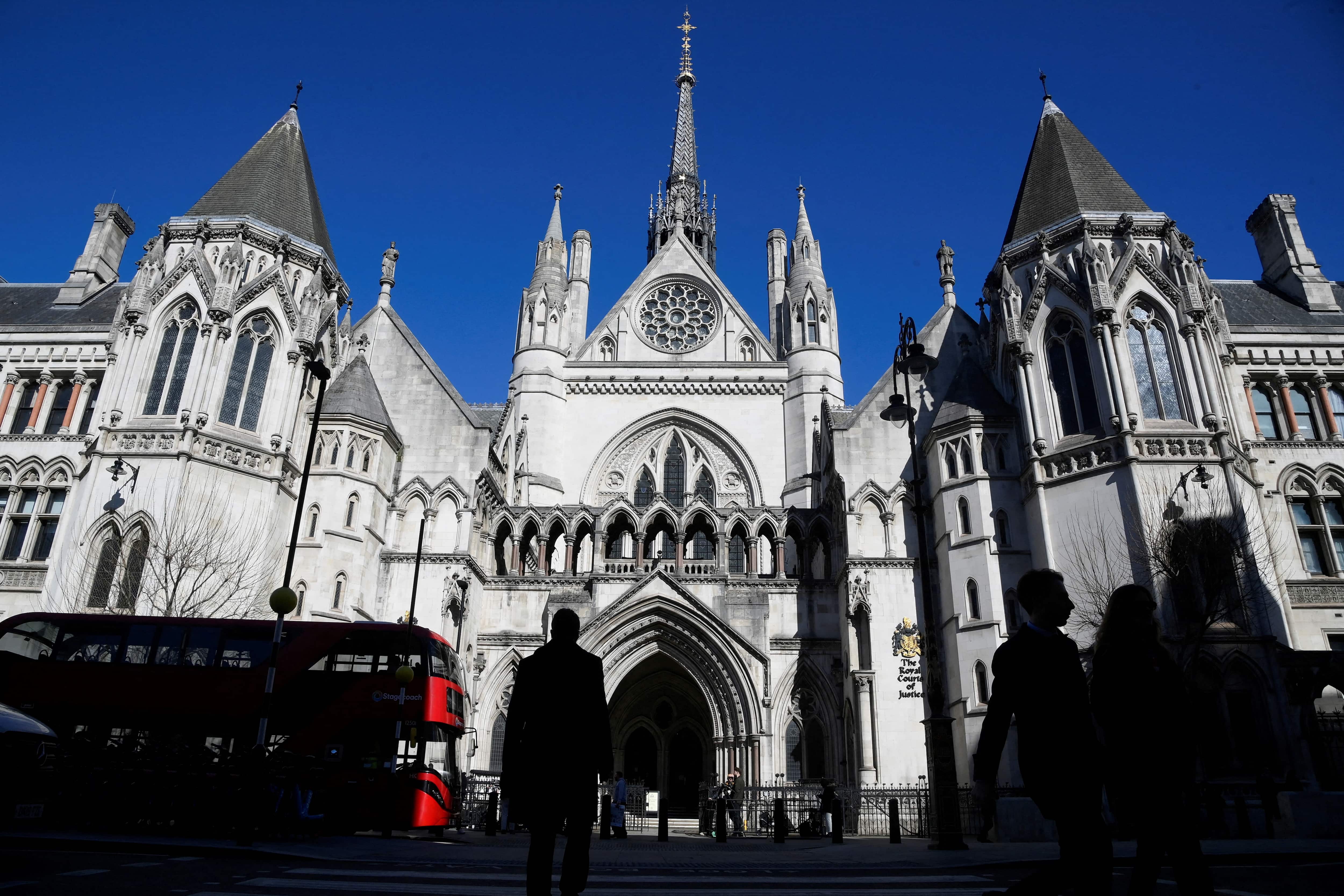
A general view shows the High Court in London, Britain
The UK Supreme Court has ruled against the notion that artificial intelligence (AI) can be recognised as an inventor for patent rights, Reuters reported on Wednesday.
The case revolved around US computer scientist Stephen Thaler, who sought to register patents in the UK for inventions generated by his AI system named DABUS. Thaler's attempt was rejected by the UK's Intellectual Property Office (IPO), which argued that patent rights should be attributed to a natural person or a company rather than a machine.
The UK Supreme Court, in a unanimous decision, dismissed Thaler's appeal, affirming that, under UK patent law, an inventor must be a natural person. While addressing the specific case at hand, Judge David Kitchin emphasised that the ruling did not address the broader question of whether technical advances produced autonomously by AI should be eligible for patents.
Thaler's legal team expressed concerns, stating that the ruling highlights the inadequacy of current UK patent law in protecting inventions autonomously generated by AI machines, potentially hindering industries reliant on AI-driven technological advancements.
The UK's IPO welcomed the Supreme Court's decision, providing clarity on the existing law regarding the patenting of AI-generated creations. Acknowledging the evolving landscape, the IPO spokesperson recognised the legitimate questions surrounding how the patent system and intellectual property, in general, should handle such AI-generated creations. The government expressed its commitment to keeping this area of law under review.
Earlier this year, Stephen Thaler experienced a similar defeat in the US when the US Supreme Court turned down his appeal against the US Patent and Trademark Office's denial of patents for discoveries produced by his AI system.
While the UK Supreme Court's ruling aligns with decisions from courts in Europe, Australia, and the US, legal experts anticipate potential changes in the medium term as AI evolves from being a tool to an agent.
Despite the current legal stance, Giles Parsons, a partner at law firm Browne Jacobson, noted that the decision is not expected to have a significant impact on the patent system at present. Parsons emphasised that as AI evolves, addressing potential challenges in patent law can be tackled when they arise.
Rajvinder Jagdev, an intellectual property partner at Powell Gilbert, highlighted that the judgment does not preclude individuals from using AI to devise inventions, provided that a natural person is identified as the inventor. In a separate case last month, London's High Court affirmed that artificial neural networks can attract patent protection under UK law.
(With inputs from Reuters)
WATCH WION LIVE HERE