Tel Aviv stock exchange denies allegations of insider trading ahead of Hamas Attack

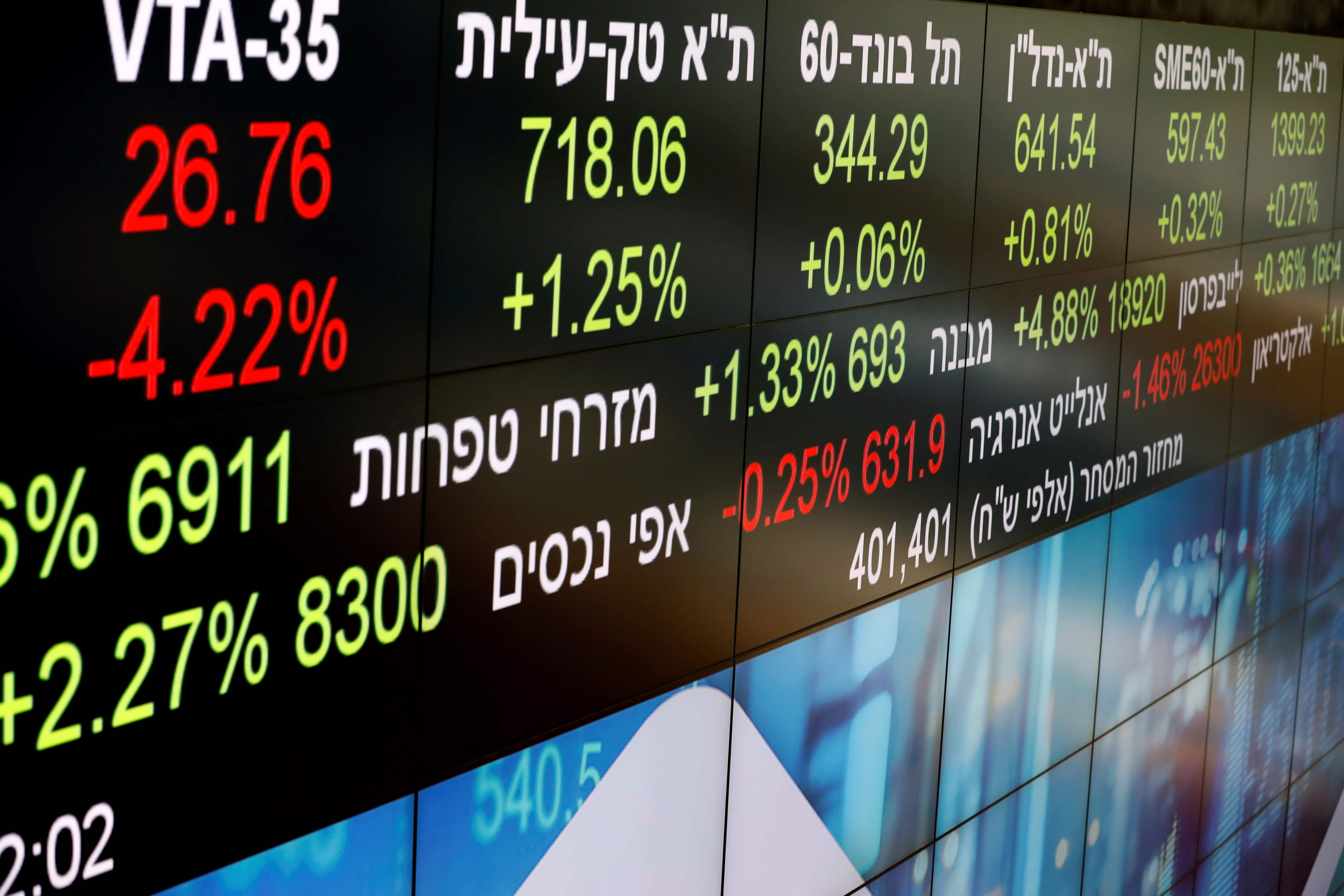
Market data is seen on part of an electronic board displayed at the Tel Aviv Stock Exchange
Responding to a report by US researchers, the Tel Aviv Stock Exchange (TASE) refuted claims of unusual trading activities beforethe October 7 Hamas attack, Reuters reported.
The study, conducted by law professors Robert Jackson Jr. from New York University and Joshua Mitts of Columbia University, alleged that certain investors in Israel may have profited from prior knowledge of the attack, citing significant short-selling of shares leading up to the event.
TASE, in a statement on Tuesday, dismissed the report as inaccurate and irresponsible, asserting that the researchers miscalculated the potential short-sale profits due to a misunderstanding of the currency in which share prices are listed.
Reuters cited, Yaniv Pagot, the head of trading at TASE, who emphasised that there was nothing unusual in short positions in the stock exchange in the two months before the attack. He noted an increase in short interest in Leumi, Israel's largest bank, in the week ending September 21, but stated that the position remained stable thereafter.
Pagot remarked, "I don't see in the data something even close to what they wrote in the paper." He also highlighted that the researchers did not consult with TASE or its members before publishing their findings.
He further downplayed concerns about the ETF and short-dated options activity identified by the researchers, expressing confusion about the theory behind it.
The Israel Securities Authority (ISA) also weighed in, stating that no significant trading abnormalities necessitating further investigation were detected in the days preceding the Hamas terrorist attack. The ISA's examinations found a decline in average short balances for shares traded on TASE during the period leading up to October 7th.
The regulator disputed the researchers' calculations, estimating the value of theoretical returns of the short balance in Bank Leumi shares to be in the tens of millions of shekels, rather than the alleged three billion shekels.
Joshua Mitts, one of the researchers, acknowledged via email that the 67-page report had been corrected to address currency issues. However, he maintained that the correction did not impact the "highly unusual" exchange-traded fund (ETF) and short-dated options activity identified in their study. The report highlighted a sudden and significant spike in short interest in the MSCI Israel ETF on October 2, based on data from the Financial Industry Regulatory Authority (FINRA).
Despite the TASE's denial, media speculation has suggested the involvement of a terror organisation in the short-selling. Pagot, however, dismissed this notion, stating that the short position in Leumi was taken by an unidentified Israeli bank known to the TASE. He emphasised the strict compliance standards of the involved bank, making it unlikely for such a position to pass through without scrutiny.
Israel's securities regulator confirmed its awareness of the report for a week and stated it is in contact with the researchers. However, the regulator declined to comment further while it investigates the TASE's rebuttal.
(With inputs from Reuters)
WATCH WION LIVE HERE