Sub-Saharan Africa faces economic slowdown as key players falter, World Bank warns

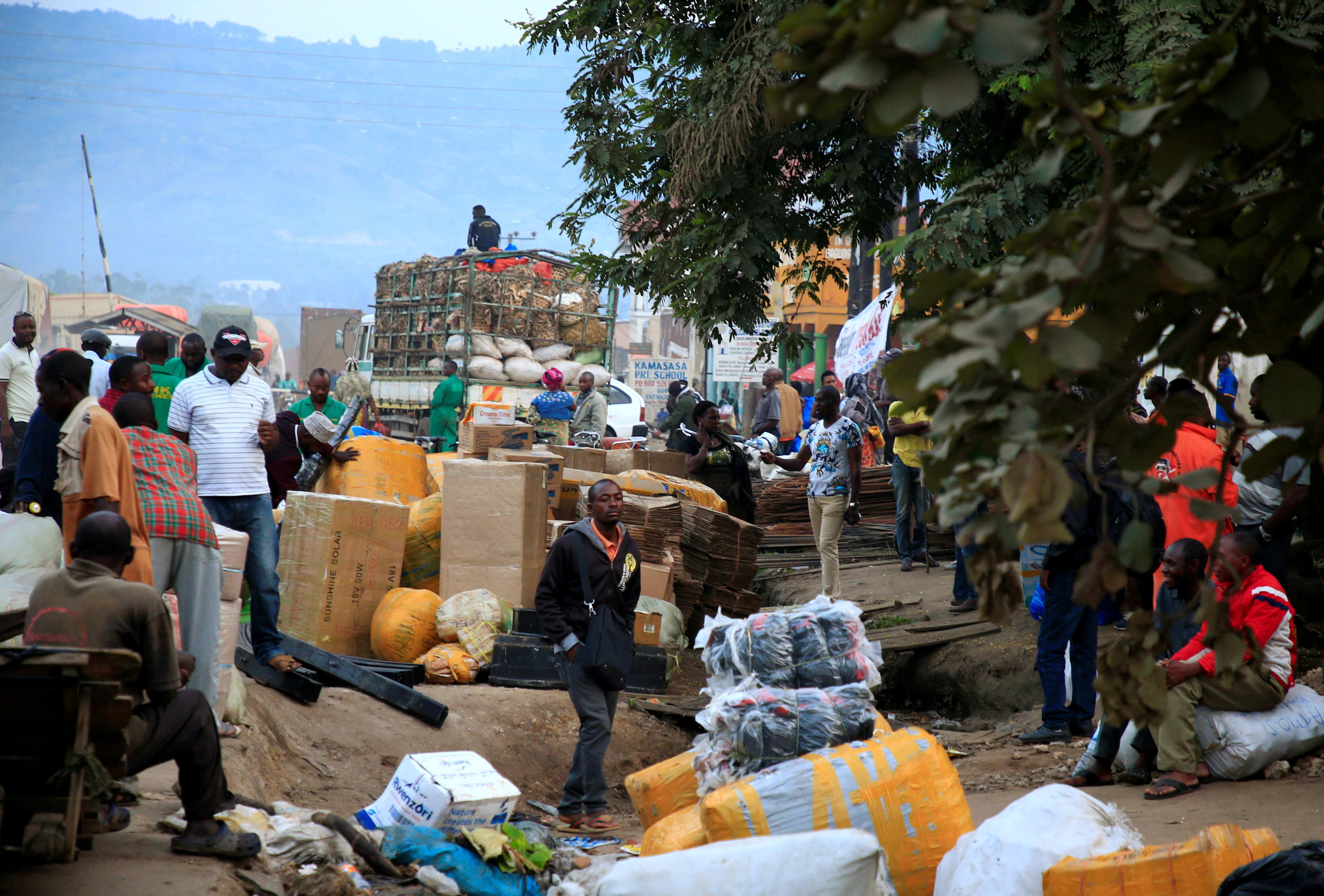
Ugandan business people are seen at a market with their merchandises for sale
The economic growth of Sub-Saharan Africa is poised to slow down this year, largely due to the underperformance of economic powerhouses like South Africa, Nigeria, and Angola, as per the latest report from the World Bank, released on Wednesday.
The report reveals that regional economic growth is expected to decrease to 2.5 per cent in 2023, down from 3.6 per cent recorded last year. However, there is hope, with projections indicating a rebound to 3.7 per cent next year and 4.1 per cent in 2025.
One concerning trend highlighted in the report is the lack of positive per capita growth in the region since 2015. Despite a rapid increase in population, economic activity in African countries has failed to keep pace. The result is a growing gap between population growth and job creation.
According to the World Bank's "Africa's Pulse" report, approximately 12 million Africans join the labour market annually, but the current economic growth patterns only generate around 3 million formal sector jobs. This, in turn, places a significant burden on the region's most vulnerable and impoverished individuals.
Reuters cited Andrew Dabalen, the Chief Economist for Africa at the World Bank, who expressed his concerns, stating, "The region's poorest and most vulnerable people continue to bear the economic brunt of this slowdown, as weak growth translates into slow poverty reduction and poor job growth."
In a worrisome trend, more than half of the region's countries, precisely 28 out of 48, have seen a downward revision in their 2023 growth forecasts compared to the World Bank's April estimates.
South Africa, the most developed economy on the continent, is expected to experience a 0.5 per cent growth this year, primarily due to its ongoing energy crisis. Similarly, top oil producers Nigeria and Angola are projected to witness growth slowdowns, with rates of 2.9 per cent and 1.3 per cent, respectively.
The report also highlights the dire situation in Sudan, where a major internal armed conflict has led to infrastructure destruction and a stagnant economy, resulting in a projected 12 per cent contraction.
Excluding Sudan from the equation, the regional growth would be slightly more promising, at 3.1 per cent.
"The region is projected to contract at an annual average rate per capita of 0.1 per cent over 2015-2025, thus marking a lost decade of growth in the aftermath of the 2014-15 plunge in commodity prices," the report stated.
Additionally, while inflation in sub-Saharan Africa is expected to decrease to 7.3 per cent this year from 9.3 per cent in 2022, it remains above central bank targets in most countries.
Moreover, recent military coups in Niger and Gabon, along with army takeovers in Guinea, Mali, and Burkina Faso, and ongoing armed conflicts in the Democratic Republic of Congo, Ethiopia, Somalia, and Sudan, have introduced additional risks to stability in Africa.
Furthermore, the mounting debt crisis is putting immense strain on the region's resources, with a staggering 31 per cent of regional revenues being consumed by interest and loan payments in 2022.
(With inputs from Reuters)
WATCH WION LIVE HERE