Starbucks misses quarterly sales targets, expects sustained rebound in China

CHina, coronavirus in china, starbucks in china
Starbucks on Tuesday released its latest quarterly earnings, impressively surpassing analysts' earnings expectations.
However, the company faced a slight setback in same-store sales, falling short of Wall Street's target at 10 per cent instead of the anticipated 11 per cent.
Nevertheless, Starbucks managed to exceed analysts' projections with adjusted earnings per share of $1, outperforming the predicted 95 cents.
The coffee chain slightly lifted its outlook for full-year earnings growth, but its shares experienced a marginal dip in after-hours trading.
The company's domestic market remains robust, though it faced a minor hiccup with same-store sales growth in North America reaching 7 per cent, falling short of the expected 8.4 per cent.
Moreover, to cater to its younger, more affluent customers in the United States, Starbucks introduced new beverages and expanded food choices, resulting in increased average customer sales.
However, quarterly transactions in North America only grew by 1 per cent, a notable drop compared to the 6 per cent increase seen in the previous quarter.
Starbucks thrives in China with 46% Sales surge
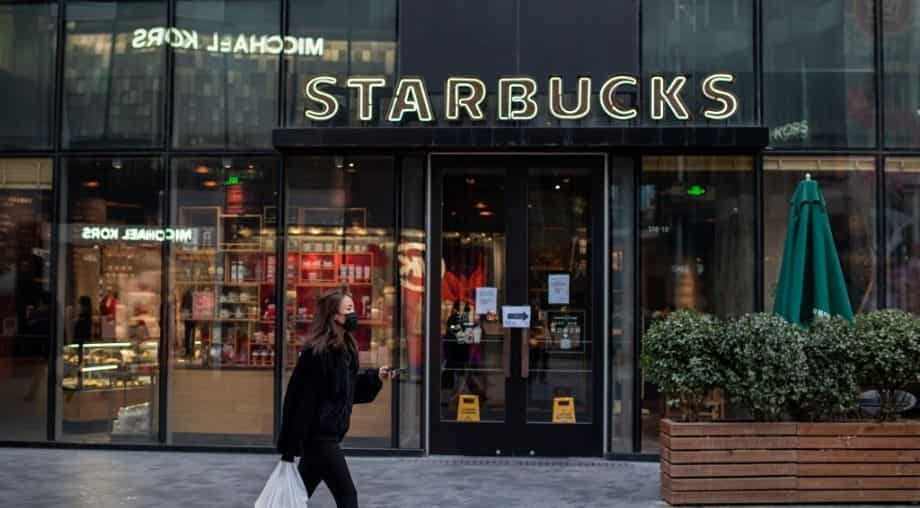
Starbucks experienced a remarkable resurgence in China, witnessing a 46 per cent surge in comparable sales during the third quarter. Corporate managers saidthat this rebound aligned with their expectations and is anticipated to continue.
As per Bank of America Global Research analysts cited by Reuters, Chinese city travel witnessed a remarkable surge of approximately 128 per cent in the third quarter, rebounding to pre-pandemic levels seen in 2019.
Starbucks projects revenue pressure.
In a meeting with investors, Starbucks officials expressed their expectation of ongoing revenue pressure in the fourth quarter, primarily driven by the at-home coffee business. They also anticipate a decrease in pricing trends after several months of price increases.
Furthermore, Starbucks achieved a global comparable sales increase of 10 per cent, slightly below analysts' forecasts of an 11.8 per cent rise, according to Refinitiv IBES data. Additionally, same-store sales grew by 24 percent in its overseas business, falling short of the projected 25.7 per cent.
Nevertheless, the company managed to enhance its adjusted operating margin to 17.4 per cent in the quarter that ended on July 2, up from 16.9 per cent in the previous year. This improvement was attributed to lower commodity prices, which helped offset the impact of increased investments in pay and worker benefits.
(Inputs from Reuters)
WATCH WION LIVE HERE