South African Election sparks financial market rally. Here are the details

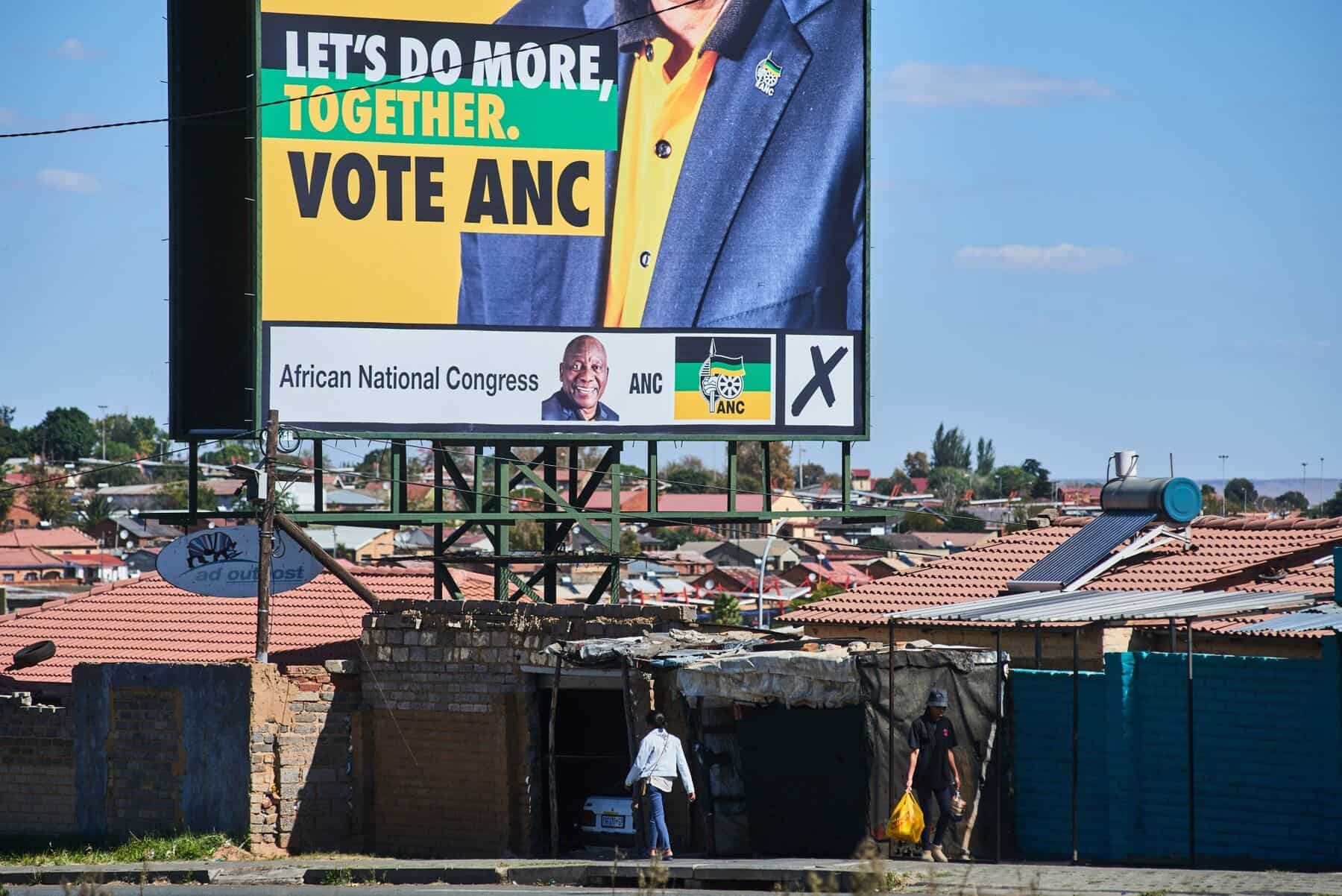
ANC Election Poster in Soweto, Johannesburg
The most crucial South African election in decades is already changing the country's financial markets, with money pouring in amid speculation that the African National Congress (ANC) will win enough votes to avoid less market-friendly policies from left-leaning coalition partners.
South African bonds received the most cash in April since Bloomberg began tracking the data in 2019, and the trend has continued into May. Stocks are at a 15-month high, and the rand is one of just five emerging-market currencies to strengthen this year.
South Africa represents a recovery tale for bullish investors. Foreign investors withdrew $50 billion during the last decade as the country struggled with power outages, corruption, and economic stagnation. Some investors, however, believe there will be a reversal.
"International equity investors are largely underweight South Africa, so their biggest risk is a positive election result driving a stronger currency and a re-rating of both our equity and bond markets," said Peter Brooke, a portfolio manager at Old Mutual Investment Group Ltd. "The low positioning and cheap assets could make this an explosive rally."
Elections around the world have had an impact on the markets. In 2023, pro-market governments in Greece and Argentina implemented economic reforms, resulting in huge returns, with an MSCI gauge of Greek shares rising 48 per cent and Argentina's index rising 67 per cent in dollar terms. South African equities have historically performed strongly after elections, with Goldman Sachs Group Inc. experts, including Sunil Koul, predicting that "election relief" might support domestic-focused companies, particularly domestic cyclicals, and banks.
However, scepticism prevails. "Those who have been disappointed have the memory of an elephant," stated Derrick Msibi, CEO of Stanlib Asset Management Ltd. "They never forget or easily relinquish their reservations, demanding compelling evidence of change." Last year, South Africa experienced a confidence crisis, with the rand falling to historic lows and bond yields rising. Nonetheless, the electricity supply has stabilised, and the government is poised to produce its first main budget surplus in 15 years.
JPMorgan Chase & Co. strategist David Aserkoff expressed cautious optimism, saying: "We anticipate that growth picks up, local bond yields fall, and the rand remains stable. If that happens, we are convinced that South Africa will significantly outperform emerging markets, reversing the previous decade's direction."
According to opinion polls, the ANC could lose its majority for the first time since 1994 in the May 29 election. However, fears of forming a government with communist parties have subsided. "Our base case remains that the ANC wins this election outright with an overall majority," said Standard Chartered Bank's head of research, Razia Khan. "If that doesn't happen, we still think it's a likely coalition with relatively benign, relatively centrist coalition partners."
The Democratic Alliance, the populist Economic Freedom Fighters, and the newly created uMkhonto weSizwe, led by former President Jacob Zuma, who is facing corruption charges, are all expected to receive large votes outside of the ANC. UBS Group AG strategists, including Manik Narain, believe local stocks may rise by 17 per cent if the ANC and the DA form a partnership.
The election premium on bonds is also decreasing. Local currency debt, which underperformed emerging markets earlier in 2024, has risen to the top ten this quarter, delivering investors a 6.3 per cent return in dollar terms. Citigroup Inc. strategists, including Bhumika Gupta, have switched overweight on the debt, expecting more inflows.
"The danger of the ANC having to team up with the EFF post-election has led to considerable underperformance in South African bond and credit markets in recent months," said Roger Mark, an emerging-markets fixed-income analyst at Ninety One." "Because we view this scenario as a tail risk only, we are turning increasingly constructive on the country's assets."
In April, Credit Agricole SA went long the rand against the dollar, with a target price of 18.60 rand per dollar. The currency has already risen above this, trading at about 18.20 on Friday. Cumesh Moodliar, CEO of Investec South Africa, stated that investors want to see sustained improvements in state-owned enterprises and important institutions, as well as successful prosecutions of individuals involved in corruption.
"None of these are out of reach of the government," Moodliar stated. "A concerted effort to follow through is probably the first requirement to rebuild confidence."
(With inputs from Bloomberg)