Sluggish growth sparks talks of rate cuts in Australia

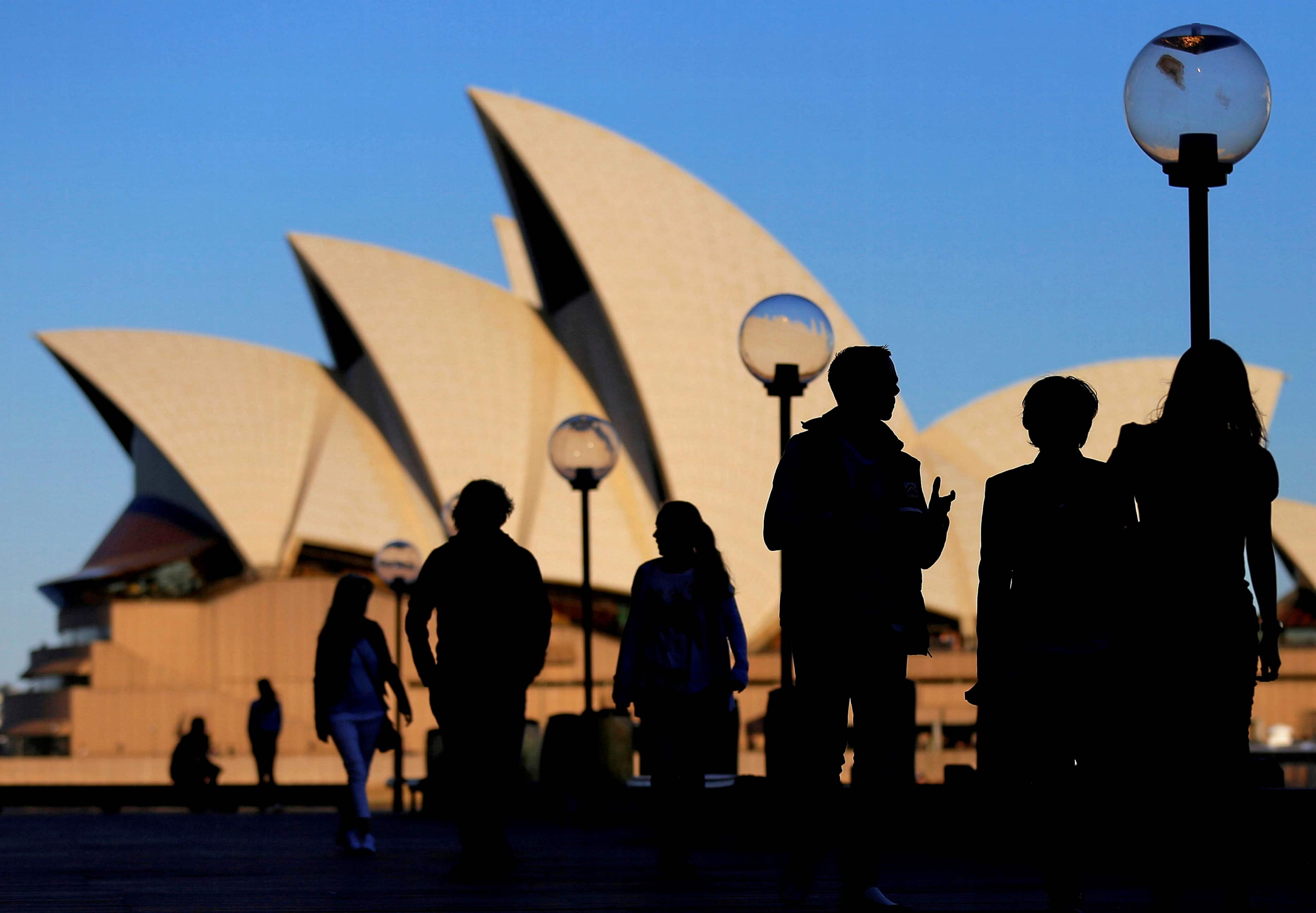
People are silhouetted against the Sydney Opera House at sunset in Australia
Australia's economy faced sluggish growth in the December quarter, as household incomes dwindled and consumer spending stagnated, signaling a potential downward shift in interest rates.
Treasurer Jim Chalmers acknowledged the economic challenges, stating that the focus is now shifting from inflation to growth.
According to data from the Australian Bureau of Statistics (ABS), real gross domestic product (GDP) expanded by a mere 0.2 per cent in the fourth quarter, falling below expectations of 0.3 per cent.
This slowdown reflects the effectiveness of high borrowing costs in curbing demand, with annual growth dropping to 1.5 per cent, the lowest since early 2021.
The softness in domestic demand was evident in household spending patterns, as essentials saw a modest increase while discretionary spending declined.
Deloitte Access Economics partner Stephen Smith highlighted the impact of higher interest rates and living costs on Australian consumers, stressing the need for policy adjustments to stimulate economic growth.
The Reserve Bank of Australia (RBA) has implemented significant interest rate hikes to combat inflation, totaling 425 basis points since May 2022.
Despite headline inflation easing to two-year lows, persistent services price pressures have kept the possibility of further rate hikes on the table.
Treasurer Chalmers noted the need for a response to the shifting economic landscape, with a potential budget announcement in May.
Globally, economic growth has slowed, with countries like Japan, Britain, and the euro zone facing recessionary pressures.
In Australia, growth has been supported by record immigration, yet per capita GDP fell by 0.3 per cent in the December quarter, marking the longest declining streak since 1982.
While the household saving ratio rebounded slightly, it remained subdued, indicating ongoing economic challenges.
Net trade emerged as a significant driver of growth, with reduced imports contributing positively to fourth-quarter GDP growth.
Looking ahead, analysts anticipate further economic slowdown before a potential recovery in the second half of the year.
Market expectations point to the possibility of the RBA implementing its first rate cut in August, signaling a shift towards growth-focused policies.
(With inputs from Reuters)