Saudi Aramco IPO institutional tranche 2.95 times oversubscribed

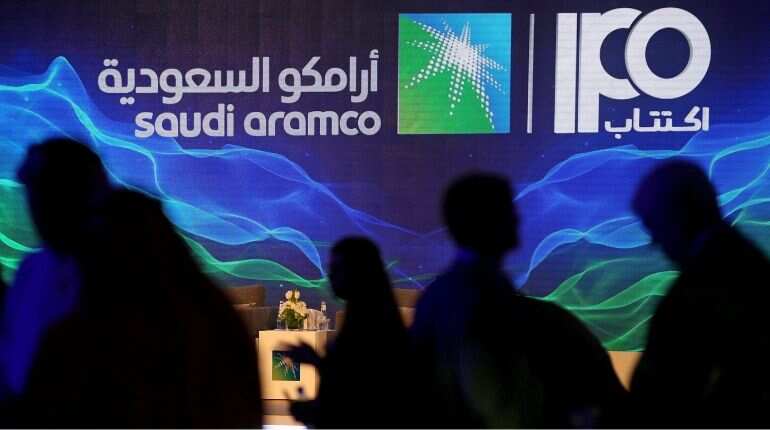
Saudi Aramco's initial public offering
The institutional tranche of Saudi Aramco's planned initial public offering (IPO) has been almost three times oversubscribed, receiving orders worth 189.04 billion riyals ($50.4 billion), financial advisers for the IPO said on Tuesday.
The book-building process for allocating shares to institutional buyers typically asset managers, insurers or pension fundsbegan on November17 and investors have until 1700 Saudi time on December4 to place orders.
Aramco plans to sell 1.5 per centof its shares in a deal that could raise up to $25.6 billion.
The state-owned Saudi oil giant has received subscription orders for around 5.9 billion shares so far frominstitutionsin the first 17 days of the IPO, Samba Capital, NCB Capital, and HSBC Saudi Arabia said.
Typically, IPOs in Saudi Arabia tend to be subscribed many times over, although the unprecedented size of Aramco's listing means it is harder to benchmark the level of demand.
The biggest IPO in Saudi Arabia, before Aramco, was for the National Commercial Bank (NCB) in 2013, which sought to raise $6 billion and was oversubscribed many times over.
Aramco has previously said 0.5 per cent of the offering will be allocated to retail investors, leaving 1 per cent or2 billion shares for institutional buyers.
The deal could be the world's biggest IPO if it tops the $25 billion listing of China's Alibaba Group Holding Ltdin 2014.
The lead managers did not provide a breakdown of the institutional investors, but in a separate statement last week Samba Capital said the bulk of orders came from Saudi companies and funds, while foreign investors accounted for just 10.5 per centof the offers as of November28.
The retail tranche, which closed on that date, attracted bids worth 47.4 billion riyals, equivalent to around 1.5 times the number of shares offered.
Riyadh scaled back its original IPO plans, scrapping an international roadshow to focus instead on marketing the offering to wealthy Gulf Arab allies. It has stayed quiet on when or where it might list the stock abroad.
The deal is the centerpiece of Crown Prince Mohammed bin Salman's plans to diversify the Saudi economy away from oil.