Decoding Russia's $11 bn end run around Western oil sanctions

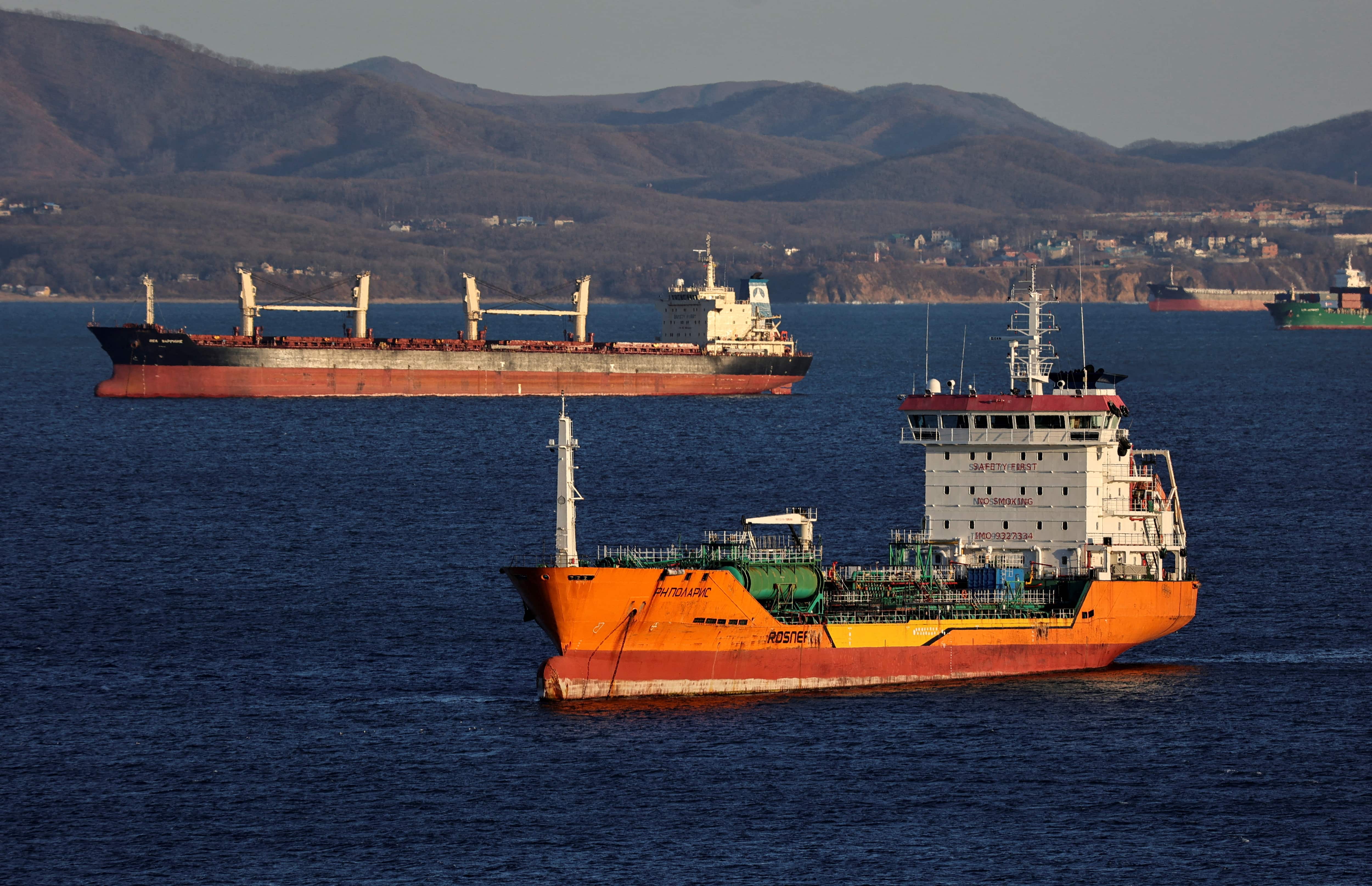
The crude oil tanker RN Polaris and a bulk carrier sail in Nakhodka Bay near the port city of Nakhodka, Russia
In a shocking revelation, Greece emerges as an unexpected hub for covert oil trading activities, defying Western sanctions against Russia.
According to Bloomberg, two aging oil tankers, the Turba and Simba, were recently caught on camera engaging in suspicious ship-to-ship fuel transfers off the Greek coast, these vessels, sailing under a flag deemed "very high risk", are part of a vast shadow fleet responsible for handling approximately 45 per cent of Russia's oil shipments this year.
The Greek-owned vessels, operating under the $60 per barrel price cap imposed by sanctions, handled more of Moscow's oil than those of any other individual country except Russia itself.
Sanctions intended to constrain, but profits escalate
The Western sanctions, designed to cut funding for Russia's military assault on Ukraine, included a $60 per barrel price cap for seaborne Russian oil. However, rather than achieving its intended goal, the sanctions have inadvertently created a lucrative business for elusive traders and shipping companies.
Bloomberg quotedEddie Fishman, a senior research scholar at Columbia University’s Centre on Global Energy Policy, as saying that without concerted action, these substandard alternatives to Western services will become a structural feature of the world oil trade.
The unexpected consequence of reshaping the financial architecture of oil and maritime trade raises concerns about environmental risks and the funds potentially flowing back into Kremlin coffers to finance the Ukraine conflict.
Greek diplomacy and regulatory powerlessness
Despite tentative Western efforts to thwart Russia's workarounds, Greece, the world's single largest oil tanker-owning nation, remains a crucial outlier. Greek-owned vessels have carried 20 per cent of all Russia's oil shipments in 2023, primarily due to diplomatic efforts that watered down measures restricting shippers' ability to trade with Russia.
While Spain successfully stamped out similar activities earlier this year, Greece claims powerlessness to prevent clandestine shipping off its coast, as these activities occur in international waters.
Shadow fleet entrenched and growing
The International Maritime Organisation (IMO) has expressed"grave concern" over the shadow fleet's illegal activities, calling for a global clampdown to prevent environmental disasters. The shadow fleet, responsible for moving about 45 per cent of Russia's oil this year, is becoming increasingly entrenched, as per Lars Barstad, CEO of Frontline Limited’s management arm.
The fear is that regulators' inability to act against these covert operations could make them a permanent feature of the global oil trade.
Shadowy traders and obscure affiliations
The sanctions' unintended consequences have seen a shift from dominant forces like Vitol Group, Glencore Plc, and Trafigura Group to an army of smaller, difficult-to-trace organisations with unclear affiliations. Entities like Bellatrix Energy and Nord Axis Ltd., previously unknown, have emerged and now handle a significant portion of Russian oil shipments.
The lack of transparency has raised concerns about the environmental and financial risks associated with these obscure traders and their involvement in the oil trade.
US and allies' response and the unanswered question
Amid increasing concerns, the US Treasury has sanctioned oil tankers and expressed a desire to push up costs for Russia. President Joe Biden's energy security adviser, Amos Hochstein, saidthat the US Treasury and others are taking measures to ensure Moscow's profits from the oil trade fall.
However, the ultimate question remains: Do the US and its allies truly want to curtail Russian oil flows, considering the potential impact on global fuel prices in an election year?
The possibility of Moscow employing workarounds, from the shadow fleet to manipulating Western service providers, suggests a complex challenge for policymakers.
(With inputs from Bloomberg)
WATCH WION LIVE HERE