Rupiah faces testing times as Indonesia gears up for elections

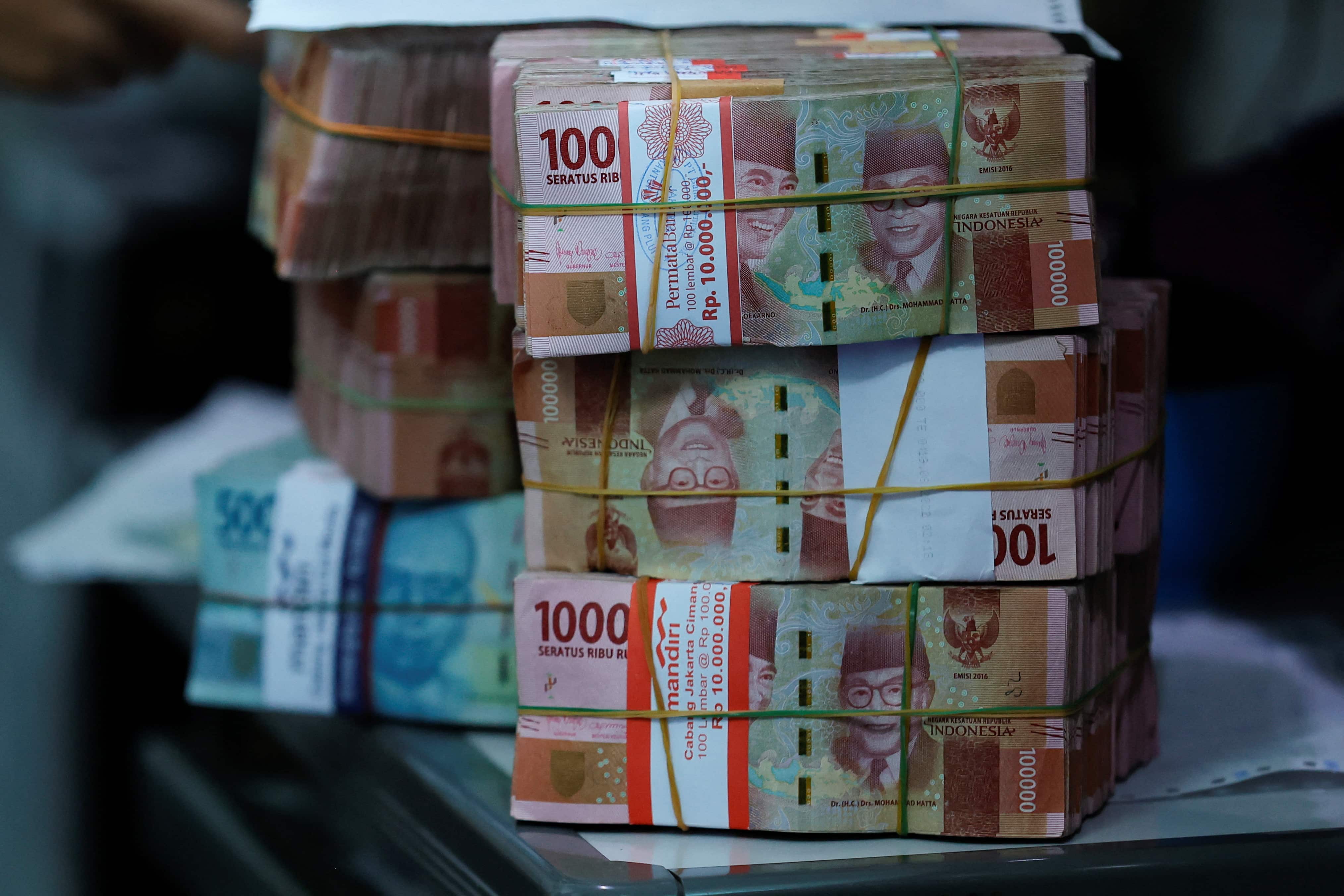
Indonesian rupiah bank notes are seen at a money changer in Jakarta, Indonesia
As Indonesia approaches its national elections in February 2024, the resilience of the rupiah is under scrutiny, with analysts predicting a potential weakening trend in the currency.
According to a Bloomberg report, BNY Mellon Corp., HSBC Holdings Plc., and PT Bank Mandiri project the rupiah to trade around 15,800 against the dollar in the first quarter of the coming year, citing historical trends and concerns over the change of leadership after a decade.
Historically, the rupiah has exhibited underperformance compared to its emerging market peers leading up to elections. Analysts point to worries about political stability and policy continuity, especially as Indonesia is on the brink of selecting a successor to President Joko Widodo after his decade-long tenure.
Bloomberg cited Joey Chew, the head of Asian FX research at HSBC, who noted, "During the past three elections, the rupiah consistently underperformed select EM peers in the four to six weeks prior."
The impact of election uncertainty is already evident in the rupiah's performance. Despite being Asia's best performer earlier this year, the currency has weakened the most against the dollar this quarter. Foreign investors withdrew nearly $600 million from Indonesian equities since October, but a cushion was provided by inflows of about $900 million in bonds.
However, Bloomberg's scorecard ranks the nation's sovereign debt near the bottom among emerging economies.
The upcoming elections hold the key to the rupiah's trajectory, with the results indicating whether the new government will adhere to President Widodo's policies that supported export earnings and reduced the current account deficit.
While leading candidates Prabowo Subianto and Ganjar Pranowo pledge to continue Widodo's economic policies, rival contestant Anies Baswedan has expressed intentions to revisit some, including plans for a new capital.
President Widodo, widely known as Jokowi, will complete his 10-year term next year. His fiscal policies successfully narrowed the fiscal deficit from pandemic-induced highs, and the economy outpaced regional peers. The official declaration of the winner is expected in March, but a runoff poll in June could occur if no candidate secures more than 50 per cent of the votes.
Aninda Mitra, head of Asia macro and investment strategy at BNY Mellon, highlights potential risks from an extended lag between elections and new government formation, which could expose the rupiah to policy uncertainty. He adds that the central bank is expected to remain on hold through the elections, providing a buffer against political uncertainty in the months ahead.
(With inputs from Bloomberg)
WATCH WION LIVE HERE