
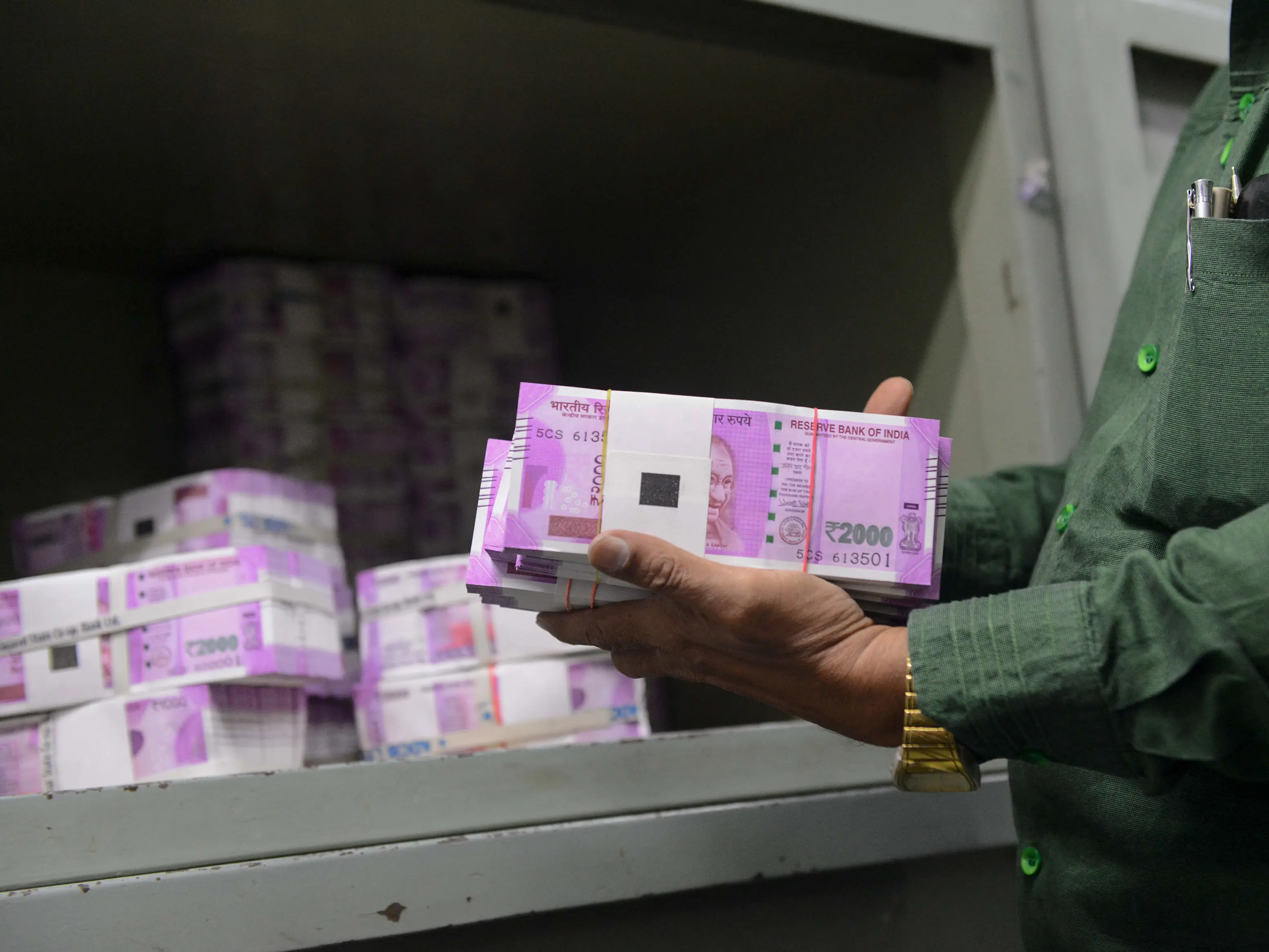
The Reserve Bank of India has issued a fresh reminder on Thursday: if a ₹2,000 note is still sitting in your drawer, it hasn't turned into paper. It remains legal tender, but it's now a relic of a currency experiment that's almost over.
The RBI reports nearly 98.5 per cent of ₹2,000 banknotes have been returned since the withdrawal was announced on May 19th, 2023. The total value of these notes has declined from ₹3.56 lakh crore, or over $3.7 billion, to just ₹5,451 crore, or about $572 million, as of April end this year.
That means barely 1.5 per cent of the original stock is still floating around with the public, a number shrinking every quarter. This is not demonetisation 2.0. Unlike 2016, when ₹500 and ₹1,000 notes were rendered worthless overnight.
The RBI's 2023 move was calculated, low-drama currency management. It did not have any midnight deadlines or queues outside ATMs. The note stays valid indefinitely, with no cutoff date set by the RBI.
But the practical channels have narrowed. Commercial banks stopped taking these notes back in October 2023.
Currently, only two routes exist. The 19 RBI issue offices scattered across the country, or India Post. One needs to mail the note from any post office to the RBI with account details, and the money lands in your bank account. The bigger signal here is about India’s cash economy itself.
High-value notes are being systematically retired in favour of digital rails. As a result, UPI transaction volumes have exploded over the same period the pink note has been vanishing.
The RBI isn't panicking about the residual ₹5,451 crore; it is just simply mopping up the balance. For anyone still holding one, there's no legal risk or no expiry clock ticking.
But every month of delay means one more trip to a shrinking list of RBI offices, or a slower postal route, to get your money back.
₹2,000: The last of the pink notes face quiet exit as RBI confirms 98.5% of currency returned

Authored By Hanshika Ujlayan
Published: Jul 10, 2026, 11:42 IST | Updated: Jul 10, 2026, 11:42 IST
&imwidth=800&imheight=600&format=webp&quality=medium "₹2,000: The last of the pink notes face quiet exit as RBI confirms 98.5% of currency returned")
Representative image. Photograph: (AFP)
Story highlights
The RBI confirmed 98.5% of ₹2,000 notes have been returned, leaving just ₹5,451 crore in circulation. They remain legal tender and can still be exchanged indefinitely via 19 RBI offices or India Post.
