Nikkei surges to near all-time high, driven by market optimism and corporate gains

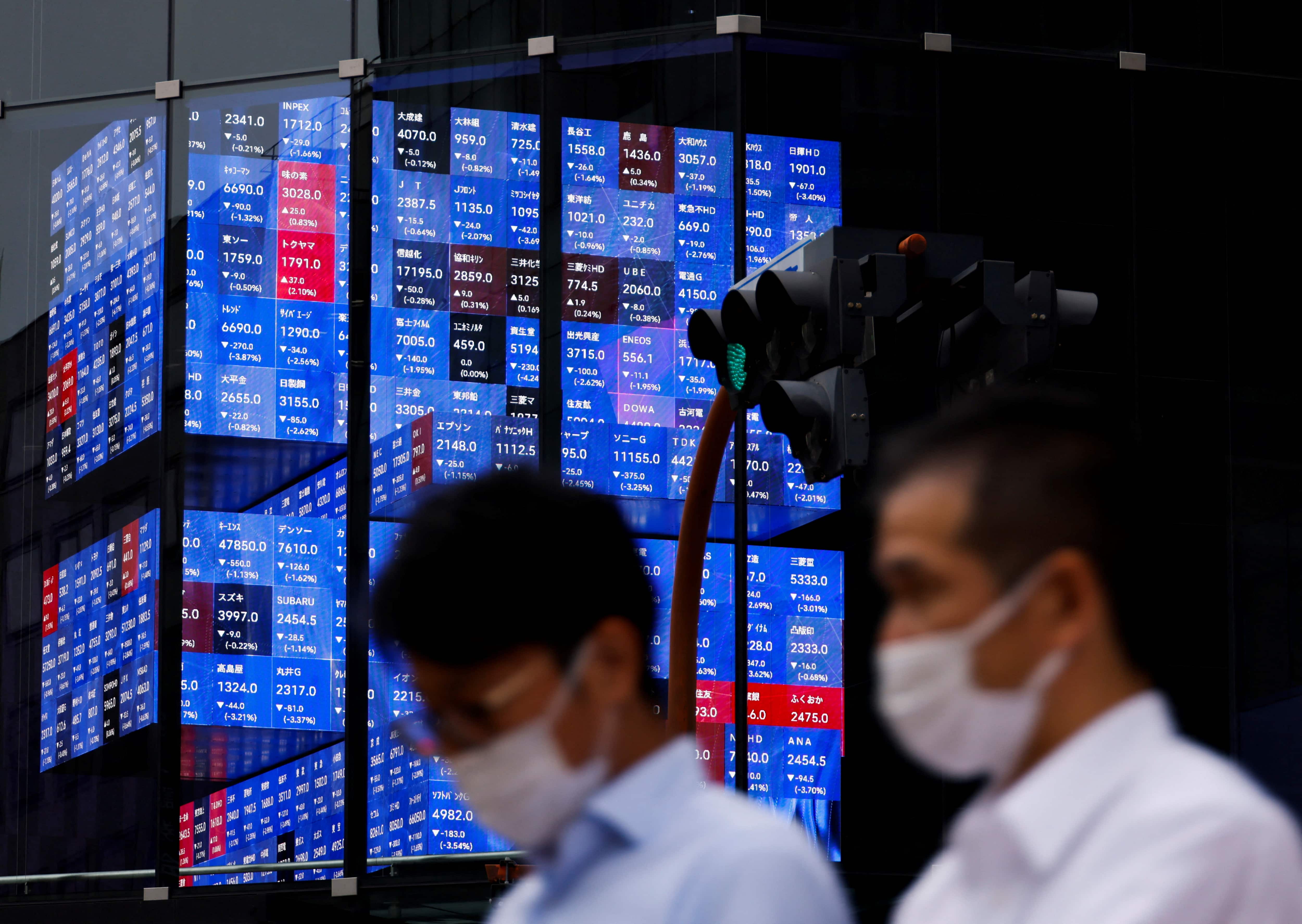
People pass by an electronic screen showing Japan's Nikkei share price index
Japan's Nikkei index surged to remarkable heights on Friday, inching closer to its all-time peak last seen during the country's economic bubble in the 1980s, signalling renewed investor confidence and buoyancy in the market.
The index soared past post-bubble records, with the Nikkei share average closing at a 34-year high of 38,487.24, reflecting a robust 0.86 per cent increase for the day, and an impressive 14.0 per cent surge year-to-date.
"The speed (at which the Nikkei is rising) is faster than I had expected, but I think it's justified" given fundamental improvements such as corporate governance reform, noted Kenji Abe, an analyst at Daiwa Securities, highlighting the market's response to structural changes within Japan's corporate landscape.
The ascent saw 190 of the index's 225 constituents advancing, indicating broad-based optimism among investors, while only 34 declined, showcasing a robust market sentiment.
Contributing to the market's bullish trajectory were key players in Japan's corporate landscape.
Heavyweights like Toyota Motor, Fast Retailing, and Recruit Holdings saw notable gains, with Toyota Motor recording a 0.95 per cent increase, Fast Retailing up by 1.08 per cent, and Recruit Holdings rallying by 4.0 per cent, bolstering overall market sentiment.
Even semiconductor equipment manufacturer Tokyo Electron, which initially struggled, managed to clinch a 0.4 per cent gain during the trading session, further underscoring the market's resilience.
Bandai Namco Holdings Inc emerged as the top performer, witnessing an 8.05 per cent surge following a previous day's downturn, signalling dynamic shifts within specific sectors of Japan's market landscape.
Moreover, the oil and coal products subindex rallied by 3.96 per cent, spearheading sectoral gains after a surge in oil prices overnight, accentuating the market's adaptability to global economic dynamics.
However, amid the market euphoria, investors remained vigilant over Japan's economic indicators, particularly in light of Thursday's unexpected revelation of the country slipping into a recession at the end of the previous year.
This development prompted scrutiny over the Bank of Japan's (BOJ) monetary policy outlook, with Governor Kazuo Ueda affirming the central bank's commitment to evaluating its monetary easing measures, including negative interest rates, as it navigates toward achieving its inflation target.
(With inputs from Reuters)