
&imwidth=800&imheight=600&format=webp&quality=medium "Jane Street to challenge India market ban, rejects manipulation claims")
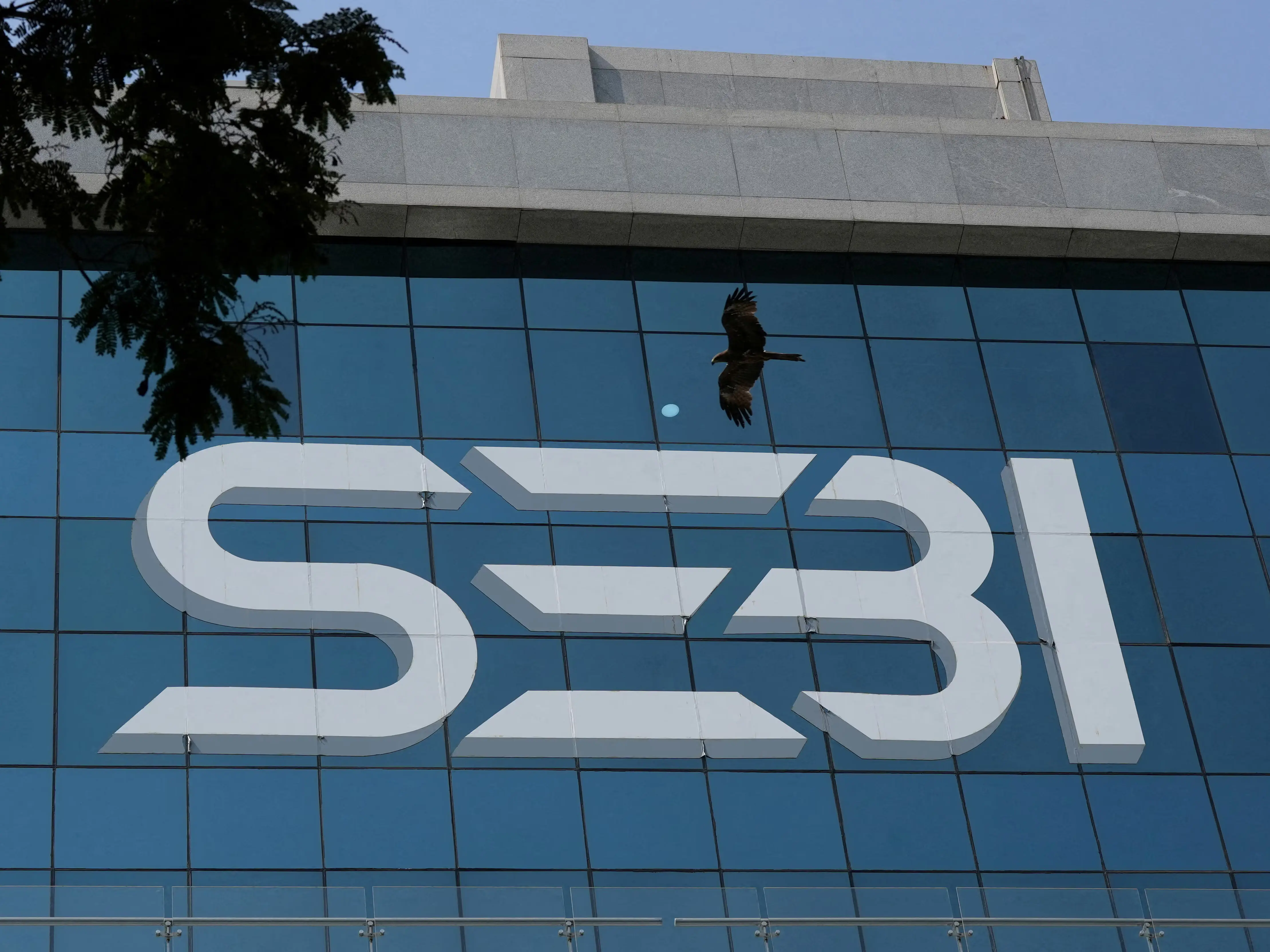
US-based high-frequency trading giant Jane Street has vowed to challenge a trading ban imposed by India’s market regulator, rejecting accusations of manipulation and insisting its activity amounted to legitimate index arbitrage.
SEBI accuses Jane Street of market manipulation
India’s Securities and Exchange Board (SEBI) on Friday barred Jane Street from buying and selling securities in Indian markets and ordered the seizure of $567 million of its funds. As per Reuters, the regulator alleges that Jane Street artificially propped up India’s Bank Nifty index during morning trading by buying large quantities of index constituents in both the cash and futures markets, while simultaneously building large short positions in index options. SEBI claims the firm allowed these options to expire or exercised them later in the day for profit.

The watchdog has been tracking Jane Street’s trading patterns for more than two years and has widened its investigation to other indices and exchanges, according to Reuters sources.
Jane Street rejects ‘inflammatory’ claims
In an internal email seen by Reuters, Jane Street told employees over the weekend that it was “beyond disappointed” by SEBI’s “extremely inflammatory” accusations and was preparing a formal response. The email characterised the contested activity as “basic index arbitrage trading,” describing arbitrage as “a core and commonplace mechanism of financial markets that keeps the prices of related instruments in line.”
Trending Stories
&im=FitAndFill=(700,400))
Why Chinese PL-15 air-to-air missiles use dual-pulse motors compared to European interceptors
)
BRICS Summit 2026: Iran's Pezeshkian praises PM Modi at BRICS
)
BRICS Summit 2026: PM Modi, Xi reach key consensus on ties, China to assume BRICS chairmanship in 2027
)
Why asking questions could be more important than memorising answers
)
How does the loss of forests affect the way wildlife lives and moves?
)
Top 5 places to visit in Goa beyond its famous beaches
)
Baba Vanga's first prophecy for 2027 is out, and straight out of science fiction
)
BRICS rejects EU carbon tax as ‘punitive’, ‘discriminatory’; warns of burden on Global South
)
Why dehydration is the hidden cause of travel fatigue on long flights
)
Did Iran President Pezeshkian touch feet of Hindu spiritual leader at Delhi event as shown in viral video?
)
From drones to KAAN fighters: Turkey outlines 229% surge in defence spending amid regional shifts
)
Why does your body need time to adjust after a long journey?
)
Frustrated man demolishes his kitchen after thousands flock to see Mother Mary his wife spotted on the wall
)
BRICS Summit 2026: Global leaders of BRICS nations attend main open session
)
Why going digital does not always mean becoming more efficient
)
Why do wild animals need quiet places to survive?
)
Ramanathaswamy temple takes centre stage as PM Modi welcomes world leaders at BRICS
)
From India, Putin warns Europe against sending troops to Ukraine, Zelensky expresses willingness to meet him at G20 Summit
)
'He is popular...': Malaysian PM Anwar Ibrahim's praise for PM Modi during bilateral meeting | WATCH
)
IND vs AFG, 1st T20I: When and where to watch live streaming in India?
)
From severe mobility problems to recovery: Madhuri the elephant’s journey of wildlife care
)
Humans may lose control of AI: Anthropic CEO calls for slowdown, Altman, Musk back him
)
Trump says Canada eager to reach a deal, it could come ‘fairly soon’ if Ottawa treats US farmers better
)
Why does your skin need protection from UV rays?
)
BRICS Summit 2026: PM Modi to hold bilateral with leaders of seven countries
)
800 million years old - Scientists discover 'fingerprints' of supercontinent Gondwana in ancient rocks
)
‘Partners, not rivals’: Xi outlines four point plan for stronger India-China ties
)
Osama Bin Laden ‘planned’ to target India, CIA reveals dozens of declassified documents
)
BRICS Summit day 1: New Delhi declaration adopted with full consensus, big diplomatic win for India
)
BRICS Summit 2026: 30+ countries seek BRICS membership
&im=FitAndFill=(700,400))
Why do air defence missiles explode near their target instead of hitting it?
)
Could staying indoors all day affect your health?
)
Who is the smiling man beside Modi, Putin and Xi at BRICS Summit 2026?
)
9-year-old Chennai prodigy clears Cambridge IGCSE grade 10 exams
)
PM Modi and China's Xi offered to help resolve Russia-Ukraine war: Kremlin
“SEBI’s order that this activity is ‘prima facie manipulative’ disregards the role of liquidity providers and arbitrageurs in markets,” Jane Street said in its message to staff, as per Reuters.
Firm denies failing to cooperate with regulators
Jane Street also rejected SEBI’s assertion that it had not adequately addressed regulatory concerns. The firm said its executives had met regulators and exchange officials multiple times. “Once again, we left this process feeling that we had reached an understanding of the concerns and reflected them in modifications to our trading behaviour,” the email said, as per Reuters.
According to Jane Street, it had continued efforts to communicate with SEBI since February but had been “consistently rebuffed.”
Explosive growth in India’s derivatives market
The dispute underscores mounting regulatory scrutiny of India’s booming derivatives market, which has seen an influx of retail investors. According to the Futures Industry Association, India accounted for roughly 60 per cent of global equity derivative trading volume in May, making it the largest such market in the world.
But rapid growth has also brought risks. Data released on Monday showed retail investors in India suffered widening losses in equity derivatives, with losses growing 41 per cent to 1.06 trillion rupees ($12.4 billion) in the financial year that ended in March.
SEBI ramps up surveillance as other firms watch
SEBI Chairman Tuhin Kanta Pandey said on Monday the regulator was enhancing surveillance to identify manipulation in derivatives trading, while adding there may not be many more cases similar to Jane Street’s. Other global proprietary trading firms active in India include Citadel Securities, IMC Trading, Millennium and Optiver, according to Reuters.
SEBI did not respond to Reuters’ requests for comment on the details of the investigation or Jane Street’s accusations of poor communication. As the standoff escalates, Jane Street’s case is shaping up as a key test of India’s approach to policing sophisticated trading strategies in a rapidly expanding market and of how global firms adapt to tightening oversight.