India urges oil producers for 'sensitivity' as prices near $90: Report

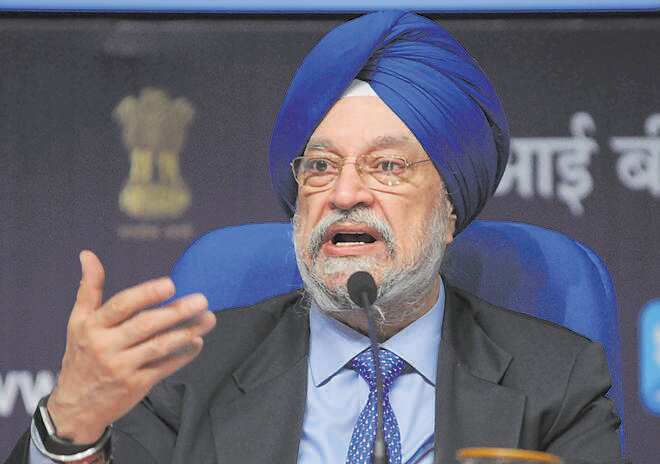
Hardeep Singh Puri
India is calling for "sensitivity" from oil producers as crude oil prices hover near $90 a barrel. This appeal comes as Indian oil minister Hardeep Singh Puri met with OPEC Secretary General Haitham Al Ghais in Abu Dhabi during an industry conference.
According to a report by Reuters, Puri emphasised the need for oil producers to consider the impact of their policies on oil-consuming countries, especially as the global economy teeters on the brink of recession.
Puri stated on social media platform X, "During the pandemic, when crude oil prices crashed, the world came together to stabilise the prices to make it sustainable for the producers. Now, as the world is at the cusp of economic recession and slowdown, oil producers need to show the same sensitivity towards the consuming countries."
The United States and Western allies have also been urging OPEC+ to increase oil output to alleviate the pressure on energy costs and support the global economy. OPEC+ producers, however, argue that they are acting preemptively to maintain market stability.
Puri later confirmed in an interview with Reuters that he had discussed oil prices with Ghais, saying, "If the petroleum and natural gas minister of one of the largest consuming countries meets the OPEC secretary-general, who has an inside track into the OPEC+, surely we discussed prices."
India, which relies on imports for approximately 85 per cent of its crude oil needs, has been closely monitoring the situation. Puri acknowledged that while India could manage if oil prices rose above $100 per barrel, such a scenario would not be "in anyone's interest." As per a Reuters report, he expressed concern for other developing nations, stating, "I hope it (oil price) doesn't go above $100 ... India will manage ... I would worry about what happens to other parts of the developing world."
In recent months, India has sought alternative sources of oil due to geopolitical tensions. After Western countries imposed sanctions on Russia following its invasion of Ukraine, Indian refiners turned todiscounted Russian oil. Puri clarified that India would continue to purchase Russian oil as long as it remained within the Western countries' price cap of $60 a barrel. He also mentioned that if the prices were to exceed the cap, it was clear that they would not proceed with the purchases.
Russian oil exports to India surge in September
Meanwhile, on a different note, Russian oil exports to India experienced a significant rebound in September. Shipments of Russian oil to India surged by 15 per cent from a seven-month low in August, driven by ample supply and attractive price discounts, Bloomberg reported.
These shipments amounted to 1.78 million barrels a day last month. Experts suggest that this trend is likely to continue, as Russia's ban on diesel exports will lead domestic refiners to reduce production, freeing up more crude for overseas markets. India predominantly purchases the Urals grade of Russian crude, which is delivered at a discount of around $4 per barrel compared to Brent, making it a more appealing option than term supplies from the Middle East.
Bloomberg cited Viktor Katona, the lead crude analyst at Kpler, who highlighted that there is "plentiful room" for Russian oil imports to increase further, especially with the potential for even greater discounts in the future as the availability of Russian crude grows. In contrast, imports from Iraq, India's second-largest supplier, rose by 9.4 per cent in September, while cargoes from Saudi Arabia, the third-largest supplier, fell by 41 per cent.
(With inputs from agencies)
WATCH WION LIVE HERE