India to assert key interests, opposes China-led investment pact at WTO ministerial meeting

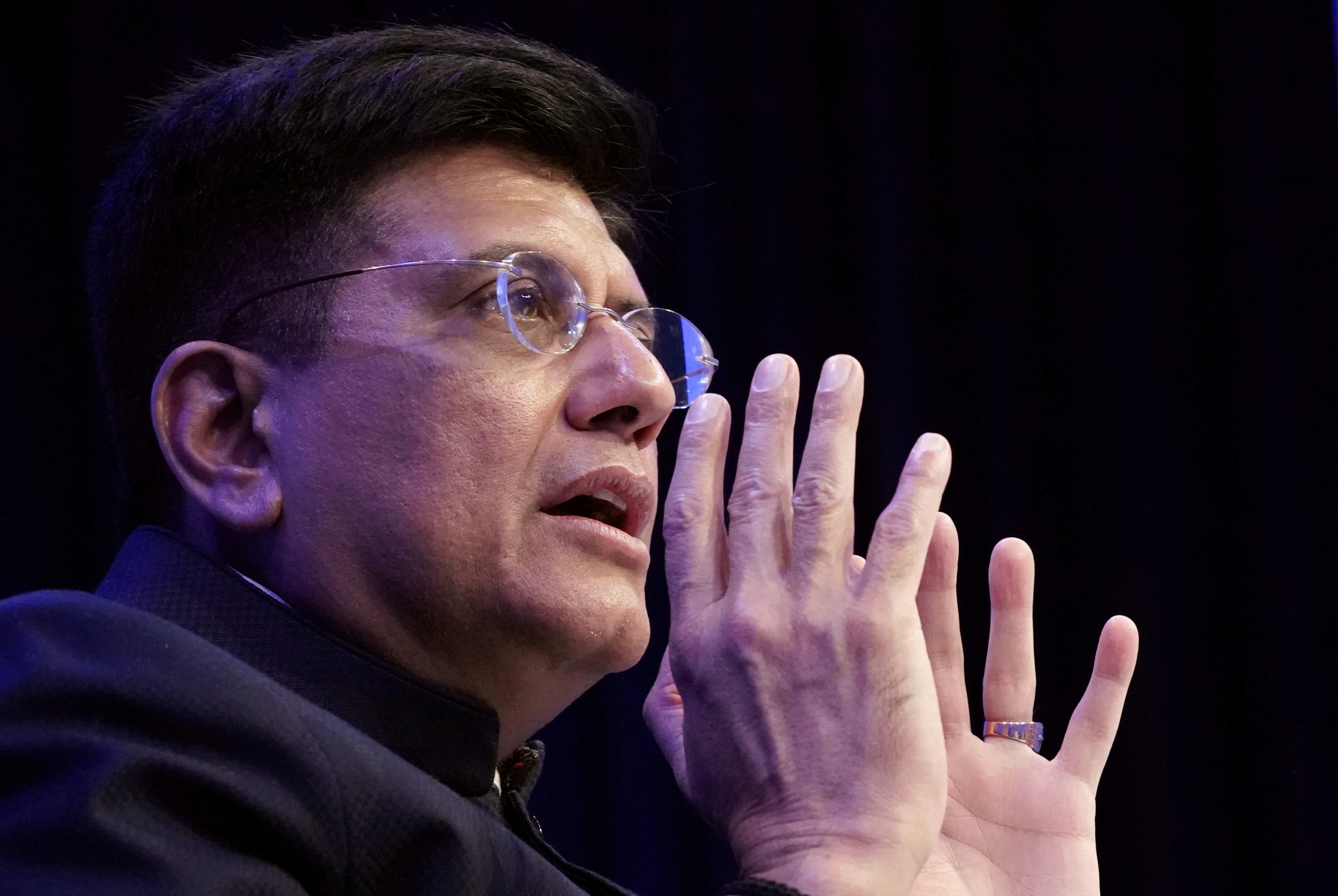
Piyush Goyal, India's Minister of Railways and Minister of Commerce and Industry
India is set to take a firm stance against a proposal led by China for an investment facilitation pact and advocate strongly for its key interests at the World Trade Organisation (WTO) ministerial meeting commencing on Tuesday.
Led by Commerce and Industry Minister Piyush Goyal, the Indian delegation aims to address critical issues concerning food security, fisheries subsidies, agricultural reforms, and e-commerce moratorium on import duties during the four-day 13th ministerial conference (MC13) in Abu Dhabi, UAE.
Piyush Goyal stressed India's commitment to finding a permanent solution to the public stock holding (PSH) issue for food security, highlighting the significance of food procurement, stockholding, and distribution in India's food security strategy.
The Indian government's procurement of crops at minimum support prices (MSP) plays a crucial role in ensuring food security for millions of vulnerable citizens, despite limitations imposed by the WTO's Agreement on Agriculture.
India is vehemently opposed to the Joint Support Initiatives (JSIs) or plurilateral agreements advocated by certain nations, particularly China.
These efforts to push for investment facilitation for development agreement at the WTO are seen as falling outside the WTO's mandate, raising systemic concerns and potentially hindering developing nations' interests in the future.
Furthermore, India stands firm on protecting farmer livelihoods and ensuring equitable market access amid calls for agricultural reforms.
Developed nations' push to reduce domestic support and increase market openness disregards the heavy subsidies they provide to their own farmers, posing challenges for India and other developing nations.
In addition to advocating for inclusive WTO reforms, India emphasises the need to revamp the Appellate Body to ensure fairness in dispute resolution.
This stance pits India against the USA's reluctance and the EU's proposal for alternate mechanisms.
Fisheries subsidies also feature prominently in India's agenda, with a focus on promoting sustainable fishing practices and protecting the interests of poor fishermen.
India advocates for a balanced approach based on the principle of common but differentiated responsibilities, urging advanced fishing nations to bear greater responsibility for overfishing and overcapacity.
The ongoing moratorium on customs duties on e-commerce trade is another contentious issue for India, which seeks its termination alongside several other developing nations.
Developed nations, however, advocate for the permanent adoption of duty-free digital transmission, setting the stage for heated debates at MC13.
India reiterates its position that non-trade issues like labour and environment should not be discussed at the WTO.
(With inputs from PTI)