German property market faces bleak outlook as TAG Immobilen warns of 30pc price decline

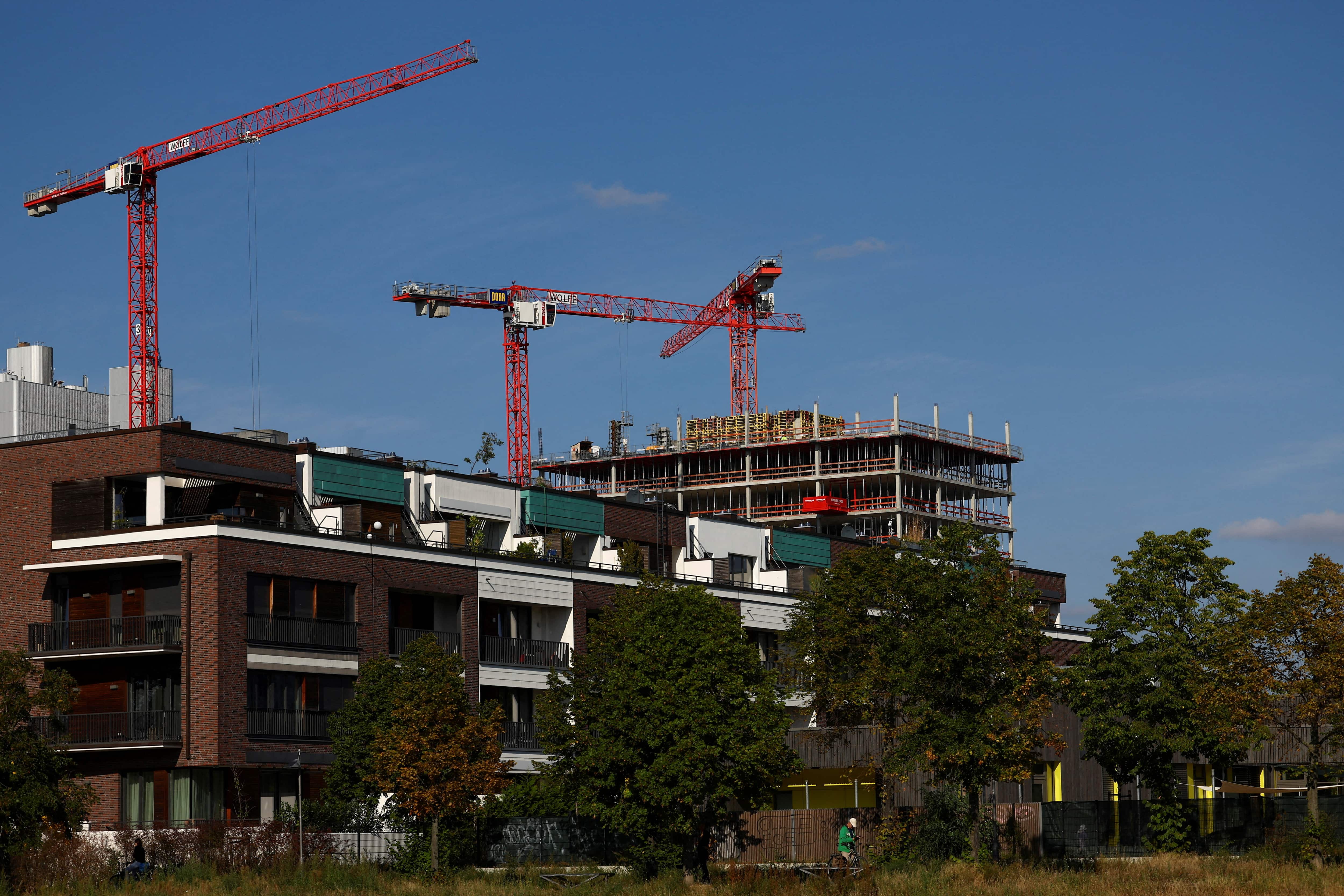
Cranes of a construction site are seen near a residential building
In a stark warning, TAG Immobilen, one of Germany's largest landlords, has forecasted that home prices in the country could plunge as much as 30 per cent below their 2022 peak, portraying a more pessimistic outlook than its counterparts.
This is based on a Reuters report.
The co-CEO of TAG Immobilen, Martin Thiel, expressed a somber view of Europe's largest residential property market, noting that while they anticipate a bottoming out at a 20 per cent decline, the company is preparing for a potential 25 per cent or 30 per cent drop.
Thiel emphasised the need for financial precautions, stating, "The balance sheet must be able to withstand that. You simply need that cushion."
Thiel's assessment contrasts sharply with the more optimistic outlook presented by Germany's largest listed property group, Vonovia.
CEO Rolf Buch expressed cautious optimism that the worst might be over for the property market, acknowledging potential lower valuations in the next half-year but suggesting a turnaround soon.
Despite a 10 per cent write-down of property value by Vonovia, Buch compared the market situation to Formula One racing, indicating an imminent acceleration after a period of braking.
Germany's property industry, valued at 670 billion euros, plays a critical role in the country's economy, contributing significantly to jobs and output.
Thiel's perspective diverges from other industry leaders, including LEG Immobilien's CEO Lars von Lackum, who remains more sanguine, stating, "The German property market is not going to implode."
While Germany experienced a property boom in recent years, a sudden rise in interest rates and building costs has led to insolvencies and frozen deals, making it the hardest-hit country in Europe in the current property market upheaval.
Thiel's comments offer a unique insight into an industry dominated by small, privately-owned companies.
The reluctance to book losses among investors and executives has been a prevailing sentiment, hoping for an improvement in market conditions.
Thiel highlighted the existing standstill in deals, with both buyers and sellers reluctant to bridge the gap in price expectations.
He mentioned, "Potential buyers know that the prices have changed. Both sides are some way apart. That is why we partially have a standstill."
Thiel admitted to misjudging the scale of the slump, leading to strategic measures such as withholding dividends, selling properties, and raising capital.
The unforeseen volatility in the market has prompted a reassessment of stability, with Thiel reflecting, "If you had asked at the beginning of 2022 whether prices for apartments... would fall by 20 per cent, I probably would have said: impossible. The business is too stable for that.”
Looking ahead, the forecast for the German property market in 2024 appears grim. Economic institute DIW predicts a decline in construction spending, marking the first decrease since the financial crisis, with stabilisation expected in 2025.
The ongoing challenges in the property sector have led to calls for emergency aid, emphasising the broader economic implications of the downturn.
(With inputs from Reuters)