G-7 trade chiefs condemn weaponisation of economic dependencies: Report

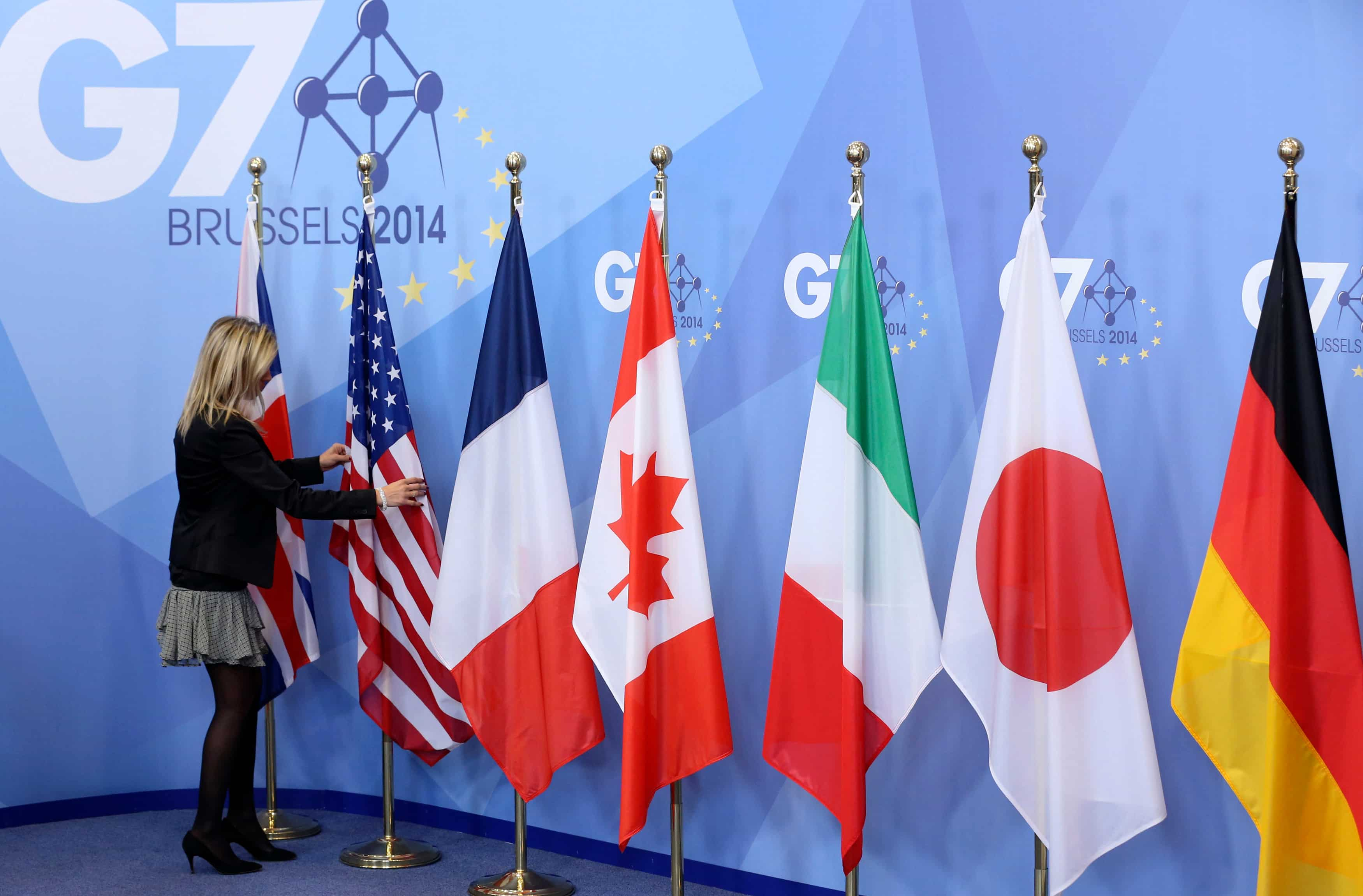
An official adjusts flags during the G7 summit.
Trade ministers from the Group of Seven (G-7)have come together to criticise the exploitation of commercial vulnerabilities by certain nations to further their policy objectives, Bloomberg reported.
In a joint statement issued after their two-day gathering in Osaka, Japan, the G-7 pledged to collaborate with developing nations to ensure the resilience of supply chains for crucial items like critical minerals, semiconductors, and batteries.
While refraining from naming specific culprits, the group voiced their disapproval of actions that weaponise economic dependencies, emphasising the need for free, fair, and mutually beneficial economic and trade relationships. They also expressed concern over the increasing frequency of economic intimidation and threats, which they believe interfere with the legitimate actions of governments.
While the statement didn't explicitly single out any countries employing these tactics, China is widely perceived as a target.
China has, in recent years, used tariffs, import bans, and restrictions against nations like Australia and Lithuania in efforts to influence policies it opposes or express dissatisfaction with foreign governments' actions.
The G-7's outreach session also included non-member nations, such as India, Indonesia, Australia, Chile, and Kenya, emphasising the importance of keeping supply chains secure and inclusive.
The COVID-19 pandemic exposed vulnerabilities in supply chains for critical items like semiconductors and medical devices, leading to concerns about overreliance on specific nations for these essential commodities. Geopolitical tensions in various regions have driven governments to employ trade barriers, sanctions, and subsidies to advance their security and diplomatic objectives. As developing nations often face pressure to align with either democratic powers or the camp led by China and Russia, the G-7's outreach to non-members reflects the evolving dynamics in global trade.
The G-7 nations pledged to promote fair competition by discouraging protectionism and market-distorting measures, noting their concern over export control measures on critical minerals.
This indirect criticism is likely aimed at China, which recently imposed export restrictions on elements essential for high-tech goods like semiconductors and electric vehicle batteries. The group called for an immediate end to measures that unnecessarily restrict trade, alluding to Chinese and Russian bans on Japanese seafood imports following the release of treated wastewater from the Fukushima nuclear power plant.
While the G-7 issued appeals for unity and joint action, there were indications of the challenges in achieving consensus, even among developed nations. The European Union's chief trade negotiator, Valdis Dombrovskis, pointed to additional demands from the United States as the reason for the failure to reach an agreement on crucial minerals. The EU and Australia are currently engaged in critical free trade talks in Osaka, with both sides warning that a failure to reach a deal now could result in substantial delays in any potential pact.
(With inputs from Bloomberg)
WATCH WION LIVE HERE