Federal Reserve treads cautiously on rate cuts amid economic uncertainty

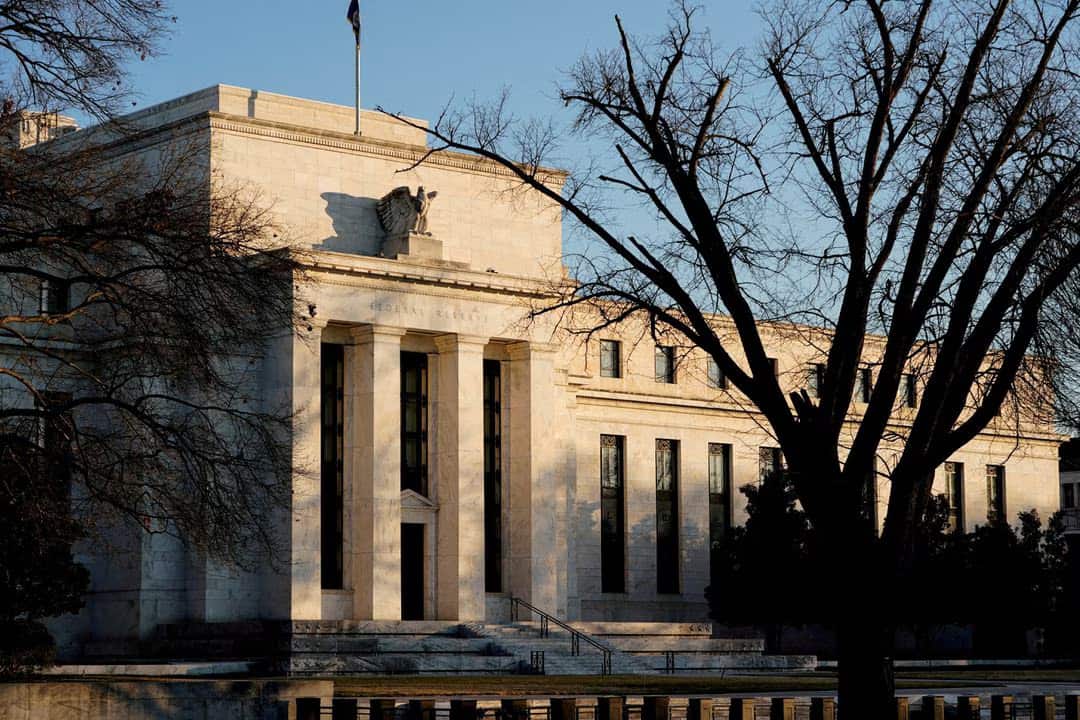
The Federal Reserve building is seen in Washington, U.S.
In a peekinto the Federal Reserve's recent discussions, the minutes of the January meeting have unveiled a predominant concern among policymakers about the potential risks associated with cutting interest rates too soon.
The minutes, released on Wednesday, indicated a broad uncertainty regarding the duration of maintaining current borrowing costs, with a focus on steering inflation back to the US central bank's target of 2 per cent.
According to the minutes, the uncertainty revolves around the timeframe required for a restrictive monetary policy stance to bring inflation back on track.
Most participants expressed apprehension about the risks associated with a swift easing of policy.
While the majority was cautious about moving too quickly, a couple of participants raised concerns about the downside risks linked to an overly restrictive stance for an extended period.
Market reactions were evident, with US stocks initially trading lower upon the release of the minutes before later recovering ground in the session.
The US dollar remained relatively stable against a basket of currencies, and US Treasury yields experienced an uptick.
The minutes echo recent statements from Fed policymakers, highlighting a measured approach towards anticipated rate cuts expected to begin later this year.
Richmond Fed President Thomas Barkin, speaking on SiriusXM, highlighted concerns about persistent inflation in service industries and housing.
He mentioned that the latest data, reflecting strong job growth and higher-than-anticipated inflation, complicates any decision on rate cuts, making it "harder".
Federal Reserve officials, including Vice Chair Philip Jefferson and Governors Lisa Cook and Christopher Waller, are expected to delve deeper into the discussion on rate cuts in upcoming speeches on Thursday.
The overall sentiment conveyed by the minutes and subsequent speeches is a cautious approach, with concerns about moving too quickly amid uncertainties.
Quincy Krosby, Chief Global Strategist at LPL Financial, emphasised the Fed's valid concerns, especially given the recent uptick in prices.
Krosby suggested that the Fed is wary of rushing decisions before confidently addressing and curbing inflation.
The minutes also shed light on the Fed's considerations regarding the balance sheet policy. "Many participants" suggested initiating "in-depth" discussions on this matter at the March policy meeting, indicating the complexity of decisions on when and how to cease reducing the size of the Fed's balance sheet.
As the economic landscape continues to evolve, investors in contracts tied to the Fed's benchmark overnight interest rate appear to anticipate a reduction in borrowing costs starting in June.
The minutes acknowledged the mixed picture since the end of January, with Treasury yields rising while stocks continued their march to record highs.
In the aftermath of the minutes, Ryan Sweet, Chief US Economist at Oxford Economics, questioned the Fed's concern about cutting rates too soon, deeming it "odd."
Sweet suggested that risks might be tilting towards overly tight policies that could potentially weigh on the economy if signs of deterioration are not addressed promptly.
(With inputs from Reuters)