Explained: US President Biden orders ban on certain US tech investments in China. Who's targeted?

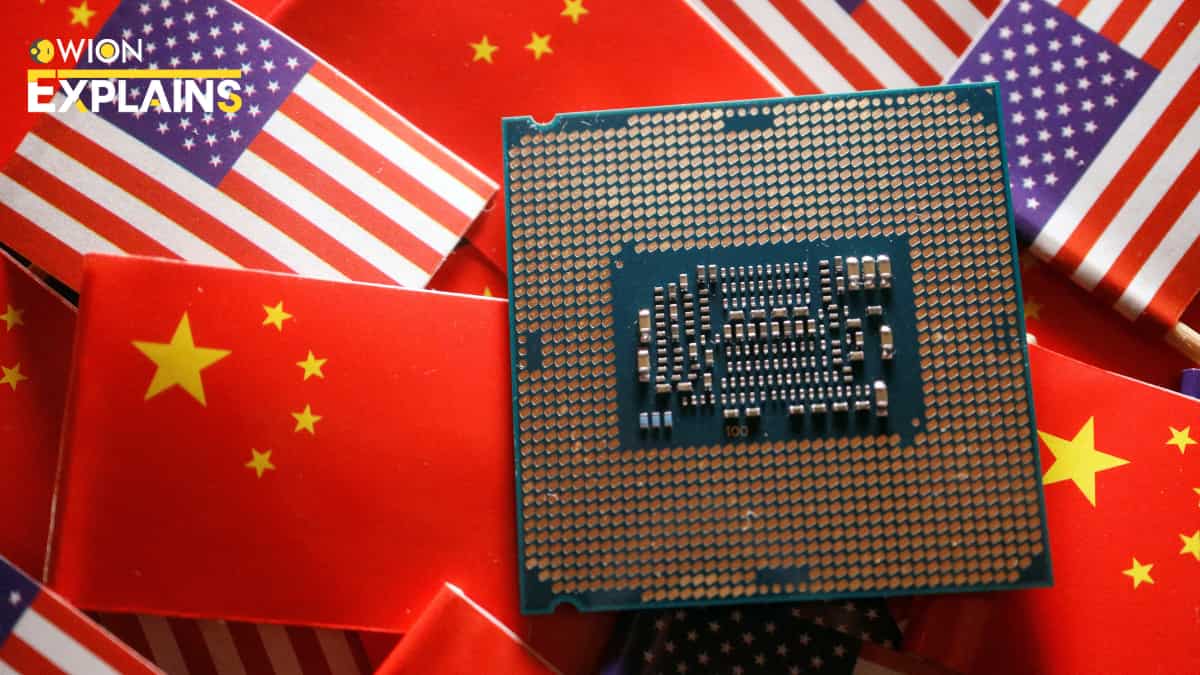
File photo.
United States President Joe Biden on Wednesday (August 9) signed an executive order that would prohibit American investments in China in sensitive technologies such as computer chips and require government notification in other tech sectors. On Thursday, the Chinese government said it was gravely concerned about the order and that it reserves the right to take measures.
In a letter to Congress, President Biden said that he was declaring a national emergency to deal with the threat of advancement by countries like China "in sensitive technologies and products critical to the military, intelligence, surveillance or cyber-enabled capabilities."
The executive order is expected to be implemented next year.
"The Order directs the Secretary of the Treasury to establish a program to prohibit or require notification of certain types of outbound investments by United States persons into certain entities located in or subject to the jurisdiction of a country of concern, and certain other entities owned by persons of a country of concern, involved in specific categories of advanced technologies and products," an official statement from the Treasury said on Wednesday.
"In an Annex to the Order, the President identified the People’s Republic of China, along with the Special Administrative Regions of Hong Kong and Macau, as a country of concern," the statement added.
Who's targeted in the executive order?
The executive order authorises the US Treasury Secretary to prohibit or restrict American investments in three sectors: semiconductors and microelectronics, quantum information technologies and certain artificial intelligence (AI) systems. The Biden administration said the restrictions would apply to "narrow subsets" of the three areas but did not elaborate.
"Among other things, Treasury seeks input on the sub-sets of national security technologies and products related to semiconductors, quantum information technology, and artificial intelligence systems," another statement from the Treasury read.
The statement said that the US benefits from an open investment climate and the new measure would not change that. "It is narrowly targeted at investments in highly sensitive technologies and products for the purposes of protecting US national security," it added.
The order aims to prevent American capital and expertise from helping China develop technologies that could support its military modernisation and undermine US national security. The measure targets private equity, venture capital, joint ventures and greenfield investments.
"This narrowly targeted action will complement our existing export control and inbound investment screening tools, and protect our national security while maintaining our longstanding commitment to open investment," the statement also said.
Regulations to only affect future investments
The White House said Biden consulted allies on the plan and incorporated feedback from the Group of Seven (G7) nations. On Wednesday, Senate Democratic leader Chuck Schumer said, "For too long, American money has helped fuel the Chinese military’s rise. Today the United States is taking a strategic first step to ensure American investment does not go to fund Chinese military advancement."
The US Treasury pointed out that the regulations would only affect future investments and not the existing ones. Officials insisted the prohibitions were intended to address the most acute national security risks and not to separate the two countries' highly independent economies.
However, the Republican party said the executive order was rife with loopholes and was not aggressive enough.
Exemptions expected
The US Treasury said that it anticipates exempting "certain transactions, including potentially those in publicly traded instruments and intracompany transfers from US parents to subsidiaries."
"Treasury welcomes comments and views from a wide range of stakeholders on all aspects of how the Secretary should implement this new program. Treasury will take this input into account as it develops draft regulations, including refining the definitions of key terms, setting forth the notification requirements, and establishing the penalty and enforcement processes for violations, among other things," Wednesday's statement further said.
How has China reacted to the executive order?
China's commerce ministry said on Thursday that the executive order affected the normal operation and decision-making of enterprises, and undermines the international economic and trade order. The ministry said it hoped that Washington would respect the laws of the market economy and the principle of fair competitionand refrain from "artificially hindering global economic and trade exchanges and cooperation, or set up obstacles for the recovery of the world economy".
The foreign ministry said that Beijing was "strongly dissatisfied" with and "resolutely" opposes Washington's insistence on introducing investment restrictions on China, having also lodged solemn representations with the US.
China urged the US to fulfil Biden's promise of no intention to decouple from China or obstruct China's economic development, the ministry added.
Meanwhile, a spokesperson from the Chinese embassy told Reuters on Thursday the White House had not heeded "China’s repeated expression of deep concerns" about the plan.
Pointing out that more than 70,000 American companies do business in China, the spokesperson said that the restrictions would hurt both Chinese and American businesses, interfere with normal cooperation and reduce investor confidence in the US.
(With inputs from agencies)
WATCH WION LIVE HERE
You can now write for wionews.com and be a part of the community. Share your stories and opinions with us here.