

&imwidth=800&imheight=600&format=webp&quality=medium "Chinese investors pivot to Indonesia amid escalating US-China trade tensions")
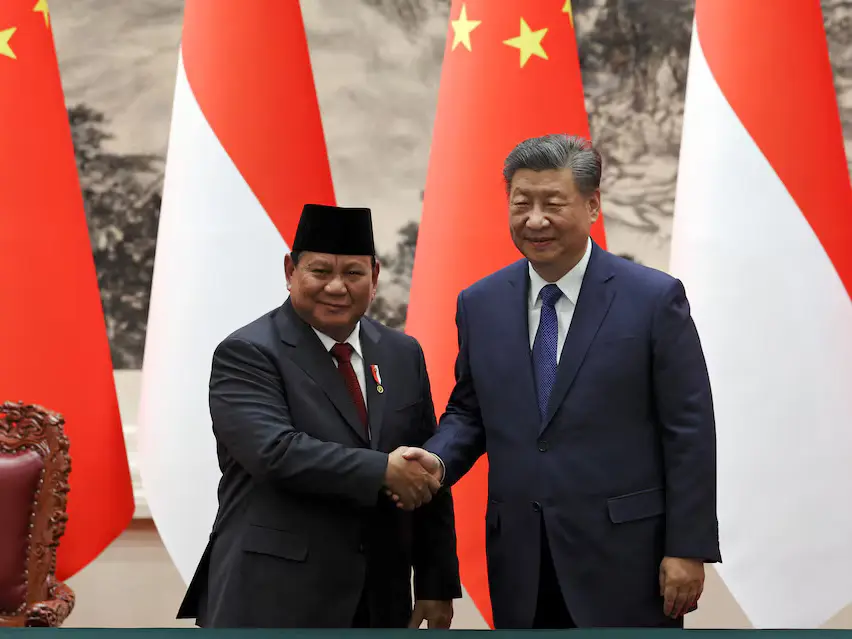
Chinese investors are increasingly funnelling capital into Indonesia to sidestep high US tariffs on Chinese goods, with inflows from China and Hong Kong rising 6.5 per cent year-on-year to $8.2 billion in the first half of 2025. The shift comes as the US maintains tariff rates exceeding 30 per cent on Chinese imports, while Indonesian exports face a comparatively lower 19 per cent rate, on par with Malaysia, Thailand, and the Philippines, and just below Vietnam’s 20 per cent.
Reutersreported that Jakarta-based Gao Xiaoyu, founder of PT Yard Zeal Indonesia, has seen a surge in calls from Chinese enterprises eager to establish operations in the country. “We have meetings from morning till night,” Gao said, noting that demand for industrial real estate has pushed up warehouse and property prices by 15 per cent to 25 per cent year-on-year in Q1 2025, marking the fastest rise in two decades.
West Java’s sprawling Subang Smartpolitan industrial park has been inundated with enquiries from Chinese manufacturers, ranging from toy makers and textile firms to electric vehicle producers. The province’s proximity to the Patimban deep-sea port is a key draw for investors seeking quick market access.
Economic growth and market potential draw foreign capital
Indonesia, Southeast Asia’s largest economy and the world’s fourth most populous nation, expanded by 5.12 per cent in the second quarter, the fastest pace in nearly two years, fuelled by robust household spending, which accounts for over half of GDP. For Chinese firms, Indonesia offers not only a production base but also a consumer market of more than 270 million people.
“If you can establish a strong business presence in Indonesia, you’ve essentially captured half of the Southeast Asian market,” said Zhang Chao, a Chinese motorcycle headlight manufacturer who has seen profit margins in Indonesia reach 20-30 per cent, compared to as low as 3 per cent in China.
Trending Stories
&imwidth=180&imheight=135&format=webp&quality=medium)
Jordan strikes 'terrorist organisations' in Syria after deadly church attack as Damascus shuts main border crossing
&imwidth=180&imheight=135&format=webp&quality=medium)
Mohra re-release in 4K: Akshay Kumar, Raveena Tandon’s film to clash with Ranbir Kapoor’s Ramayana
&imwidth=180&imheight=135&format=webp&quality=medium)
'Hire the robot, fire the human': Bill Gates's words hint at a bleak future
&imwidth=180&imheight=135&format=webp&quality=medium)
Trick or Treat -Anthropic's IPO sales pitch is the perfect Halloween scare for AI enthusiasts
&imwidth=180&imheight=135&format=webp&quality=medium)
US Midterms 2026: Last leg polls and forecasts indicate Democratic momentum, but Senate control remains uncertain
&imwidth=180&imheight=135&format=webp&quality=medium)
Hijack scare unfolds on United flight over suspicious text message. Here is what happened
&imwidth=180&imheight=135&format=webp&quality=medium)
'Already tired of his 9-to-5': Baby born with a moustache becomes internet sensation, video goes viral | Watch
&imwidth=180&imheight=135&format=webp&quality=medium)
Uttarakhand innovator Ravi Tamta builds flying car without any formal engineering degree
&imwidth=180&imheight=135&format=webp&quality=medium)
Shah Rukh Khan unveils new poster of King, Internet reacts
&imwidth=180&imheight=135&format=webp&quality=medium)
Microsoft offers voluntary exit packages to 60,000 employees in India, US, UK and Canada
&imwidth=180&imheight=135&format=webp&quality=medium)
'I've done my work sincerely': AR Rahman on facing backlash over Ramayana soundtrack
&imwidth=180&imheight=135&format=webp&quality=medium)
‘That is a miss’: Ravi Ashwin questions Sooryavanshi’s demotion to No. 3 in 2nd T20I vs NZ
&imwidth=180&imheight=135&format=webp&quality=medium)
Trump accused of 'brutal' rape by ex-Miss Switzerland; Beatrice Keul alleges 'Don's best friend' Epstein facilitated assault in 1993
&im=FitAndFill=(700,400)&imwidth=180&imheight=135&format=webp&quality=medium)
New OTT releases this week (October 26-November 1, 2026): Baththa, Akka, The One About Matthew Perry- 7 titles coming on Netflix, Prime Video and more
&imwidth=180&imheight=135&format=webp&quality=medium)
US midterms 2026: Democrat Annie Andrews gains bipartisan backing against Trump's pick Darline Graham in South Carolina Senate race
&imwidth=180&imheight=135&format=webp&quality=medium)
'Shove that ballroom up your a**': Trump heckled at Mississippi rally over White House ballroom renovations | WATCH
&imwidth=180&imheight=135&format=webp&quality=medium)
Pakistan airline PIA unveils new crew uniforms, faces online criticism
&imwidth=180&imheight=135&format=webp&quality=medium)
Maurene Comey, daughter of ex-FBI director James Comey, was unlawfully fired as federal prosecutor, judge rules
&imwidth=180&imheight=135&format=webp&quality=medium)
'He is a red flag': Ex-India strength and conditioning coach on Rohit's fitness regime
&imwidth=180&imheight=135&format=webp&quality=medium)
Storm Boelo’s fierce winds push passenger plane onto grass in UK, terrifying landing caught on cam
&imwidth=180&imheight=135&format=webp&quality=medium)
Police called after 3-year-old scores 10 goals in 12 minutes at Florida youth soccer game
&imwidth=180&imheight=135&format=webp&quality=medium)
Democrats allege 'desperate efforts to cover up' Trump's involvement in Jeffrey Epstein sex crimes, release 50-page report
&imwidth=180&imheight=135&format=webp&quality=medium)
Chris Brown given suspended eight-month jail term for London nightclub attack
&imwidth=180&imheight=135&format=webp&quality=medium)
WATCH | Virat Kohli returns to training ahead of New Zealand ODI series
&imwidth=180&imheight=135&format=webp&quality=medium)
'She is a beautiful woman': Trump mocks Mexican President Sheinbaum, mimics her voice at US Midterms rally
&imwidth=180&imheight=135&format=webp&quality=medium)
Trump’s oil and gas holdings surge to $81.6 million amid Iran war as Americans face rising fuel costs
&imwidth=180&imheight=135&format=webp&quality=medium)
Meta’s AI bet is getting more expensive: What its $95 billion share plan means
&imwidth=180&imheight=135&format=webp&quality=medium)
'Lousy president': Trump hits back at Obama over 'cheesecake factory' White House jibe
&imwidth=180&imheight=135&format=webp&quality=medium)
'Hell of a beautiful a**': Trump compliments Nicki Minaj as rapper joins him in Michigan rally
&imwidth=180&imheight=135&format=webp&quality=medium)
Zimbabwe slips four places to 14th out of 29 in Africa’s Digital Rights and Inclusion ranking
&imwidth=180&imheight=135&format=webp&quality=medium)
One dead, six injured in Elizabeth, New Jersey mass shooting; suspect flees
Mira Arifin, Indonesia country head at Bank of America, cited the country’s young, skilled workforce and favourable demographics as factors encouraging rapid scale-up by foreign investors.
Opportunities tempered by structural and geopolitical risks
Despite the optimism, significant hurdles remain. Investors point to Indonesia’s bureaucratic red tape, incomplete industrial supply chains, and infrastructure gaps. There are also domestic concerns about the over-reliance on Chinese investment in strategic sectors such as nickel, where China controls around 75 per cent of smelting capacity. President Prabowo Subianto has strengthened ties with Beijing, meeting Chinese President Xi Jinping in November 2024 and hosting Premier Li Qiang in May. However, his recent trip to Washington underscores Jakarta’s balancing act between China and the US.
The global trade environment remains volatile. Although Washington and Beijing have extended a 90-day tariff pause, uncertainty persists, with US President Donald Trump threatening to double tariffs on Indian exports. Analysts warn that global supply chains are undergoing significant realignment, with Indonesia emerging as a prime beneficiary, provided it can address regulatory and logistical constraints. As Chinese firms race to secure land and facilities, Indonesia’s challenge will be to convert this wave of interest into sustainable, long-term economic gains without compromising strategic autonomy.
(With inputs from agencies)