China's exporters on the brink as prolonged deflation threatens survival

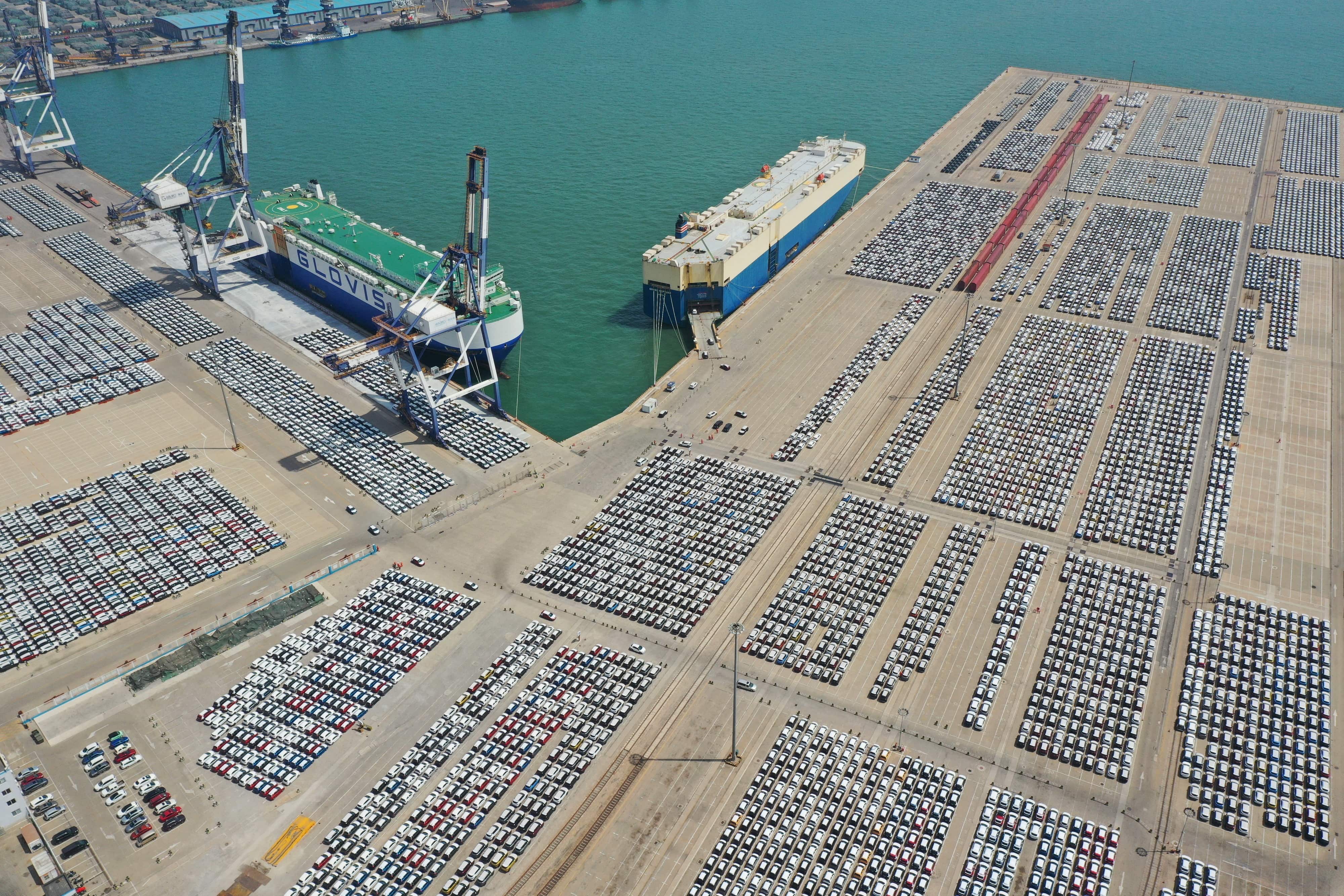
An aerial view shows cars for export at a port in Yantai, Shandong province, China May 3, 2023.
China's exporters, particularly smaller enterprises, find themselves at a crossroads as prolonged factory deflation takes a toll on profit margins. Fierce price wars and shrinking business opportunities, exacerbated by higher interest rates abroad and growing trade protectionism, have left many exporters grappling with difficult choices.
Reuters cited Kris Lin, an owner of a lighting factory, who highlighted the dilemma, stating, "It was impossible for me to lose this order." The relentless price competition poses a threat not only to individual businesses but also to the broader economic landscape in China.
Survival struggles for small exporters
Smaller Chinese exporters, locked in relentless price wars, are facing an uphill battle for survival. The continuous fall in producer prices, persisting for 15 consecutive months, has severely impacted profit margins, risking industrial output and jobs. The economic challenges compound existing issues like a property crisis and a debt crunch.
Raymond Yeung, Chief China Economist at ANZ, emphasised the urgency of addressing deflation as a higher policy priority than achieving expected growth targets. Yeung warned of a potential vicious cycle, where companies cut prices, leading to staff salary reductions and subsequently hampering consumer spending.
Impact on industrial profits and economic growth
China's industrial profits experienced a 2.3 per cent decline in the previous year, adding to the 4 per cent drop in 2022 due to the COVID-19 pandemic. Manufacturing activity has been contracting for four consecutive months, with export orders shrinking for ten months straight.
The challenging economic landscape has led to a decline in profits, prompting the need for policymakers to consider alternative strategies to stimulate growth. Louis Kuijs, Asia-Pacific Chief Economist at S&P Global, underscored the importance of balanced growth to alleviate downward pressure on prices and margins.
Financial resources and the broken monetary policy link
China's focus on channelling financial resources into the manufacturing sector, rather than consumers, has raised concerns about overcapacity and deflation, even in booming higher-end sectors. Smaller firms are hesitant to take on loans to finance new business, contributing to what economists view as a broken link in China's monetary policy. Investment by private companies dropped 0.4 per cent last year, while state investment rose 6.4 per cent, indicating a growing inefficiency in the monetary policy framework. The intensifying competition in various industries, described as a "rat race" by an executive in the automotive molds sector, further complicates the situation. (Reuters)
The urgency to address deflation and preserve jobs
China faced a deflationary scare in 2015, primarily in state-dominated primary industries like steel. However, the current scenario involves a surplus in the private sector, with electronics, chemicals, and machinery makers being particularly affected.
The pressure to cut jobs is intense, and factory owners are grappling with difficult decisions. Miao Yujie, an e-commerce clothing exporter, noted the anxious calls from bank managers offering loans but highlighted the impracticality for smaller firms to borrow amid fierce competition.
(With inputs from Reuters)