China’s economic growth lags Asia-Pacific region for first time in 30 years: Report

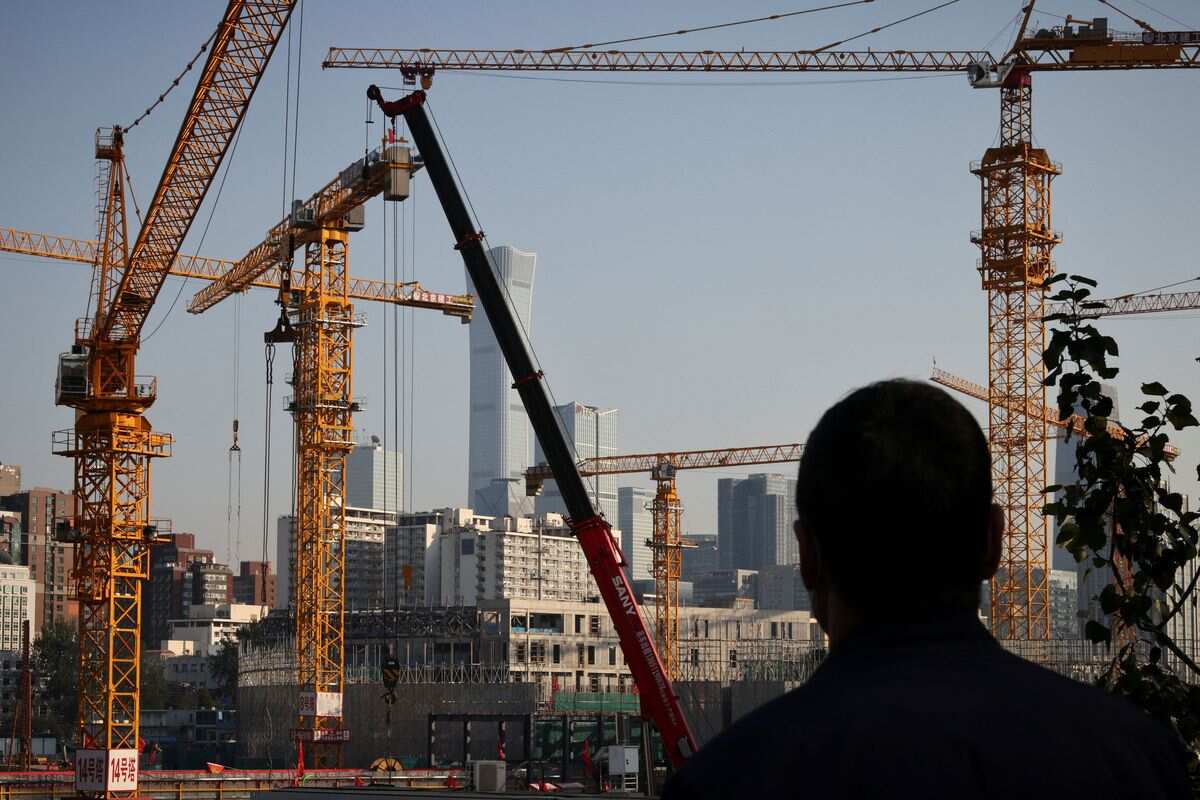
A person looks towards cranes in front of the skyline of the CBD in Beijing
Covid-zero policies and the property market crisis have caused China's economic development to lag behind that of the rest of Asia-Pacific for the first time in more than 30 years, as perWorld Bank predictions.
The US-based organisation stated in a biannual study released on Tuesday that the region of East Asia and the Pacific's yearly growth outlook had been revised downward from 5 per centto 3.2 per cent. However, since China accounts for 86 per centof the region's economic production, a large portion of that decline was caused by China's economic problems.
The second-largest economy in the world, China, was predicted by the World Bank to grow its GDP by just 2.8 per centin 2022, while the other 23 countries in the region were predicted to see average growth of 5.3 per cent, which would be higher than the 2.6 per centgrowth seen in 2021. For the first time since 1990, China's GDP growth lagged behind that of its neighbours due to its distinct path.
According to the World Bank, the increase in the Asia-Pacific was being driven by high commodity prices and a post-pandemic recovery in domestic consumption. However, the World Bank reported that China's tight adherence to its zero-Covid policy had affected the industry as well as domestic sales and exports.
Conditions have gotten worse due to a crisis in China's housing and real estate development industries. According to government statistics, new home prices in 70 Chinese cities decreased by a worse-than-anticipated 1.3 per centin August compared to the previous year, and almost a third of all property loans are now categorised as bad debts.
According to Chinese government statistics, the country's annual GDP growth in 2021 was 8.1 per cent, the strongest rate in a decade, and 5.5 per centwas forecast for 2022. Prior to Tuesday's announcement, the World Bank had predicted a decline this year, with a growth of only 5 per cent. The second-largest economy in the world was projected to increase by 4.5 per centin 2023.
(with inputs from agencies)