China unveils rate reform to steer funding costs lower for firms

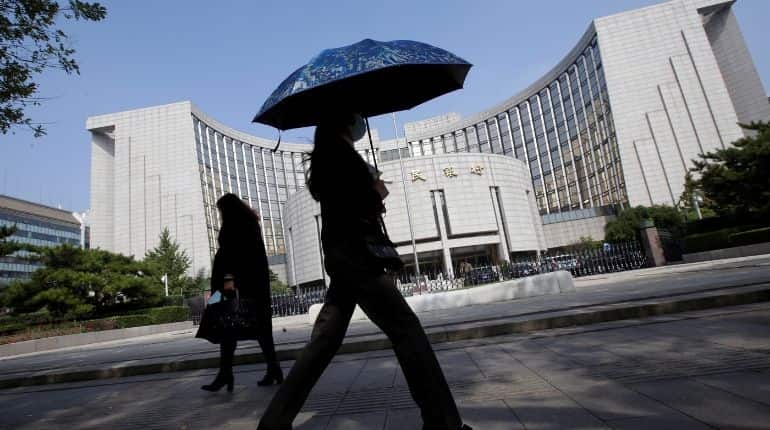
People's Bank of China
China's central bank unveiled a key interestratereformon Saturday to helpsteerborrowingcostslowerfor companies and support a slowing economy that has been hurt by a trade war with the United States.
The People's Bank ofChina(PBOC) said it will improve the mechanism used to establish the loan primerate(LPR) from this month, in a move to furtherlowerreal interestrates for companies as part of broader marketreforms.
Analysts say the move, which came after data that showed weaker than expected growth in July and followed a cabinet announcement on Friday, underscores the government's attempts to usereforms to support a slowing economy.
"Byreforming and improving the formation mechanism of LPR, we will be able to use market-basedreformmethods to helplowerreal lendingrates," the PBOC said in a statement published on its website.
The central bank will "deepen market-based interestratereform, improve the efficiency of interestratetransmission, andlowerfinancingcostsof the real economy," it said.
Chinese banks' new LPR quotations will be based onrates of open market operations, and the national interbankfundingcentre will be authorised to publish theratefrom August 20, the PBOC said.
It added theratewill be published every month on the 20th, effective this month.
Banks must setrates on new loans by mainly referring to the LPR and use LPR as the benchmark for setting floating lendingrates, the PBOC said, adding that banks will be barred from setting any implicit floor on lendingrates in a coordinated way.
The central bank said five-year and longer tenors will be added to the existing one-year LPR, which will help banks setrates on long-term loans such as mortgages.
Chinawill add eight small banks, including two foreign-funded banks, to the existing 10 nation-wide banks that will be allowed to submit LPR quotations, the central bank said.
The move followed pledges fromChina's State Council on Friday that the country will rely on market-basedreformmeasures to helplowerreal interestrates for companies.
The central bank said that it will strengthen its supervision on banks'ratequotations and punish banks for irregularities that disrupt the market order.
The central bank will incorporate the LPR application into its macro-prudential assessment (MPA) to urge banks to use LPR pricing.
SHARPER SLOWDOWN
This week's data broadly showedChina's economy stumbled more sharply than expected at the start of the third quarter, as the intensifying trade war with the United States took a heavier toll on businesses and consumers.
Second-quarter economic growth slowed to a near 30-year low.
Tang Jianwei, an economist at Bank of Communications in Shanghai, said thereformcould be seen as a guidedratecut as PBOC can guiderates of its open market operations, which will be closely followed by the LPR.
"The tool (LPR quotationreform) equals to a guidedratecut, and is only pushed out by the PBOC at crucial moments," said Dai Zhifeng, an analyst with Zhongtai Securities Co.
The central bank has pledged to gradually unify two interestrate"tracks" - its market-basedrates developed in recent years and its benchmark bank deposit and lendingrates.
Analysts say the new LPRratewill belowerthan the current level, but they are divided over the scope of reductions on borrowingcostsforfirms.
To free up funds for lending and to accommodate local government project financing, most analysts still expect the central bank will cut banks' reserve requirement ratios (RRR) further in the coming months, on top of six reductions since early 2018.
Sources have told Reuters that more aggressive action such as interestratecuts are a last resort, as it could fuel a sharper build-up in debt.
In July, central bank head Yi Gang saidChinawould keep its benchmark depositratefor a relatively long time but would phase out its benchmark lendingratein the push to unify the benchmark lendingrateand market-basedrates.
China's banks currently price their loans based on the benchmark lendingratethat has been kept unchanged since October 2015, hampering the central bank's efforts tolower borrowingcosts.
The PBOC launched the LPR in 2013 to reflectrates that banks charge their best clients.
But the LPR has been reacting little to market demand and supply, with the one-yearrate currently at 4.31 per cent, versus benchmark one-year lendingrateof 4.35 per cent.
China's short-term money market rates have been falling more quickly in recent months due to the central bank's cash injections.