China slides towards deflation, with breakfast buffets costing just 40 cents

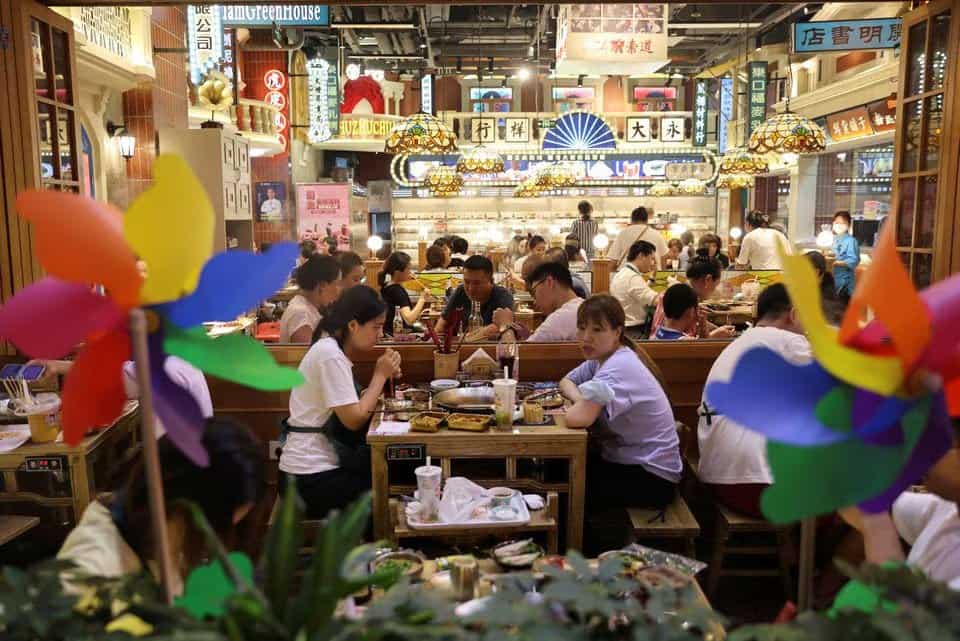
Customers dine at a restaurant in a shopping area in Beijing
At Nanchengxiang restaurants in Beijing, diners can treat themselves to a large breakfast buffet with three types of rice porridge, sour and spicy soup and milk at just 3 yuan ($0.40).
"Many good, cheap choices popped up during the pandemic," Gao Yi, aged 71, told Reuters while he ate breakfast with his grandson in one of the chain's 160 locations in the Chinese capital.
"Not all of them last. But there are new good deals all the time; you just have to go out to find them."
Deflation in China appears like that.
A price war among lower-end restaurant chains in China is fueled by a lack of consumer demand, which analysts warn might hurt smaller firms already trying to compete with the discounts provided by larger players.
Deflation can hinder economic growth, as seen in Japan in the 1990s.
"Good deals are needed to get consumers through the door, so there is a lot of pressure on these businesses to find margins," Ben Cavender, the managing director at China Market Research Group in Shanghai, told Reuters.
People in China were mostly left to fend for themselves financially throughout the pandemic, unlike residents of Western nations, with government assistance focused primarily on the industrial industry. As some economists had feared, there was no immediate consumer splurge after the restrictions were lifted.
Spending appetites remain less, and confidence is low in an economy that has not been expanding. This is because earnings and pensions have stayed the same while employment remains unpredictable.
"Discount strategies, offering consumers a more value-for-money choice, match the current economic situation," Reuters quoted Zhu Danpeng, a food and beverage analyst and deputy head of the Guangdong Provincial Food Safety Promotion Alliance.
Staff reported that the central Nanchengxiang outlet was crowded on Thursday, as it has been each morning since the 3 yuan discount was introduced in May. Reuters questioned the company about its profit margins and business plan, but they did not receive a response.
The staff of the Beijing-based burger chain Xishaoye has similarly advertised decreased prices, claiming that some menu items will cost as little as 10 yuan. Burgers, snacks, and drinks are available on the menu at KFC operator Yum China for 19.9 yuan.
"Traffic is back, but spending per person has dropped," Joey Wat, Yum's chief executive officer, told Reuters.
"In our minds, the pandemic seems like it happened a long time ago. It actually hasn't. People need time to adjust," Reuters quotes another source.
WATCH WION LIVE HERE