Brazil shifts focus to new markets amid EU deadlock

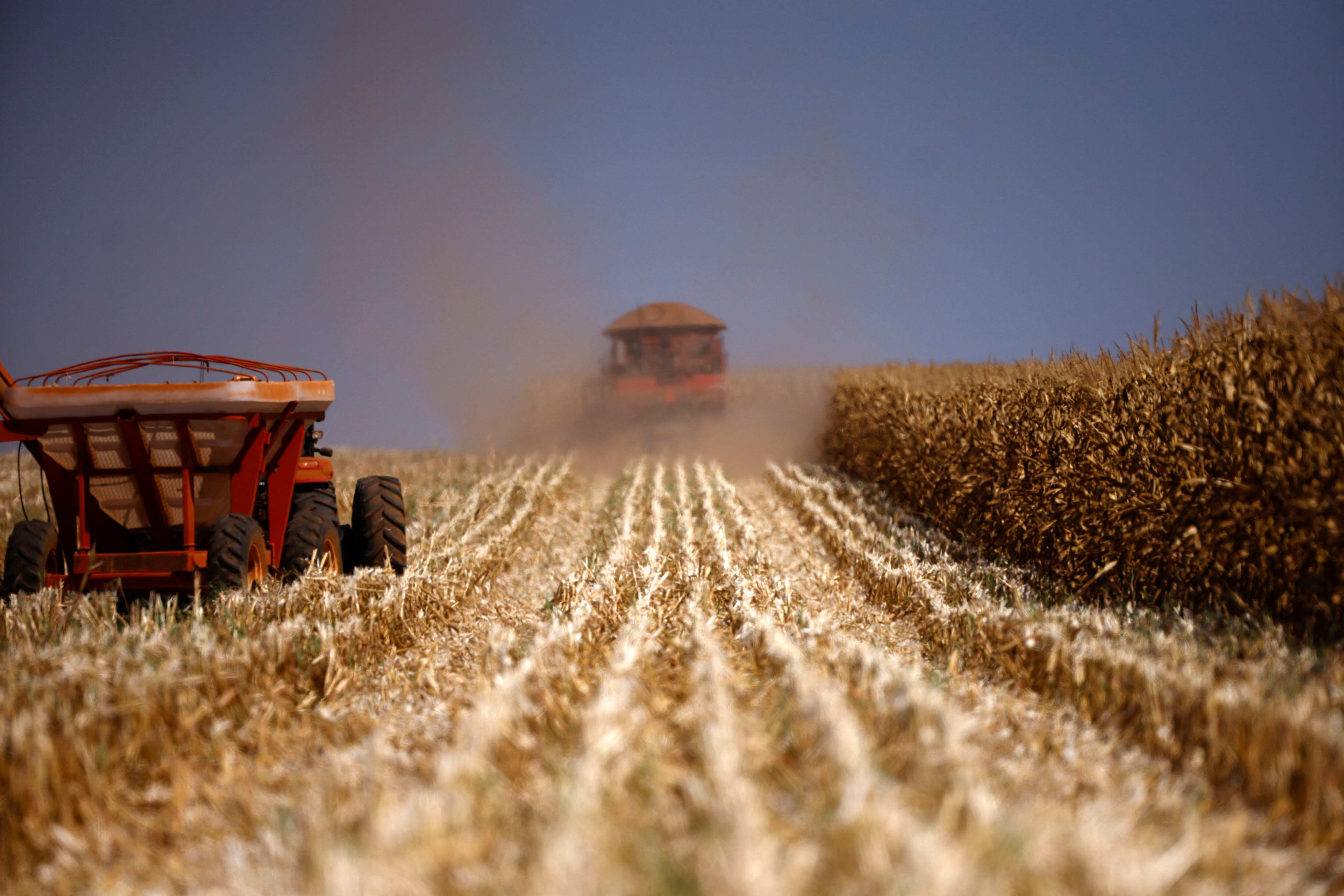
A combine harvester is seen as it harvests corns at a farm near Brasilia, Brazil.
Amid stalled trade negotiations between the Mercosur bloc and the European Union (EU), Brazil is planning toexpand itsagricultural exports to India and Africa.
According to Bloomberg, President Luiz Inacio Lula da Silva has expressed a keen interest in tapping into these markets, highlighting a shift towards diversification amid the deadlock in EU trade discussions.
Agriculture Minister Carlos Favaro disclosed plans for a substantial trade mission to India, comprising over 300 entrepreneurs, with a targeted timeframe around mid-year.
Targeting the Indian market
Brazil's endeavour to strengthen ties with India is driven by the latter's burgeoning demand for various agricultural products, including fruits, juices, coffee, and black beans.
Minister Favaro said that there was potential for heightened trade relations between the two nations, accentuating India's growing appetite for Brazilian agricultural goods.
This move comes in the wake of President Lula's diplomatic engagements in India and Ethiopia, where discussions with African Union leaders have paved the way for enhanced trade opportunities with the continent.
Opportunities in Africa
Following President Lula's diplomatic overtures in Africa, particularly in Egypt and Ethiopia, Brazil is eyeing opportunities to bolster exports of meat and grains to the continent.
Minister Favaro noted the significance of leveraging diplomatic relations to facilitate trade missions, aligning with President Lula's directives to explore and penetrate new markets in Africa.
EU deadlock and shifting strategies
The impasse in trade negotiations between Mercosur and the EU, exacerbated by concerns from European farmers regarding potential influxes of cheap imports and environmental standards, has prompted Brazil to recalibrate its trade strategies.
President Lula's administration has capitalised on his global popularity to forge new trade partnerships, opening up 96 new markets since the commencement of his third term in January 2023.
Notably, Brazil's focus on expanding its meat exports, particularly to China, has witnessed significant traction, with 38 new plants authorized for export to China.
Exploring alternative markets
While prospects for a breakthrough in Mercosur-EU negotiations remain uncertain, Brazil is intensifying efforts to explore alternative markets in Asia, Africa, and the Middle East.
Minister Favaro reiterated Brazil's plans towards diversifying its trade relations, citing the need to explore markets beyond the confines of the EU amid the prevailing deadlock.
With France adopting a more protectionist stance, Brazil aims to capitalize on emerging opportunities in dynamic regions to sustain its agricultural exports.
(With inputs from Bloomberg)