Bank of England holds firm on 15-year high interest rates amid economic uncertainties

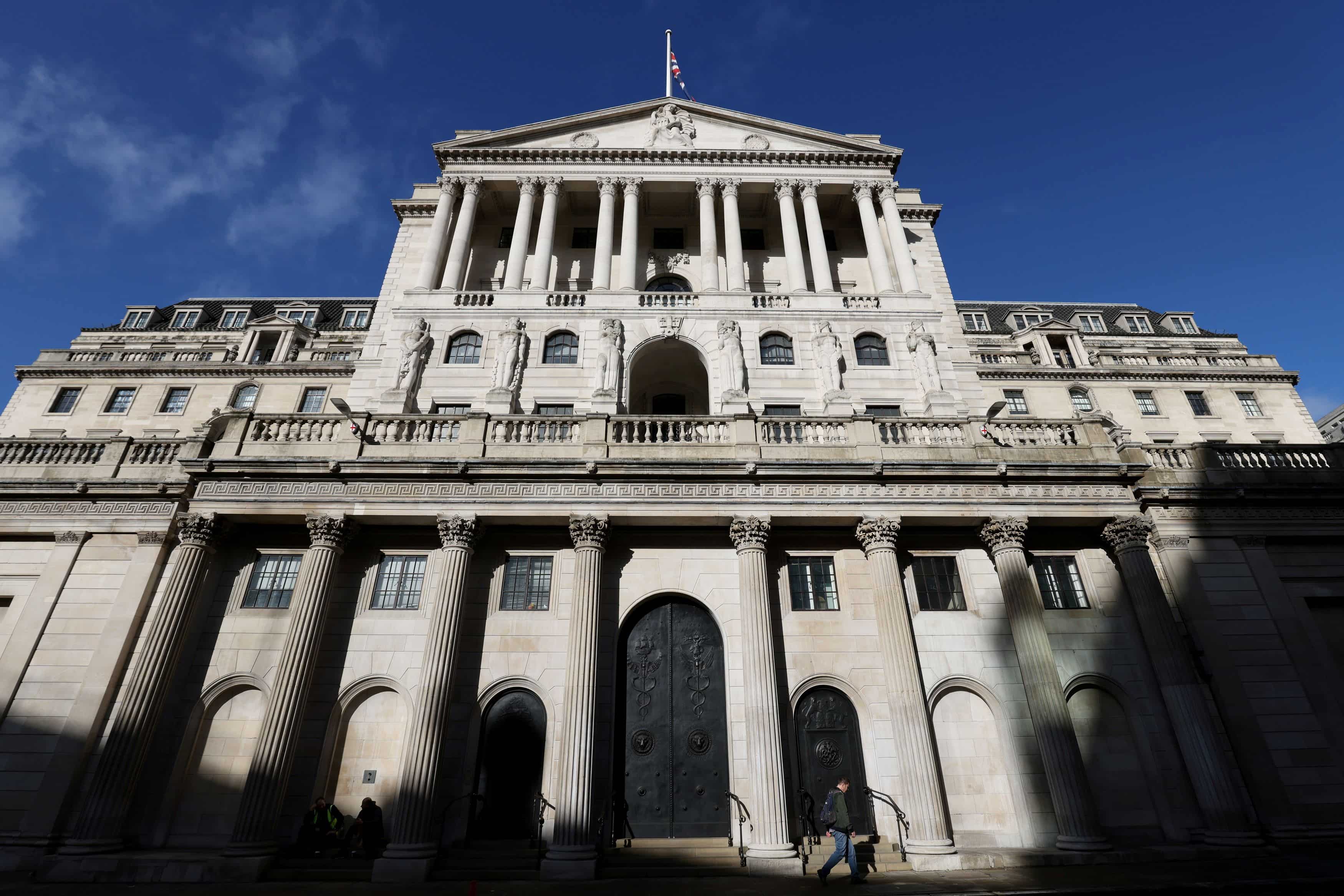
A person walks past the Bank of England, in London, Britain
The Bank of England (BoE) has opted to maintain its historically high interest rates, signalling a steadfast commitment to navigating through a challenging economic landscape. Despite acknowledging the proximity of a potential recession and a forecast of minimal growth in the coming years, the BoE has reiterated its stance of retaining borrowing costs at a robust 5.25 per cent.
This decision by the Monetary Policy Committee (MPC), voting 6-3 in favour of maintaining this rate, aligns with the consensus reached in September following a series of 14 consecutive interest rate hikes.
The BoE's projection underscores the necessity of a prolonged period of restrictive monetary policy to address the pressing issue of inflation. Highlighting the urgency of this approach, the central bank emphasised the need to "squeeze out of the system" inflation levels that rank among the highest in the world's major economies.
Reuters quoted BoE Governor Andrew Bailey, who highlighted the efforts to curtail inflation, stating, "We will be watching closely to see if further increases in interest rates are needed, but even if they are not needed, it is much too early to be thinking about rate cuts."
The central bank's assessment, however, acknowledges ongoing global uncertainties, particularly the conflict in the Middle East, which poses a risk of higher energy prices potentially feeding into inflation. The BoE remains vigilant about the impact of these external factors on the domestic economy. It also highlighted that strong wage growth is a concern, which could sustain price pressures.
The labour market data, though essential for policy decisions, has faced challenges due to low survey response rates. As a result, the BoE expresses "increasing uncertainties" about official labour market statistics. The central bank anticipates that job growth may have been weaker than initially assumed, and the robust wage growth is expected to moderate over time.
Regarding the economic outlook, the BoE's forecasts indicate a lack of growth in the British economy during the July-September period, with a marginal expansion of just 0.1 per cent in the fourth quarter. The central bank's projections extend to anticipate a static economic scenario for 2024, followed by a modest expansion of 0.25 per cent in 2025. Despite these cautious forecasts, the BoE anticipates a return to its 2 per cent inflation target by the end of 2025, albeit with a slight delay of roughly six months in comparison to previous projections.
Market sentiment suggests that the BoE is likely to maintain the current interest rates at least until August of the following year, potentially signalling a shift toward lowering rates. Economists have varying opinions on when the Bank Rate might decrease. While some believe it could happen in the second quarter of 2024 as inflation cools, others predict rates will remain unchanged throughout the entirety of the next year.
A remarkable aspect within the BoE's assessment of the economy is the prediction of a 4.6 per cent inflation rate in the fourth quarter of 2023. This projection aligns with Prime Minister Rishi Sunak's commitment to achieving price growth this year, an essential element of his political pledge in anticipation of an upcoming election in 2024.
(With inputs from Reuters)
WATCH WION LIVE HERE