Bank of Canada cuts interest rates to 4.75 per cent, First G7 Nation to ease policy

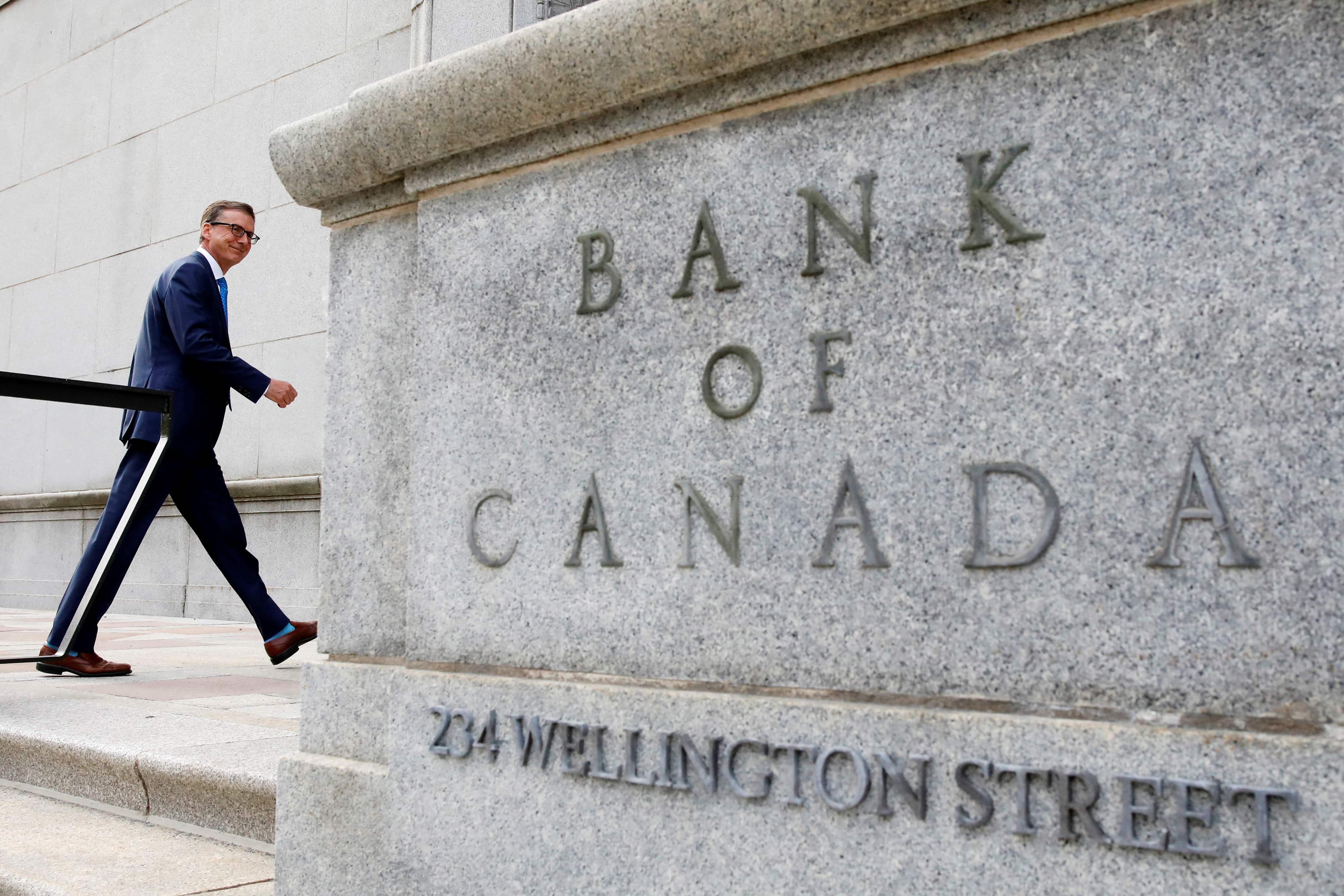
BoC Governor Tiff Macklem walks outside Ottawa's Bank of Canada.
The Bank of Canada (BoC) cut its benchmark policy rate on Wednesday, becoming the first G7 member to loosen monetary policy in a global climate of high interest rates. The central bank dropped interest rates to 4.75% from 5%, the first reduction in four years, in a widely anticipated decision to relieve pressure on deeply indebted consumers.
"Let's just enjoy the moment for a bit," stated Governor Tiff Macklem during a press conference. Macklem emphasised that any additional rate cuts would be contingent on ongoing falls in inflation and economic developments consistent with the bank's predictions.
Future rate cuts dependent on inflation trajectory
Governor Macklem stated that the timing of future rate decreases would be tightly connected to inflation trends and economic performance. In April, Canada's inflation fell to a three-year low of 2.7 per cent, staying below 3 per cent for four months while being above the Bank of Canada's 2 per cent objective.
"If inflation continues to ease and our confidence that inflation is on track to reach the 2 per cent target grows, it is reasonable to expect further cuts to our policy interest rate," Macklem said, adding that decisions would be decided on a meeting-by-meeting basis.
Despite financial markets pricing in a 39 per cent possibility of another decrease to 4.50% next month, some analysts are hopeful of a July reduction. Royce Mendes, head of the macro strategy at Desjardins Group, and Andrew Grantham, senior economist at CIBC, predict a decrease in July, with Grantham forecasting four reductions this year.
Market reaction and economic context
Following the BoC's decision, the Canadian dollar fell 0.22 per cent to 1.3708 per US dollar, or 72.98 US cents, after originally rising in early trading. The BoC's move aligns it with other central banks, such as Sweden's Riksbank and the Swiss National Bank, which have similarly decreased interest rates to fight slowing economic growth despite lower inflation.
Macklem acknowledged the risk of deviating too far from US monetary policy, adding that US inflation remains sticky, with the Federal Reserve forecast to decrease rates only once this year. "There are limits to how far we can diverge from the United States, but we're not close to those limits," Macklem stated.
Economic growth and outlook
The Canadian economy grew at an annualised pace of 1.7 per cent in the first quarter, slower than projected, raising market expectations for the rate reduction. The BoC had previously raised interest rates by 475 basis points over 16 months, until July 2023, after keeping them at 5 per cent for nearly a year.
Macklem stated that while future rate reductions will be more gradual than prior hikes, they would stay above pre-pandemic levels. The bank's next rate announcement is set for July 24, along with the release of its newest quarterly forecasts.
(With inputs from Agencies)