Australia likely to maintain interest rates amid economic slowdown: Report

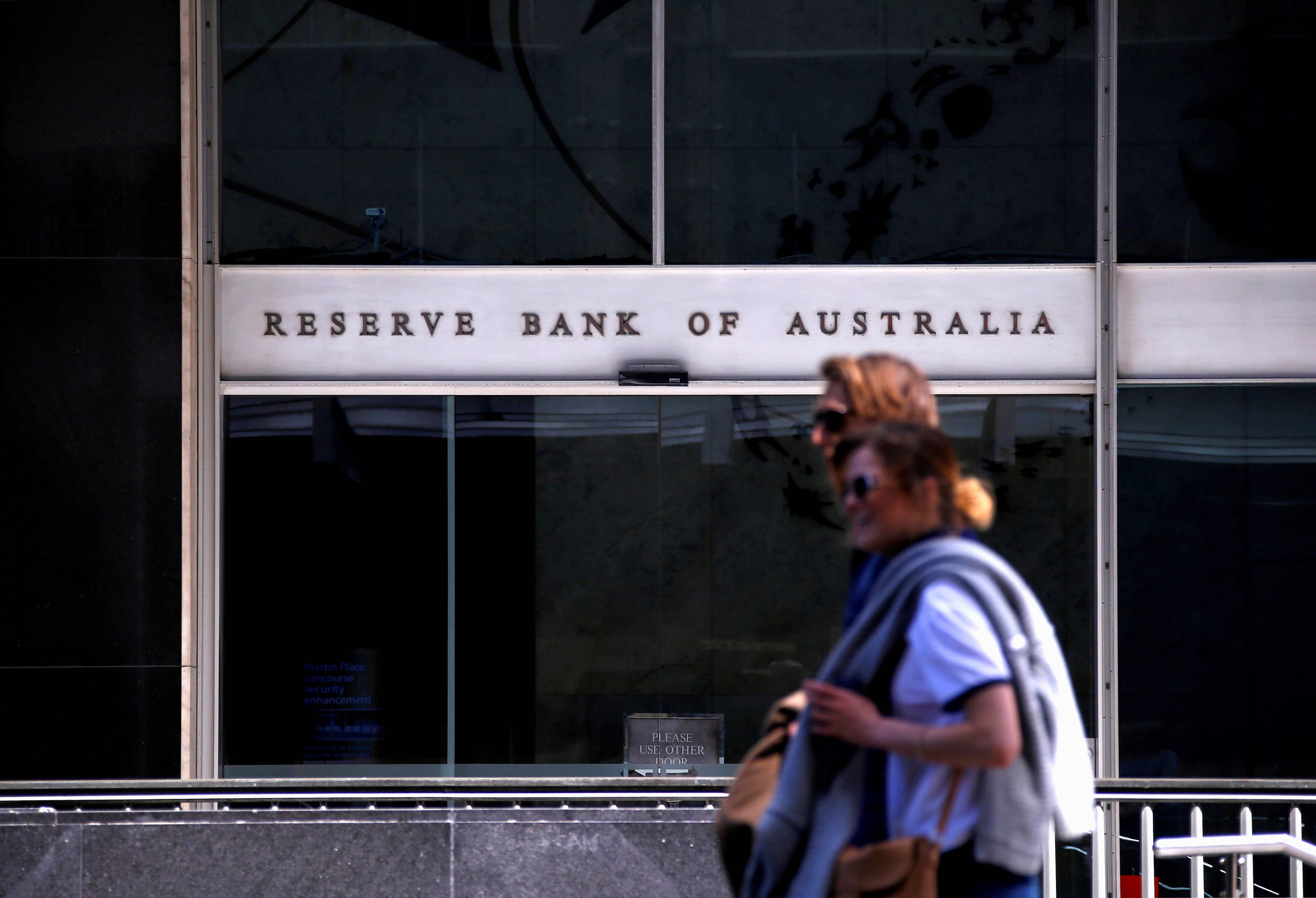
Pedestrians walk past the main entrance to the Reserve Bank of Australia (RBA) head office in central Sydney
Australia's Reserve Bank is anticipated to maintain its interest rates at 4.35 per cent for the third consecutive meeting, according to economists, as the country's economy faces headwinds amidst rising unemployment and sluggish growth.
According to Bloomberg, the decision, expected to be announced on Tuesday, comes as policymakers navigate uncertainties surrounding the strength of a disinflationary.
The bank's meeting, which begins on Monday, will be closely watched for signals about its future monetary policy stance, particularly amid global inflationary pressures and slowing economic indicators.
Analysts predict that the Reserve Bank of Australia (RBA) will maintain a cautious stance, given recent data suggesting a slowdown in economic activity.
Australia's economy expanded by a modest 0.2 per cent in the final quarter of 2023, with per capita gross domestic product (GDP) experiencing a downturn of 0.3 per cent from the previous quarter, marking the deepest decline since 1991 outside of the pandemic.
Additionally, January's inflation figures came in at 3.4 per cent, below expectations, raising concerns about the sustainability of the moderation in inflation.
Despite concerns about slowing growth, Australia's labour market remains relatively robust, with the unemployment rate at 4.1 per cent, signalling healthy employment levels.
However, there are indications of a slight loosening in the job market, prompting policymakers to monitor the situation closely.
The upcoming release of February's job data will provide further insights into the labour market's resilience and its implications for the economy.
The Reserve Bank's decision is also influenced by the hot property market, where soaring home prices have been fuelled by supply shortages and strong population growth.
Policymakers are cautious about exacerbating the housing market boom, which could have broader implications for financial stability.
Moreover, the anticipation of future rate cuts by the RBA contrasts with expectations of the US Federal Reserve initiating its rate-cut cycle, reflecting diverging economic outlooks between the two countries.
Bloomberg cited Luci Ellis, the chief economist at Westpac Banking Corp., who suggests that there is optimism regarding the economic outlook. He noted that inflationary pressures are moderating, which could alleviate pressure on households.
Ellis anticipates a shift in policy stance later in the year, with the commencement of income tax cuts and the beginning of an RBA easing cycle expected from September. This less restrictive policy environment is anticipated to support economic recovery efforts.
As the RBA navigates the complex economic landscape, the upcoming release of the semi-annual financial stability report on Friday will provide insights into the impact of rising borrowing costs on Australian banks.
Despite the tightening monetary policy cycle, Australian banks have fared relatively well.
The report will shed light on the banking sector's ability to withstand evolving financial dynamics and its implications for broader economic stability.
(With inputs from Bloomberg)