Akio Toyoda faces historic low support amid governance issues at Toyota

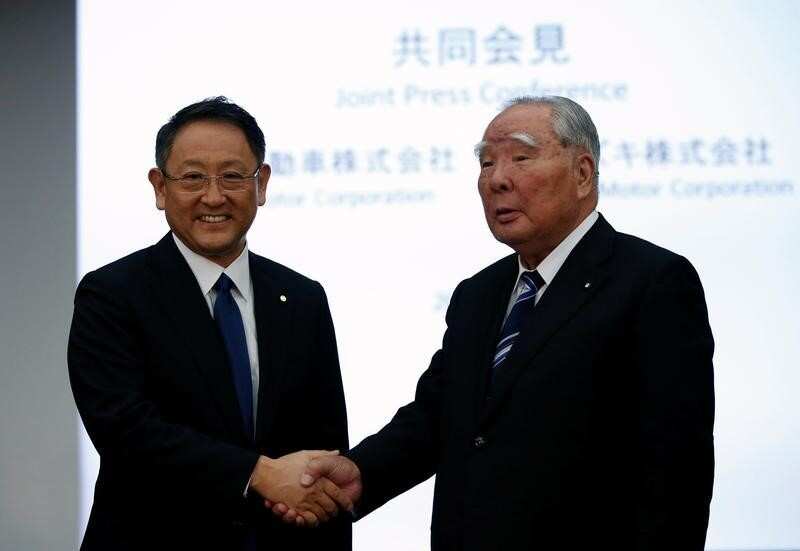
Toyota Motor Corp President Akio Toyoda (L) shakes hands with Suzuki Motor Chairman and CEO Osamu Suzuki at their joint news conference in Tokyo.
In what could be termed as a setback in the history of Toyota Motor Corporation, support from shareholders for Chairman Akio Toyoda hit its lowest level since the company began disclosing vote breakdowns in 2010. At Wednesday's annual general meeting, Toyoda garnered 72 per cent support, sliding drastically from 85 per cent in the previous year and 96 per cent in 2022-a clear indication that investors are turning increasingly flustered by certification scandals and poor corporate governance at the world's largest automaker.
Toyoda, who is the grandson of the company's founder, usually breezes to victory with strong support from shareholders. But on Friday, that trend appeared to change with the vote, indicating more U.S. corporate governance among rising practices in Japan.
The reduced support comes on the back of a recommendation by leading proxy advisory firms, Institutional Shareholder Services and Glass Lewis. Both companies advised against the re-election of Toyoda based on how the company handled ongoing certification testing violations that implicated Toyota and its subsidiaries, including compact car manufacturer Daihatsu. These violations raise serious questions over its governance and transparency.
It had also cited concerns over the independence of the board and return on equity. Glass Lewis, had recommended voting against Toyoda for the second time in a row. The falling approval rate reflects foreign investors, who make up around 25 per cent of Toyota's shareholders. Major institutional investors such as U.S. public pension fund CalPERS and Canadian pension fund CPP Investments were among those that voted against Toyoda.
In response to the shareholder vote, Toyota issued an announcement that respected the sentiments of institutional investors by indicating a move toward more board independence, with clearly defined roles of outside executives and the redefinition of criteria for assessing independence. Besides, it announced selling cross-shareholdings, which are criticised for creating a too-cosy relationship between management and shareholders, hence weakening governance.
According to James Hong, head of mobility research at Macquarie, the focus on governance and holding structure is likely to be sharpened. Shareholders are seeking more radical changes more quickly.
In contrast, the controversy never put Toyoda in serious jeopardy of not being re-elected, firmly secured through large shareholdings by other Toyota group firms, a record business performance, and his popularity among Japanese retail investors. Toyota has also been under attack for its supposedly slow pace of transition to battery electric vehicles. Its so-called "multi-pathway" strategy, on the other hand, has been beneficial with big bets placed on hybrids and hydrogen fuel cells. Strong hybrid sales helped the company out last year as growth in the fast-growing battery EV market was slowed down by high prices and worries over charging infrastructure.
The shares of Toyota have lost 9 per cent since early June, when the certification testing violations first came to light. It is, however, still up 20 per cent this year-an eloquent fact that speaks to its intrinsic strengths. This vote of shareholders is an unequivocal cry for better governance and transparency at Toyota. As the company works through such pressures, it will be forced to strike a balance between those traditional strengths and the changing expectations of its global investor base.