Volvo Cars reduces growth forecast amid premium auto market slowdown

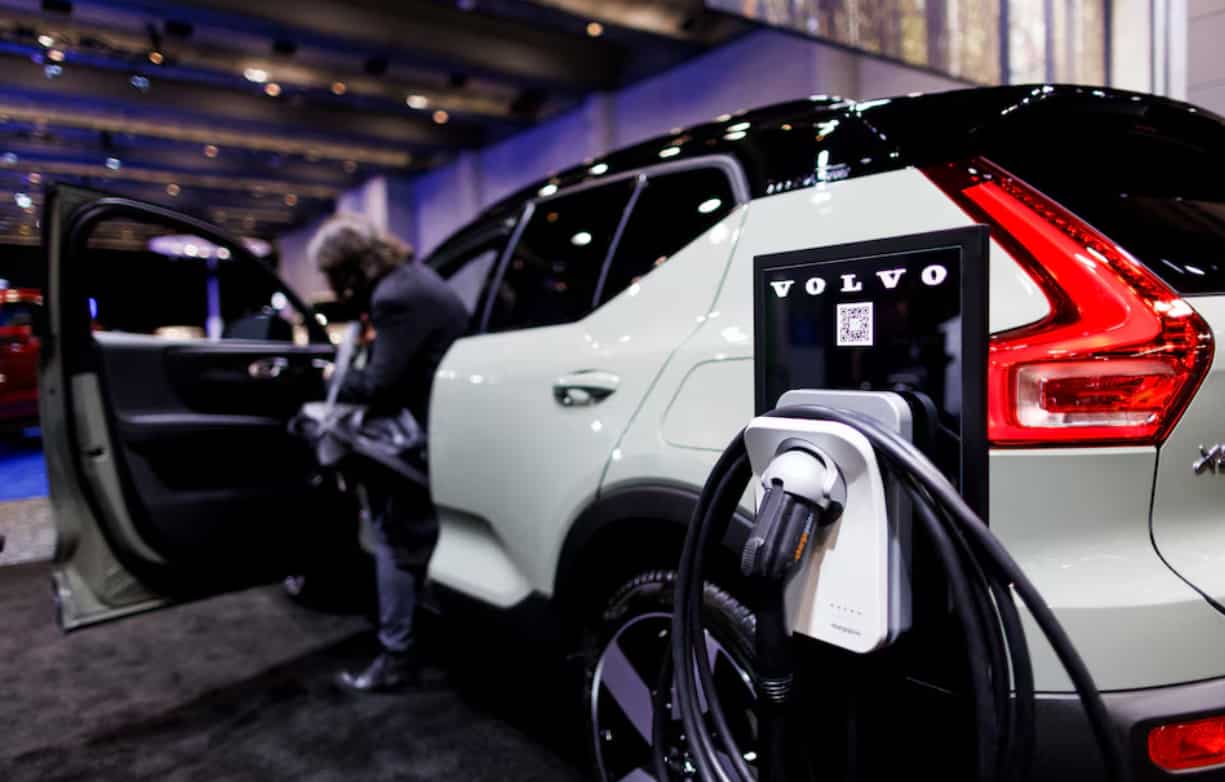
Volvo cars
Swedish luxury automaker Volvo Cars reported stronger-than-expected third-quarter operating profits while simultaneously announcing a substantial reduction in its full-year sales growth forecast, signalling mounting challenges in the premium automotive sector.
The Gothenburg-based manufacturer posted an impressive operating profit of 5.8 billion Swedish crowns (USD 550 million) for the third quarter, surpassing both last year's figure of 4.5 billion crowns and analyst expectations from prominent financial institutions including JP Morgan and Bernstein.
However, in a notable shift from its previous outlook, Volvo Cars has significantly scaled back its annual sales growth projection to 7-8%, a marked decrease from the 12-15% growth forecast issued in July. The company's revised outlook notably predicts stagnant growth for the fourth quarter, reflecting broader industry challenges.
CEO Jim Rowan acknowledged the increasingly challenging market conditions, stating, "There's no doubt that the sector's getting tougher." He specifically highlighted the impact of high inflation on consumer sentiment and financing options, noting that many customers rely on auto loans for vehicle purchases.
The automotive industry has been grappling with several headwinds, particularly in the electric vehicle (EV) segment. Market demand for EVs has shown signs of weakness over the past year, attributed primarily to the limited availability of affordable models and insufficient charging infrastructure. Adding to these challenges is intensifying competition from lower-priced Chinese manufacturers and the looming implementation of European tariffs on Chinese-manufactured EVs.
Volvo Cars' strategy for navigating these challenges relies heavily on the success of its new SUV models, the EX30 and EX90, which the company positions as potential volume drivers. However, investors remain cautious about the company's ability to maintain promised profit margins in the current market environment.
In a strategic pivot announced in September, Volvo Cars adjusted its electrification timeline, choosing to extend its hybrid vehicle offerings beyond initially planned timeframes. This decision was accompanied by a revision of the company's profit margin goals and a shift in strategic focus toward outperforming the premium car market rather than pursuing specific sales targets.
The company's latest market assessment indicates that the demand slowdown, previously observed primarily in the mass-market segment, has now penetrated the premium sector where Volvo Cars operates. This development represents a significant shift from earlier market conditions and has prompted the company's more conservative outlook.
Financial analysts have responded to the mixed results with measured optimism. Bernstein characterised the third-quarter performance as "a handsome beat on revenue and margin" while acknowledging that the reduced outlook suggests challenging conditions ahead for the automotive sector.

