Trump vows to block state bans on gas-powered vehicles in campaign push

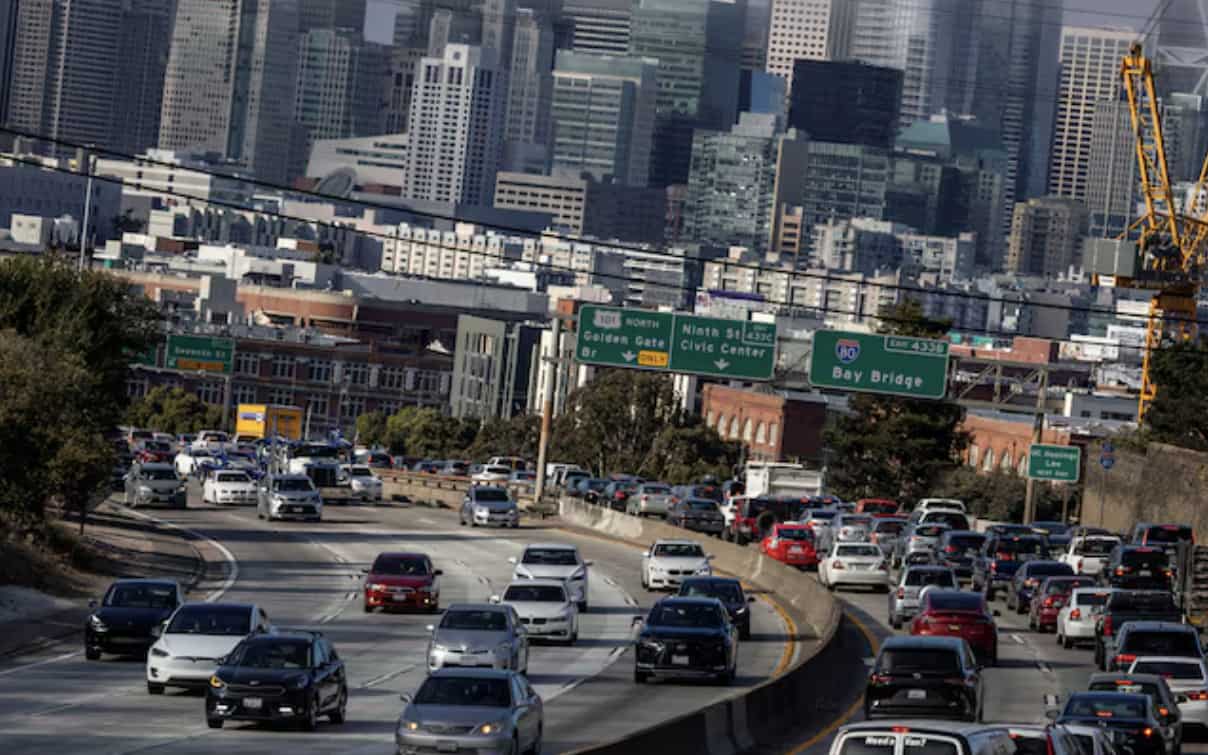
gas-powered vehicles
Former President Donald Trump declared on Thursday that his potential re-election would halt any state's efforts to ban gasoline-powered vehicles. This announcement, made during a rally in Saginaw, Michigan, directly challenges existing state-level initiatives to transition to electric vehicles (EVs) and marks a clear divergence from current federal environmental policies.
"When I'm president, no state in America will be permitted to ban gas powered cars or trucks, and I guarantee it - no way," Trump asserted to his Michigan audience, emphasising local automotive production by adding, "You're going to make them right here."
The announcement comes at a crucial time as the automotive industry faces a pivotal transformation. California, often a trendsetter in environmental regulations, has been at the forefront of this change. In May 2023, the state requested a waiver from the Environmental Protection Agency (EPA) under the Clean Air Act to implement a mandate requiring all new vehicles sold by 2035 to be either electric or plug-in hybrids. This follows California's landmark August 2022 approval of a plan to phase out gasoline-only vehicle sales by 2035.
The impact of California's initiative extends beyond its borders, with eleven other states adopting similar zero-emission vehicle requirements. These regulations establish progressively increasing targets for zero-emission vehicle sales beginning in 2026.
Trump's stance represents a stark contrast to the Biden administration's approach. While President Biden has not endorsed a specific date for phasing out gasoline-only vehicles, his administration has actively supported the transition to EVs through substantial tax credits and grants. Biden has set an ambitious goal for EVs to comprise 50% of new vehicle sales by 2030, framing it as essential for maintaining competitiveness with China.
The EPA, under the current administration, has taken significant steps toward reducing vehicle emissions. In March, they finalised federal rules aimed at cutting vehicle emissions by 49% by 2032 compared to 2026 levels. The agency projects that meeting these stringent emissions limits would require between 35% and 56% of new vehicles sold between 2030 and 2032 to be electric.
However, automakers have expressed concerns about the feasibility of California's 2035 plan, particularly for states with lower EV adoption rates. While the transition might be achievable "in the early years for California," industry representatives argue that the outlook for other states "is far less certain."
California's regulations are comprehensive, mandating a gradual increase in zero-emission vehicle sales: 35% by 2026, rising to 68% by 2030, and reaching 100% by 2035. The state has calculated that these rules will cost approximately USD 210 billion but expects total benefits of USD 301 billion through 2040. The plan does provide some flexibility, allowing automakers to sell up to 20% plug-in hybrids in 2035.
Trump's announcement in Michigan, a crucial swing state and home to major automakers, signals his campaign's strategy to make the future of the automotive industry a key election issue. His previous statements, including considering the elimination of EV tax credits, further underscore this approach.

