Hyundai enters three-row electric SUV market with IONIQ 9

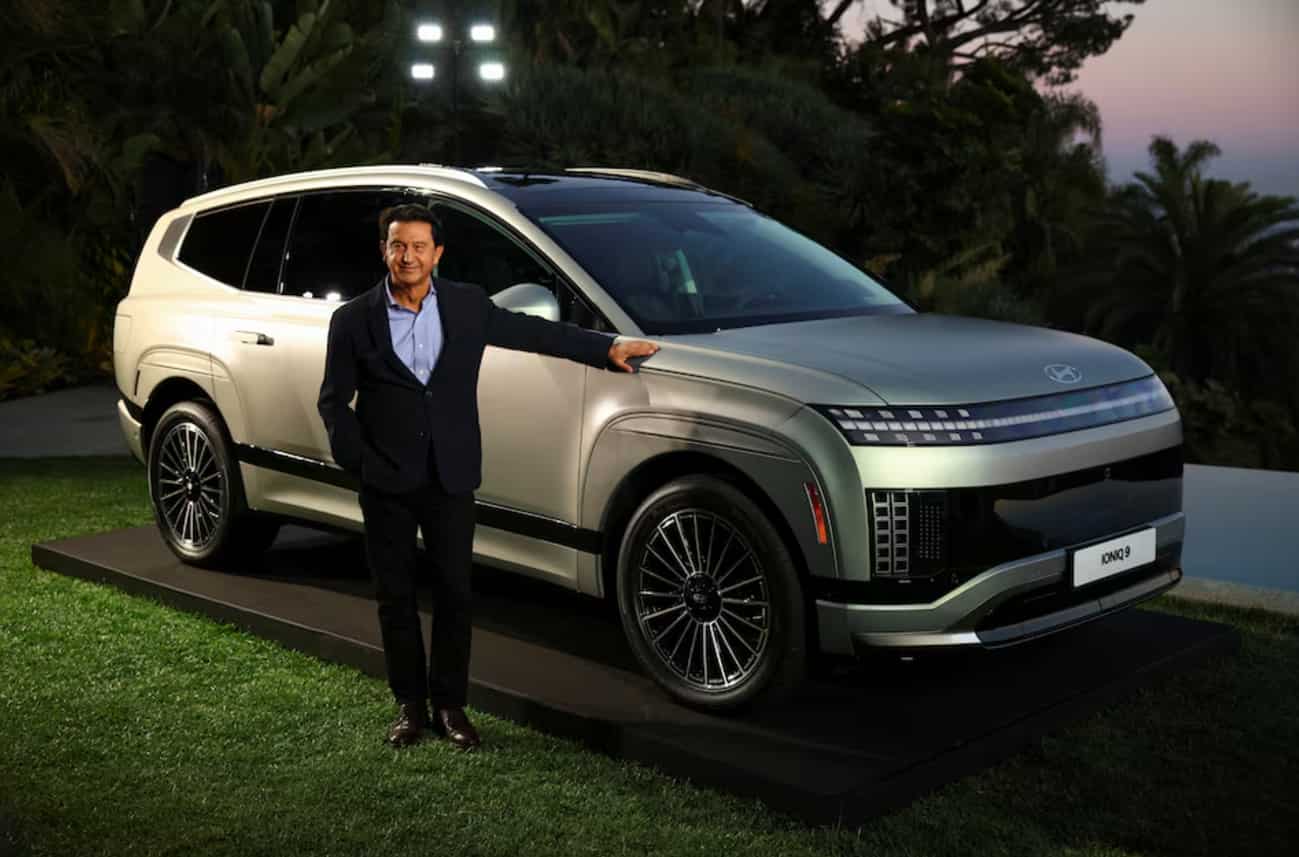
Hyundai IONIQ 9
Hyundai Motor has unveiled its IONIQ 9, a three-row electric SUV designed to capture a rapidly evolving market segment that manufacturers increasingly view as crucial for future profitability.
Scheduled for initial rollout in the United States and Korea early next year, the IONIQ 9 promises a robust range exceeding 300 miles, positioning itself as a compelling option in the expanding electric vehicle (EV) landscape. The launch represents a calculated entry into a market segment that has traditionally been dominated by gasoline-powered vehicles.
The three-row SUV market has dramatically reshaped family transportation, effectively replacing minivans and station wagons as the preferred vehicle for parents transporting children, and friends, and managing extensive cargo needs. This segment has become a critical battleground for automotive manufacturers seeking to establish their electric vehicle credentials.
While most electric vehicles currently operate at a financial loss, industry experts anticipate significant future profitability as battery technology advances and production costs decline. The early market positioning provides manufacturers a strategic advantage in capturing emerging consumer segments.
Hyundai is not alone in its pursuit. Competitors including Lucid, General Motors' Cadillac, Volvo, and Vinfast are simultaneously launching three-row electric SUVs. Hyundai's corporate cousin Kia has already introduced its own model, highlighting the industry-wide recognition of this segment's potential.
Sam Fiorani, vice president at research firm AutoForecast Solutions, emphasised the segment's complexity. "The challenge lies in designing battery packs that accommodate the storage and utility requirements of a three-row vehicle," Fiorani explained. The technical challenges are substantial, requiring sophisticated engineering to balance performance, range, and practical utility.
The current market for three-row electric SUVs remains nascent. Existing models like Rivian's R1S, starting at USD 76,000, and Tesla's Model X, priced from UD 80,000, represent premium offerings. Lucid's recently introduced Gravity SUV is priced at USD 95,000, while VinFast's VF 9 enters the market at USD 70,000.
While Hyundai has not disclosed pricing for the IONIQ 9, the related Kia EV9's starting price of $55,000 provides a potential benchmark. The vehicle will be manufactured in Georgia and offers rapid charging capabilities, able to charge from 10% to 80% in just 24 minutes at high-capacity charging stations. Notably, it is compatible with Tesla's Supercharger network, addressing a critical consumer concern about charging infrastructure.
The market expansion occurs against a complex political backdrop. Incoming President Donald Trump has signalled potential reductions in government incentives for electric vehicles, a move that could impact market dynamics. Some manufacturers, like Ford, have already adjusted strategies, opting to develop hybrid SUVs that offer greater range and flexibility.
Jessica Caldwell, head of insights at auto research firm Edmunds, offers a nuanced perspective. "The entire electric vehicle market is challenging, and three-row EVs are particularly complex due to high prices and associated costs," she noted. The vehicles currently appeal primarily to early technology adopters with significant purchasing power.
Analysts suggest that the target demographic for three-row SUVs—typically wealthy buyers—may remain relatively insensitive to potential tax credit reductions. However, the potential elimination of the USD 7,500 federal tax credit could marginally diminish the segment's attractiveness.
Hyundai's ambitious electric strategy includes plans to develop a comprehensive lineup of 23 EV models by 2030, indicating a long-term commitment to electrification. The IONIQ 9 represents a critical milestone in this strategic roadmap.
The automotive industry finds itself at a complex inflection point. While enthusiasm for electric vehicles remains high, practical considerations of range, pricing, and charging infrastructure continue to challenge widespread adoption. Manufacturers like Hyundai are betting that innovative design, improving technology, and changing consumer preferences will ultimately drive market transformation.

