Fisker faces liquidation amid creditor disputes

Founded by Henrik Fisker, the California-based company never achieved profitability.
Electric vehicle startup Fisker is on the brink of liquidation, as attorneys previewed a battle between creditor factions over payment priorities in a U.S. bankruptcy court on Friday. The court hearing in Wilmington, Delaware, revealed the financial and operational struggles that led Fisker to this critical juncture.
Background on Fisker's bankruptcy filing
Fisker filed for bankruptcy protection on Monday after exhausting its cash reserves while trying to ramp up production of its Ocean SUVs. Initially, the company aimed to secure additional financing to sustain "reduced operations," but Fisker's attorney, Brian Resnick, stated in court that the company does not anticipate obtaining the necessary funds.

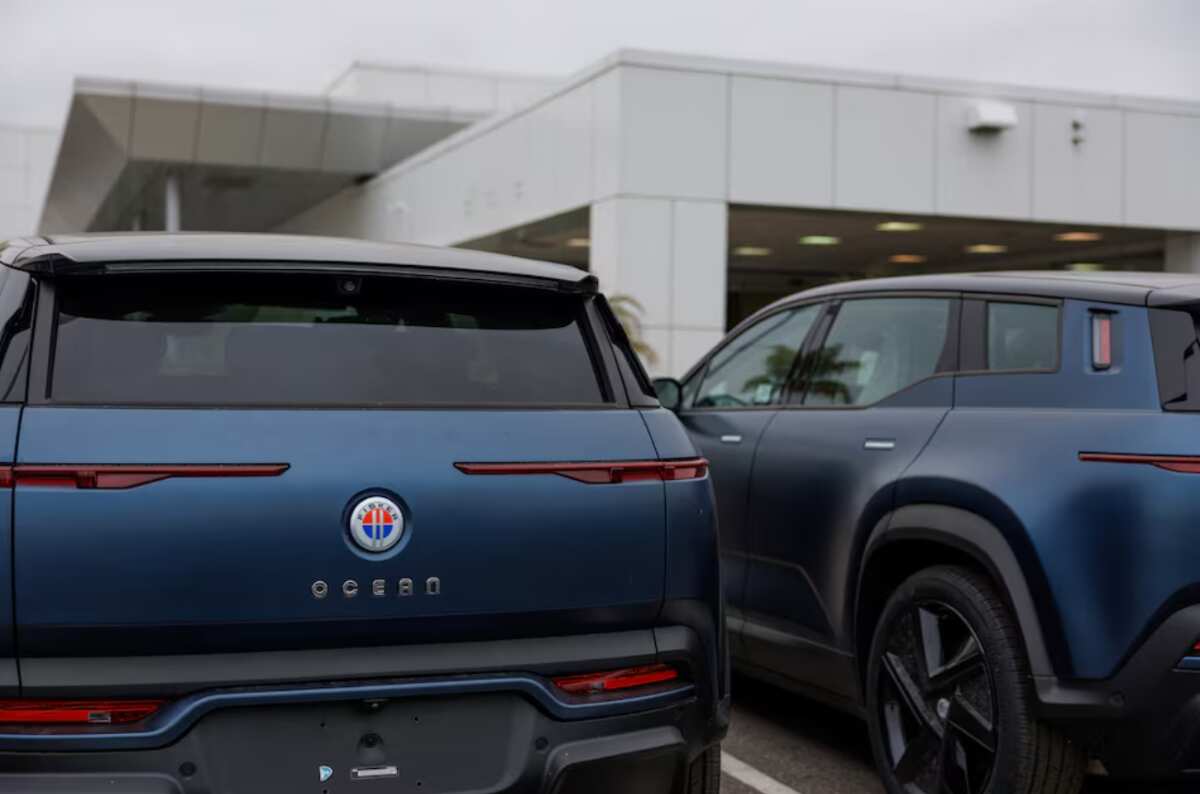
Resnick informed U.S. Bankruptcy Judge Thomas Horan that Fisker plans to liquidate its assets. The company has tentatively agreed to sell its 4,300 vehicles to a single buyer, marking a significant step towards its winding down.
Financial troubles and creditor disputes
Founded by automotive designer Henrik Fisker, the California-based company never achieved profitability. In 2023, Fisker reported $273 million in revenue but incurred a net loss of $940 million. The company owes over $850 million to two groups of bondholders, leading to a contentious dispute in court.
Attorneys for the larger group of bondholders accused a minority faction led by Heights Capital Management of taking control of Fisker's debt through a questionable transaction in November. At that time, Fisker had failed to provide audited financial statements required by its debt agreements. Heights Capital seized this opportunity to claim all of Fisker's assets as collateral for its bonds.
"They basically handed the whole business over to Heights," said Alex Lees, an attorney for the larger group of bondholders. Lees argued that Fisker should have filed for bankruptcy in November, asserting that the company has been liquidating assets outside of the court's supervision to benefit a single creditor.
Heights Capital Management's position
Heights' attorney, Scott Greissman, rejected Lees' accusations, describing them as "outrageous." He asserted that Heights had tried to help Fisker survive through its challenging period. "There may be a lot of disappointed creditors, but none more than Heights," Greissman said, noting that the expected sale of Fisker's fleet would cover only a fraction of Heights' $185 million debt.
Potential conversion to Chapter 7 liquidation
Linda Richenderfer, representing the U.S. Department of Justice's bankruptcy watchdog, indicated that Heights Capital holds all the leverage in the situation. She suggested that Fisker's bankruptcy might convert to a straightforward Chapter 7 liquidation once the vehicle fleet is sold. "Heights is getting everything it wants," Richenderfer noted, adding that Heights has no incentive to agree to further concessions.
Failed partnership and industry challenges
Fisker's fate was effectively sealed in March when it failed to secure a partnership with a major vehicle manufacturer, reportedly Nissan. This failure prompted Fisker to halt production and lay off staff to conserve cash. Resnick highlighted these steps as necessary measures amid the company's dire financial situation.
The hyper-competitive electric vehicle market has been challenging for many startups. Companies such as Proterra, Lordstown Motors, and Electric Last Mile Solutions have also filed for bankruptcy in the past two years. These firms have struggled with weakening demand, difficulties in raising funds, and operational challenges exacerbated by global supply chain issues.
Fisker's liquidation marks another casualty in the turbulent EV sector. The legal battle between its creditors underscores the complexities involved in the bankruptcy process. As Fisker prepares to liquidate its assets, the broader implications for the EV industry highlight the financial and operational hurdles that many startups face in this rapidly evolving market.
(Inputs from Reuters)