EU imposes steep tariffs on Chinese EVs, escalating trade tensions

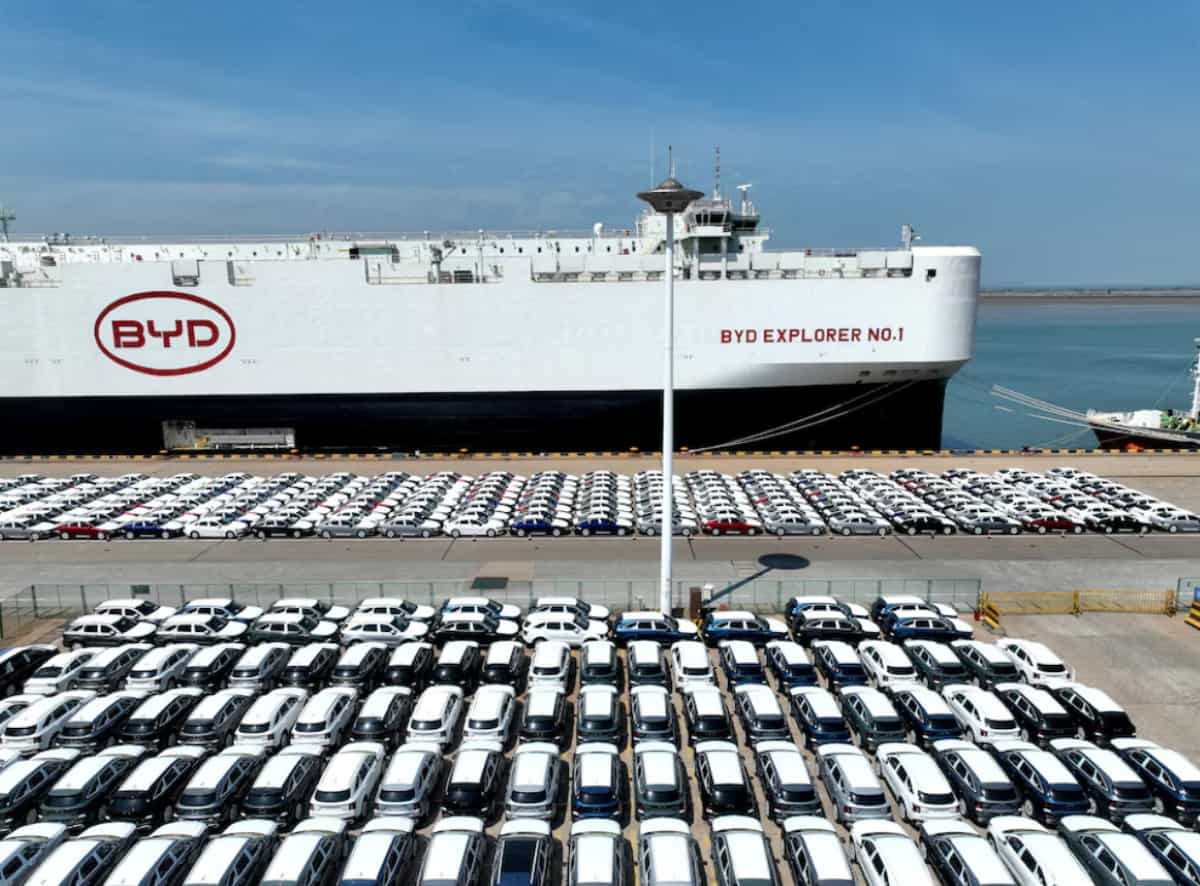
In response, Beijing has vowed to take "all necessary measures" to safeguard its interests.
The European Union (EU) has announced tariffs of up to 37.6% on electric vehicles (EVs) imported from China, a move that is expected to heighten trade tensions between Brussels and Beijing. The tariffs, effective from Friday, are part of the EU's largest trade case to date and are aimed at countering what the EU sees as unfair competition from Chinese EV manufacturers benefiting from state subsidies.
Provisional tariffs and ongoing negotiations
The European Commission, the EU's executive arm, has imposed these provisional duties, ranging from 17.4% to 37.6%, with a four-month window for negotiations. During this period, intensive talks are expected to continue between the EU and China, with Beijing threatening wide-ranging retaliation.
Addressing market distortion
EU Commission President Ursula von der Leyen has emphasised that these measures are designed to prevent a flood of cheap EVs that are built with significant state subsidies from China. The detailed tariff rates are outlined in a 208-page document published on Thursday, following minor adjustments after initial errors were identified by companies.
Beijing's response
In response, Beijing has vowed to take "all necessary measures" to safeguard its interests. Potential retaliatory actions could include tariffs on European exports to China, such as cognac and pork. EU Trade Chief Valdis Dombrovskis has countered, stating that there is no basis for China's retaliation, as the EU aims to ensure fair competition and a level playing field.
The scope of the anti-subsidy investigation
The EU's anti-subsidy investigation has nearly four more months to run. At its conclusion, the Commission could propose definitive duties, typically applying for five years, on which EU member states would vote. Dombrovskis has indicated that ongoing talks with China could yield a mutually beneficial solution, potentially avoiding the application of tariffs if market distortions are addressed.
Tariff impact on Chinese automakers
Several Chinese automakers, including BYD, Geely, and SAIC, are facing significant duties. BYD faces tariffs of 17.4%, Geely 19.9%, and SAIC 37.6%, on top of the EU's standard 10% duty on car imports. Western carmakers with manufacturing in China, such as Tesla and BMW, will also be subject to tariffs of 20.8% if they cooperated with the investigation, and 37.6% if they did not.
Strategic decisions for Chinese EV makers
Chinese EV manufacturers now face a strategic decision: whether to absorb the tariffs or pass the increased costs onto European consumers. This decision comes at a time when Chinese automakers are eager to expand their sales outside of China, where a domestic price war is taking a toll on their profitability.
Potential consequences for the European market
Opponents of the tariffs argue that increased EV costs for European consumers could undermine the EU's goal of becoming carbon-neutral by 2050. Chinese brands like MG and Nio have suggested they might raise prices in Europe later this year, while Tesla has already announced plans to increase the prices of its Model 3.
Investment in European manufacturing
The prospect of hefty tariffs might spur Chinese automakers to invest in manufacturing facilities in Europe, despite higher labour and production costs. On Thursday, Xpeng became the latest EV maker to consider setting up manufacturing operations in the region to circumvent the tariffs.
Reactions from the European automotive industry
Europe's largest carmaker, Volkswagen, was quick to criticise the EU's decision. A spokesperson for Volkswagen stated that the negative effects of the tariffs outweigh any benefits for the European, particularly the German, automotive industry. Auto industry executives have expressed concerns about potential Chinese counter-measures, which could further affect the competitiveness of European cars in China, a critical market for German carmakers.
Market dynamics and future prospects
The EU Commission estimates that Chinese brands' share of the EU market has risen to 8% from below 1% in 2019 and could reach 15% by 2025. Chinese EVs are typically priced about 20% lower than EU-made models, contributing to their growing market share.
Historical context and policy challenges
European policymakers are wary of repeating past mistakes, such as those made with solar panels a decade ago, when limited action against Chinese imports led to the collapse of many European manufacturers. The EU launched its anti-subsidy investigation into Chinese EVs last October, reflecting its proactive stance.
Navigating a complex trade landscape
The issue will soon face an advisory vote by EU members, testing support for the Commission's case. Despite the provisional nature of the tariffs, the ongoing discussions highlight the complexity of balancing trade protection with market dynamics. The evolving scenario underscores the EU's challenge in fostering fair competition while navigating the intricate landscape of international trade relations.
(Inputs from Reuters)