Canada considers tariffs on Chinese EVs amid global concerns

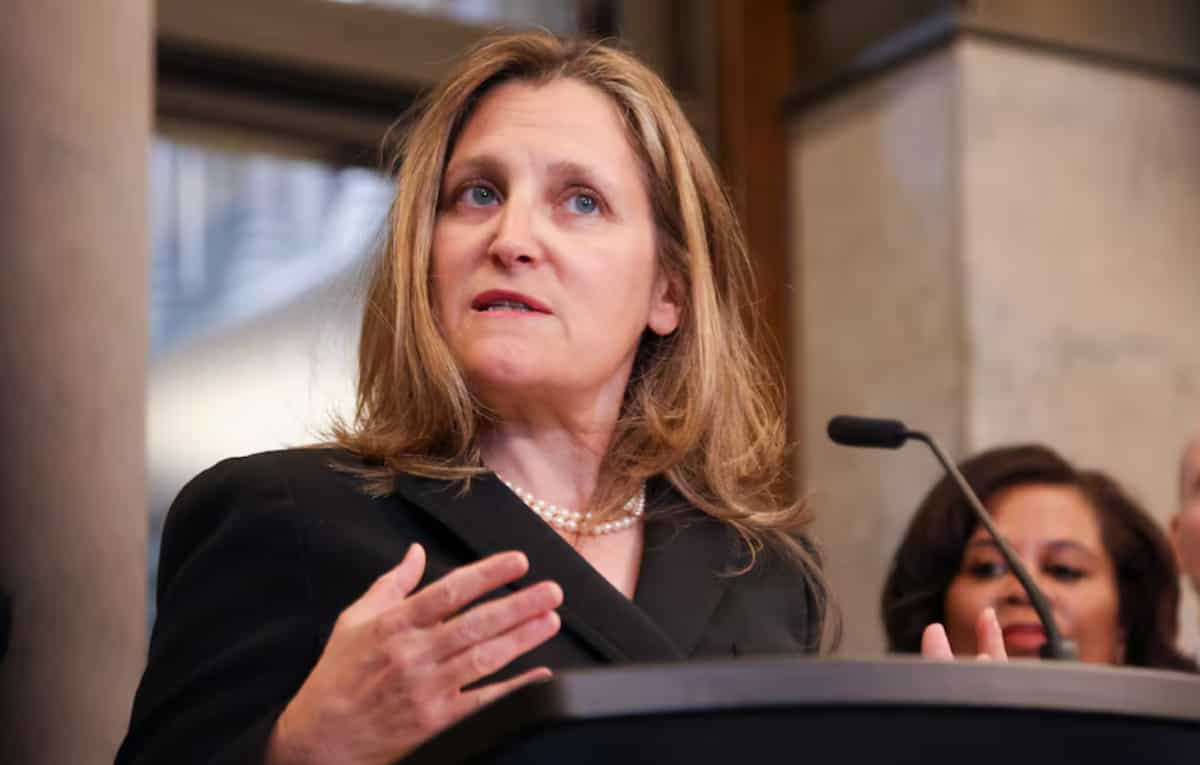
Finance Minister Chrystia Freeland
Canada is contemplating imposing tariffs on electric vehicles (EVs) manufactured in China, aligning itself with international allies concerned about a heavily subsidised Chinese industry. This move comes amid rising global tensions over trade practices and competitive fairness in the EV sector.
Finance Minister Chrystia Freeland announced the potential tariffs, citing unfair competition due to China's "state-directed policy of overcapacity." Speaking in Vaughan, Ontario, Freeland said that Chinese producers are creating a global oversupply of EVs, undermining manufacturers worldwide, including in Canada.
"Chinese producers are intentionally generating a global oversupply that undermines EV producers around the world, including here in Canada," Freeland stated, echoing sentiments previously voiced by the United States and the European Union.
Public consultation period
To address these concerns, Ottawa will initiate a 30-day public consultation period starting July 2. This period will allow stakeholders to provide input on potential responses, including tariffs on EV imports from China. Freeland hinted at possible tariffs on EV components, such as batteries, but did not detail specific measures.
"We're not ruling anything out," Freeland emphasised. "We are bringing to bear our strongest trade action tools."
International context
The consideration of tariffs follows similar actions by international partners. Last month, U.S. President Joe Biden announced significant tariff increases on Chinese imports, including EVs. The European Commission has also planned additional duties of up to 38.1% on Chinese manufacturers such as BYD, Geely, and SAIC, as well as Chinese-built Tesla and BMW cars.
China, however, has dismissed accusations of unfair subsidies and overcapacity. Chinese officials argue that their EV industry's growth is driven by technological, market, and supply chain advantages.
Chinese response
Ahead of Freeland's announcement, an opinion piece in the Chinese state-backed Global Times urged Canada to remain "strategically rational" and not "sacrifice normal economic exchanges with China for the sake of Washington's strategic selfishness." This statement reflects China's stance on maintaining robust trade relations despite rising tensions.
Economic impact
China is Canada's second-largest trading partner, following the United States. In 2023, data from Canada's largest port in Vancouver showed a 460% annual increase in automobile imports from China, driven by shipments of Shanghai-made Tesla EVs to Canada.
Domestic pressures
Domestically, there is significant pressure on the Canadian government to act. Ontario Premier Doug Ford recently called for tariffs of at least 100% on Chinese EVs. Ontario, as Canada's most populous province and primary auto-making hub, has a vested interest in protecting its automotive industry.
Canada has made substantial investments to position itself as a critical player in the global EV supply chain. These efforts include multi-billion dollar deals to attract companies across the EV supply chain, aiming to bolster the manufacturing heartland.
Industry reactions
Industry leaders and bodies have largely welcomed the potential tariffs. Hugues Jacquemin, CEO of Northern Graphite, suggested that any action should also encompass critical minerals essential for battery production. The main opposition Conservative party has criticised Prime Minister Justin Trudeau for not adequately protecting the auto industry, urging Ottawa to prevent the dumping of cheap Chinese products.
The Global Automakers of Canada and the Canadian Vehicle Manufacturers' Association have expressed support for the government's stance, recognising the need to address competitive imbalances in the EV market.
As Canada navigates its position within the global EV market, the potential imposition of tariffs on Chinese electric vehicles reflects broader concerns about fair competition and industry sustainability. The outcome of the public consultation period will be crucial in determining Canada's next steps in this evolving economic landscape.
(Inputs from Reuters)