Explainer: What exactly are the 'freezing rains' battering Canada?

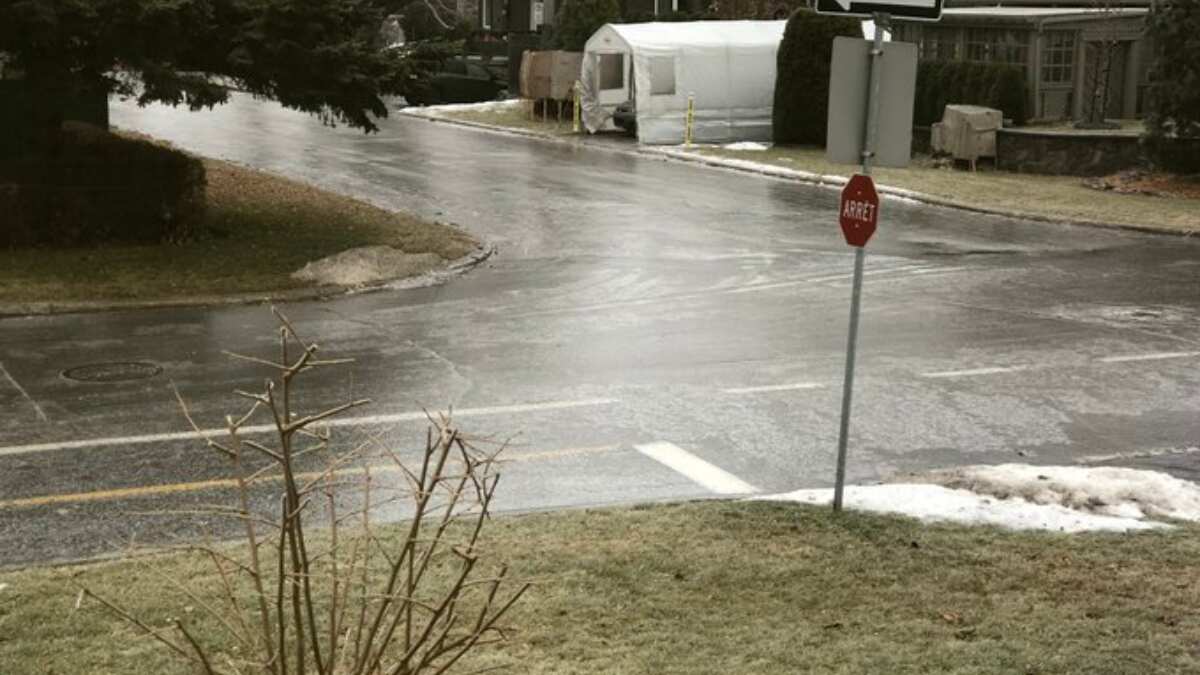
Canada freezing rains
Environment Canada, the official weather department of Canada, issued a warning for 'freezing rains' in Toronto on Tuesday. The federal agency warned the residents about the possibility of a few millimetres of ice building up on the surface. The forecast also mentioned that the freezing rains in Canada might turn to light showers later.
Roads, highways, walkways, and parking lots might become slippery and icy due to the freezing rain, alerted Environment Canada. Guidelines for motorists are to keep a slow pace on tricky roads, keep an eye on the rear lights of vehicles, and keep a safe distance from others.
"Slow down driving in slippery conditions. Watch for taillights ahead and maintain a safe following distance," Environment Canada advised drivers.
But, many are unaware of the 'significant influence' these freezing rains can have on their daily lives, especially the rush hour traffic.
Ontario, The Greater Toronto Area and the Niagara Region are included in the warning. "Areas away from Lake Ontario over slightly higher terrain will be most susceptible, especially bridges and overpasses," said meteorologist Anthony Farnell.
What is freezing rain?
Freezing rain and sleet emerge from the same phenomena. The liquid raindrops from a layer of warm air fall into a layer of freezing air above the surface and clutch the ground. Such a phenomenon results in icy precipitation. The distinction between the two occurs due to the thickness of the layers.
When the layer of freezing air is thin, the raindrops do not have much time to freeze before they touch the ground. It causes freezing rain. The water droplets from above create an ice coat on the surface.
On the other hand, sleet is frozen raindrops that occur when the layer of freezing air above the surface is thicker. Thus, the raindrops freeze before reaching the ground.
Why are freezing rains unsafe?
Both icy precipitations, freezing rain and sleet, are dangerous for travellers. In both cases, the frozen droplets create slippery areas on roads, causing motorists to lose power over their vehicles with small or no warning.
Freezing rain causes ice that can swiftly add a heavy weight to tree branches and power lines, causing them to snap or break. Moreover, these broken branches damage the surface beneath them. Broken power lines can also lead to power cuts.
Watch |Sri Lanka battles its worst economic crisis in 70 years
What did freezing rains do to Atlantic Canada?
Atlantic Canada, also known as the Atlantic provinces of eastern Canada, witnessed freezing rains across the territory accompanied by power outages and slippery surfaces.
The bulk power outages affected around 2,000 customers of Newfoundland Power at mid-afternoon in several regions of the island portion of the province. These areas included Gander, Grand Falls-Windsor, Lewisporte, and Corner Brook.
On Monday, the region experienced freezing rains of 60 to 90 millimetres across various areas.
The sloppy weather delayed flights at the Halifax Stanfield International Airport. Bay Ferries also cancelled the trips between Digby, NS, and Saint John, on Sunday, due to the windy climate in the Bay of Fundy.
In Nova Scotia, the expected rain was between 25 to 45 millimetres. New Brunswick also experienced freezing rain in southern and central regions.
Schools in New Brunswick remained closed on Monday. Students also had to miss their classes on Friday due to similar conditions.
"A lot of ice has collected on telephone poles and tree branches. What that does is cause the tree branches to come down and touch the high-powered lines and arc, sometimes causing a fire. We've had a couple of telephone poles on fire," said Keith Guptill, Moncton Fire Department which received several calls on Monday.
(With inputs from agencies)
WATCH WION LIVE HERE