Opinion: What jihad has to do with Islam

Islamic State
The current trouble in the Islamic world is a creation of the Shia-Sunni divide which continues to shift form and alliances, eventually leading to bloodshed.
Olivier Roy has written a number of books on Islam, radicalism and violence. The latest book 'Death and Jihad' brings observations of this seminal thinker into one piece. The book dissects into contemporary Islam by looking into issues, such as migration, terrorism, jihad and disassociation of culture from religion. To begin with, Olivier Roy makes a radical departure from the run of the mill analysis of Islam. He concludes in the beginning that it is not radicalisation of Islam but Islamisation of radicalism which is causing violence in Europe and other parts of the western hemisphere.
Olivier argues that jihad, instead of being a collective responsibility, has become a personal obligation in modern time, creating a rupture in Islamic history. This perceived duty does not respect traditional rules associated with going to jihad. The choices jihadis make are modern in origin and not Islamic in nature. Before leaving for jihad, the protagonists neither take permission from the parents nor settle obligations mentioned in the Islamic law.
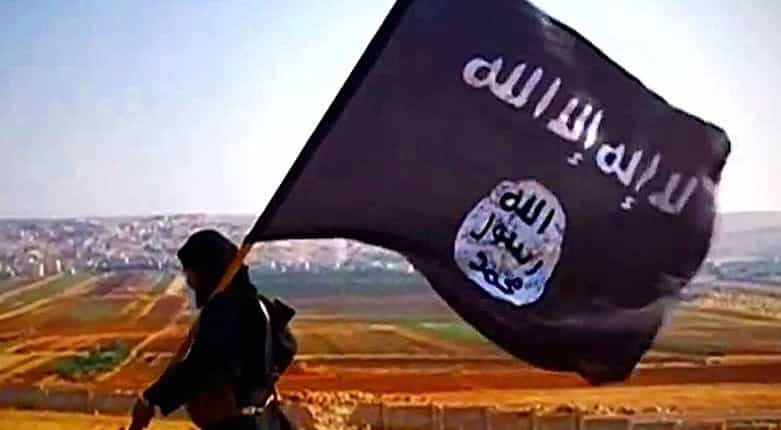
ISIS is explained in the form of an apocalyptic discourse which nullifies the sense of time. The book argues that ISIS is projected as a-historical geography divorced from historical reality as the destination for hijira (hegira). It is, for this reason, global jihad remains disconnected from West Asia and even from the question of Palestine. The new state of ISIS remains imaginary and classical at the same time which is marked by transmission of brutality that is played out like a well-rehearsed play.

 Jihad and Death by Olivier Roy (WION)
There is no doubt that the appeal of ISIS lured thousands of newly radicalised recruits to fight the dirty war in West Asia. The book argues that in a society where transmission of traditional knowledge, language and religion remains alive, few jihadis are born. He cites the example of Turkey whose contribution in global jihad has been minimum. In case of ISIS, it is argued, that it often happens before coming in the contact of a local madrasa. It happens directly through the Internet which is replete with half-baked knowledge of Islam.
For many, the argument would be surprising but the empirical evidence suggests that phenomenon of ISIS is very much a product of globalisation of religion where local cultures are being ripped away from the parent body of religion. The ripping away creates insular groups who look for redemption through extreme acts of violence.
)
US Mint releases $1 coins featuring Donald Trump, priced up to $154.50
)
Chaos in Ukraine's Kyiv: Zelensky calls shootout between spy services 'absolutely shameful'
)
J&K medical interns continue fourth-day protest, demand stipend hike to ₹30,000
&im=FitAndFill=(700,400))
How the Su-30MKI flies up to 8,000 kilometres using mid-air refueling
)
Beginning of the end? More glacial lake outbursts threaten millions in India, Nepal and China
)
No selfies with God, no reels inside: Tamil Nadu CM bans smartphones in temples | Gravitas
)
Earth-Theia collision created the moon in just 5 hours, study shows
)
ISRO EOS-05 launch: GSLV to lift heaviest payload in its 25-year flight history
)
Houthis target Yemen with ballistic missiles, Yemeni army downs several drones
)
Bangladesh batter Towhid Hridoy creates history with 350 not out in South Africa
)
Pakistan faces growing hunger crisis amid rising food insecurity
)
Who is Aditi Paudel? 17-year-old becomes Japan's first literacy ambassador
)
The Odyssey star Elliot Page opens up about struggling to land his next acting role after starring in Christopher Nolan film
)
Belgium, latest EU state cautioned by India over arms for Pakistan; gets assurances from Brussels
)
Harry Potter and the Philosophers' Stone: New trailer reveals fresh look at Hogwarts, sorting ceremony and iconic moments to life
)
India's data centre boom: AI boom fuels $31.6 trillion data race
)
Nigerian Navy discovers 99,000 litres of suspected stolen, illegally refined products as it intensifies anti-crude oil theft operations
&im=FitAndFill=(700,400))
Why the glass canopy on the Su-30MKI has a distinct golden tint
)
Rubio on Modi-Pezeshkian meeting: 'No country should help Iran evade sanctions'
)
Husband uses secret camera to record wife’s affair, wins divorce case, ends up in jail for spying
)
Nepal floods: 1,204 dead, 4,216 missing as tearful relatives pray for the missing
)
High Xylitol levels in blood linked to cardiovascular risk
)
Trump says he’s ‘happy’ Harry and Meghan left US , calls them disrespectful
)
EU and NATO step up pressure on Russia after Germany ‘escalation incidents’
)
Indian Air Force pilot Abhinandan Varthaman, who shot down Pak fighter jet retires, takes up private job
)
EU bans Brazilian meat imports over antibiotic violation rules
)
WION Exclusive: Hasina says she reads father’s unfinished memoir while planning Dhaka return
)
Manipur violence: 25 houses torched in Manipur’s Kangpokpi a day after 10 homes were burnt along Imphal-Tamenglong road
&im=FitAndFill=(700,400))
Why the Su-30MKI uses a giant air brake on its back instead of its wings
)
Man pushes Russian humanoid robot. Watch what happens next
)
At least 2 killed in Minneapolis shooting, suspect also dead
)
Coast Guard jet carrying DHS Secretary Markwayne Mullin makes emergency landing after engine failure
)
Report: Egypt eyes new Rafale F4 deal amid air force modernisation push
)
Pakistanis are eating less. What they are eating instead is even more alarming
“By chasing religion away from public sphere, it has got assigned it to the radicals,” says Roy. The first thing which Islamist did in Afghanistan was to attack the traditional structure of society, dominated by Khans, and attacking history which was both Islamic and non-Islamic in origin. ISIS has fine-tuned this discourse where life becomes an exercise in death.
It also resembles certain structural changes (not sameness) within the Indian context. Hinduism and Islam are two very different religions and cannot be compared but both have undergone unprecedented change under the rubric of modernity and globalisation. It can be said that the persistent effort to push Hinduism away from public life laid the foundation of Hindutva, which reclaimed the public space less like a devout and more like a political order.
It is to say that if religion has the potential to modify liberal democracies and then liberal democracies have reinvented religion by the process of codification and vote. For example, Brahmins and upper-class Muslims may enjoy cultural privileges but political authority percolated to OBCs who came below the defined upper castes.
It should worry both the Hindutva brigade and the secular liberal constituency. It should worry the Hindutva lobby lest the shape and mind of our religious eco-system become more intolerant. It should also concern secular liberals, for the fact, that despite enlightened values, it failed to accommodate the question of faith which rests within Indian civilisational imagination.
The difference between Hinduism and Islam apart from the structure and a book is also that of the concept of takfir. The concept differentiates between a Muslim and the Muslim who follows the tenet of Islam properly. The new interpretation led to the killing of thousands of non-Sunni Muslims in past 60 years. It is the root cause of Shia-Sunni violence.
In the Indian context, it has started to take rues of not Indian enough as Hinduism does not have the concept of takfir. This tension is being reflected by the debate on nationalism and intolerance but has not reached a level which is being witnessed in Islamic societies. The difference is that Hindus in India have reclaimed the public space through electoral methods without large-scale violence and disruptions such as we witnessed in Tunisia and Egypt. The majority in India has neither changed the Constitution nor the law as it remains committed to the larger ideals of the Constitution but the feeling of being the first citizen or community has been asserted.
The thrust of the argument in the book is that the current trouble in the Islamic world is a creation of the Shia-Sunni divide which continues to shift form and alliances, eventually leading to bloodshed. Sunnis in the current scenario feel alienated from the Shia state of Iran, Shia dominated Iraq, Shia affiliated Syria and Houthis of Yemen, plunging the region into a state of turmoil. It is argued that the scenario was further vitiated by de-Baathification of Iraq which led to thousands of trained Sunnis becoming unemployed and forming core of the ISIS terrorism.
The book argues that radicals in the system should be allowed to speak.
This position in other nations would lead to an ethical and moral dilemma. What if Kashmiri terrorists or radicals are given a public platform to speak? What was our reaction to the JNU controversy? Should Naxalities be invited for public debates? The ethical and moral choices would vary from state to state and region to region but the fact remains "jihadi killings" within the Muslim world surpasses the casualties which have taken place in the non-Muslim countries.
His book also poses questions to multi-ethnic nations like India, where despite riots and rise of cultural nationalism, Islamic terrorism has not been able to create a big geographical footprint. It has exported few people to the ISIS but not replicated the pattern witnessed by Belgium and France where second-generation converts were attracted in large numbers to the Islamic State.
His work is about how religion and faith have interacted with secularised environments over a period of time, creating new tyrannies of both religious and secular in nature.
This book is for those who want to understand the structure of Islamic violence in a modern state which is fundamentally different from medieval times. It is a book for those who want to understand the power of globalisation and its ability to change imagination of historical entities like religion without altering a word from the original text.
The only thing wanting is an explanation as to what is the platform which Roy is talking about. What is the platform from which radicals can air their feeling? What will be the consequence of it? Is Islam compatible with modernity? These are the questions which the world has to deal with today. As far as the book is concerned, it is a delight to read Roy.
Book: Jihad and Death: The Global Appeal of Islamic State
Author: Olivier Roy
Publisher: Hurst & Company, London, 2017
(Disclaimer: The opinions expressed above are the personal views of the author and do not reflect the views of ZMCL)