Frozen worlds in Kuiper Belt might be able to host life, new evidence suggests

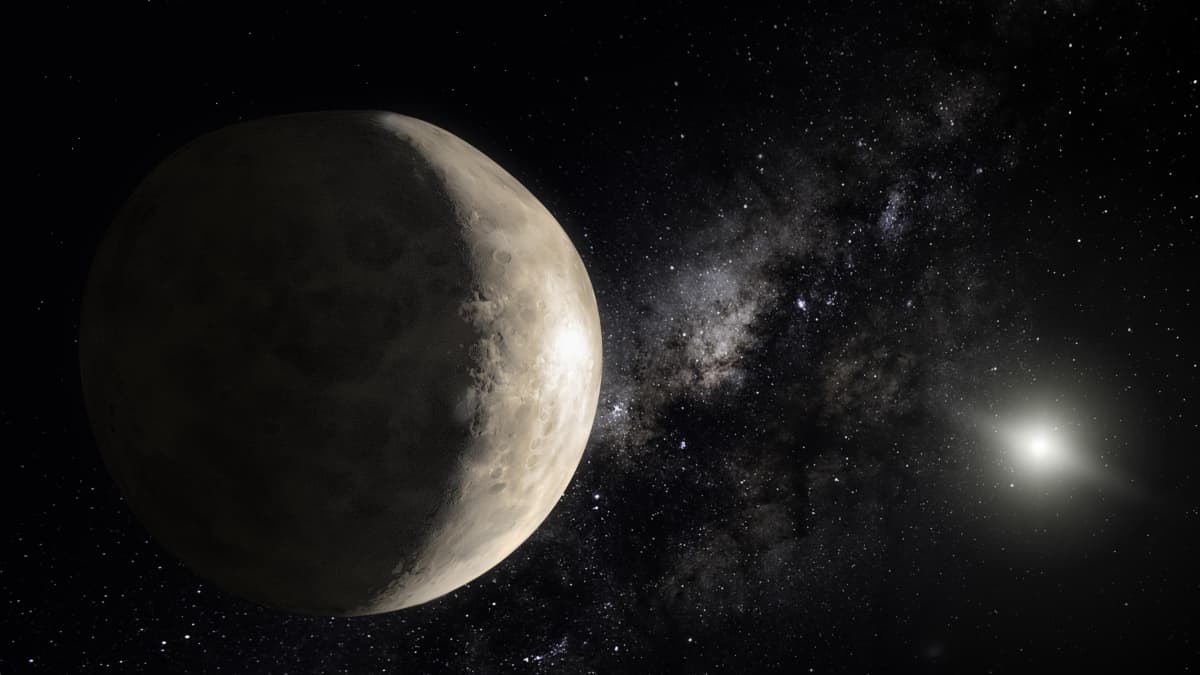
Eris and Makemake
Scientists have found some unexpected activity in the icy objects of the outer belt surrounding our solar system.
Kuiper Belt is a remote, doughnut-shaped region encircling much of our solar system, inhabited by ice-clad worlds like Pluto (a dwarf planet). Scientists have yet to explore the little-known area. However, they believe that millions of "dead objects" orbit here.

Using the James Webb Space Telescope to view some of these icy objects, astronomers found evidence that they might not be so dead after all. They trained the powerful telescope, which orbits one million miles from Earth, on Eris and Makemake, the two largest-known objects of the Kuiper Belt. It has specialised cameras that can detect different elements or molecules in distant worlds.
According to the study published in the planetary science journalIcarus, the icy orbs and objects of the Kuiper Belt are preserved primordial relics of the early solar system. However, the frozen methane identified on the surfaces of Eris and Makamake shows that these molecules were recently "cooked up".
ALSO READ |A shallow, salty lake in Canada may have an explanation for the origin of life on Earth
)
He predicted COVID-19 and 2008 economic crisis, was labeled fearmonger. Now he has another dire warning
)
'Is that a back-up Trump?' Mysterious look-alike standing behind Donald Trump baffles netizens
)
US-Iran war cost hits $37.5 billion as Hegseth seeks $67 billion more for Pentagon
)
UP BTech gold medalist dies by suicide after failing in nearly 50 govt job attempts, leaves note for father
)
'This should not happen in a democracy': Shashi Tharoor slams detention of Rahul Gandhi, Priyanka Gandhi after protest outside PM Modi's residence
)
FBI arrests alleged $547mn medicare fraud fugitive after 3-year global manhunt
&im=FitAndFill=(700,400))
Meet top 5 batters with most runs in India vs Zimbabwe T20Is
)
Maharashtra Bandh call on July 23: What all you need to know
)
Salman Khan breaks silence on health concerns after viral Mumbai appearance
)
'Don't waste...': CJI Surya Kant breaks silence on Delhi police brutality against protesting students
)
Sonam Wangchuk's connection with George Soros and Ford Foundation explained!
)
Trump announces 200% tariff on generic drugs: Here's what it means for 'Pharmacy of the World' India
)
'What is wrong...': Anna Hazare breaks silence on Sonam Wangchuk's protest, makes an appeal to Centre
)
'Guru is the...': Indian Education Minister Dharmendra Pradhan shares message on education amid calls for his resignation
)
ICC ODI Rankings: Joe Root jumps big, India trio close in on No. 1 spot
)
Dharmendra Pradhan's 1997 paper leak protest surfaces amid calls for resignation
)
Student union leaders call off hunger strike at Jantar Mantar after civil society appeal, but protest continues
)
IND vs ZIM, 1st T20I: When and where to watch live streaming in India?
&im=FitAndFill=(700,400))
Why US fighter jets use seamless bubble canopies compared to Russian jets
)
FIFA 2026 | 'I am truly sorry': Argentina's Enzo Fernandez, who get red card in final, reacts to loss
&im=FitAndFill=(700,400))
World's top 7 most liveable cities in 2026 — Check where India and Pakistan stand
)
Kaylee Hottle was unconscious: Shocking details from first responders revealed after teen star's death
&im=FitAndFill=(700,400))
New OTT releases this week (July 20-26, 2026): Musafir Cafe, Adarsh Baal Vidyalaya, 72 Hours- 5 new titles coming on Netflix, Prime Video and more
&im=FitAndFill=(700,400))
Meet top 5 Indian batters with most T20I runs against Zimbabwe
)
'We acted immediately...': Indian PM Modi breaks silence on paper leaks as NEET protest, calls for Education Minister's resignation grows
)
'George Soros playbook': Understanding the foreign funding network around Sonam Wangchuk
)
Trump blames AI for viral video of mystery objects thrown from White House window, WH says ‘maintenance’. Who's lying?
The study suggests hot interiors below the icy surface, capable of pushing liquid or gas onto the crust. The relatively recent methane deposits suggestthat these icy worlds could harbour oceans, like Jupiter's icy moon Europa.
"We see some interesting signs of hot times in cool places," Christopher Glein, a scientist at the Southwest Research Institute, said in a statement.
Glein, who haspreviously researched Saturn's geyser-shooting moon, Enceladusled the investigation into the Kuiper Belt objects.
"Hot cores could also point to potential sources of liquid water beneath their icy surfaces," Glein explained.
Scientists speculate that some of these frozen worlds, billions of miles away, could harbour conditions suitable for life. However, there has been no evidence for it.
There has been no attempt yet to reach these cosmic frontiers closely. But NASA's New Horizons mission to Pluto and beyond opened the researchers to a complex world of distinct topography, including glaciers and mountains made of water ice.
"After the New Horizons flyby of the Pluto system, and with this discovery, the Kuiper Belt is turning out to be much more alive in terms of hosting dynamic worlds than we would have imagined," said Glein.
"It's not too early to start thinking about sending a spacecraft to fly by another one of these bodies to place the JWST data into a geologic context. I believe that we will be stunned by the wonders that await!," he added.
(With inputs from agencies)